

Hey there! If you're in the market for yttrium oxide, you've come to the right place. I'm a supplier of high - quality yttrium oxide products, and today I want to talk about how the surface properties of yttrium oxide can be modified.
Yttrium oxide (Y₂O₃) is a super important rare - earth oxide with a wide range of applications. It's used in things like phosphors for displays, ceramics, and even some high - tech catalysts. But sometimes, the default surface properties of yttrium oxide just don't cut it for specific applications. That's when we need to step in and make some modifications.
Physical Modification Methods
One of the most straightforward ways to change the surface properties of yttrium oxide is through physical methods.
Milling
Milling is a common technique. By grinding yttrium oxide particles, we can change their size and shape. Smaller particles usually have a larger surface area, which can enhance the reactivity of the material. For example, if we use high - energy ball milling, the mechanical forces break the larger yttrium oxide particles into smaller ones. This increased surface area can improve the adsorption capacity of the yttrium oxide. If you're interested in high - quality yttrium oxide for such processes, check out our Yttrium Oxide Powder.
Heat Treatment
Heat treatment is another physical way. When we heat yttrium oxide at different temperatures and for different durations, we can alter its crystal structure and surface characteristics. At lower temperatures, the surface may become more porous, which can be great for applications where gas adsorption is important. On the other hand, higher - temperature heat treatment can lead to a more dense and stable surface structure. This can be useful in applications where the material needs to withstand harsh environments.
Chemical Modification Methods
Chemical modification methods offer more targeted changes to the surface properties of yttrium oxide.
Surface Coating
Surface coating is a popular chemical modification. We can coat yttrium oxide particles with other materials. For instance, coating with silica can improve the chemical stability of yttrium oxide. Silica forms a protective layer on the surface, preventing the yttrium oxide from reacting with surrounding substances. Another option is to coat with polymers. Polymer coatings can give yttrium oxide particles better dispersion properties in solvents. This is really useful in applications like paints and inks. If you're looking for nano - sized yttrium oxide that can be easily coated, our Nano Yttrium Oxide is a great choice.
Doping
Doping involves adding small amounts of other elements to yttrium oxide. For example, doping with rare - earth elements like europium (Eu) can change the optical properties of yttrium oxide. Eu - doped yttrium oxide can emit red light when excited, which is why it's widely used in display phosphors. Doping can also affect the electrical and magnetic properties of yttrium oxide. By carefully choosing the dopant and its concentration, we can fine - tune the surface properties to meet specific application requirements.
Surface Functionalization
Surface functionalization is all about attaching specific functional groups to the surface of yttrium oxide.
Organic Functional Groups
We can attach organic functional groups such as hydroxyl (-OH), amino (-NH₂), or carboxyl (-COOH) groups. Hydroxyl groups can make the surface more hydrophilic, which means it has a better affinity for water. This is useful in applications where the yttrium oxide needs to be dispersed in aqueous solutions. Amino groups can be used for further chemical reactions, like linking with other molecules. Carboxyl groups can improve the dispersibility of yttrium oxide in polar solvents.
Inorganic Functional Groups
Inorganic functional groups can also be used. For example, phosphate groups can enhance the binding of yttrium oxide to certain metal ions. This can be beneficial in applications like metal ion adsorption and separation.
Why Modify the Surface Properties?
You might be wondering why we go through all this trouble to modify the surface properties of yttrium oxide. Well, it all boils down to improving its performance in different applications.
In the field of catalysis, modified yttrium oxide can have better catalytic activity. The increased surface area or the presence of specific functional groups can make it more effective at speeding up chemical reactions. In the electronics industry, modifying the surface properties can improve the electrical conductivity or the optical properties of yttrium oxide, making it more suitable for use in semiconductors and displays.
Our Yttrium Oxide Products
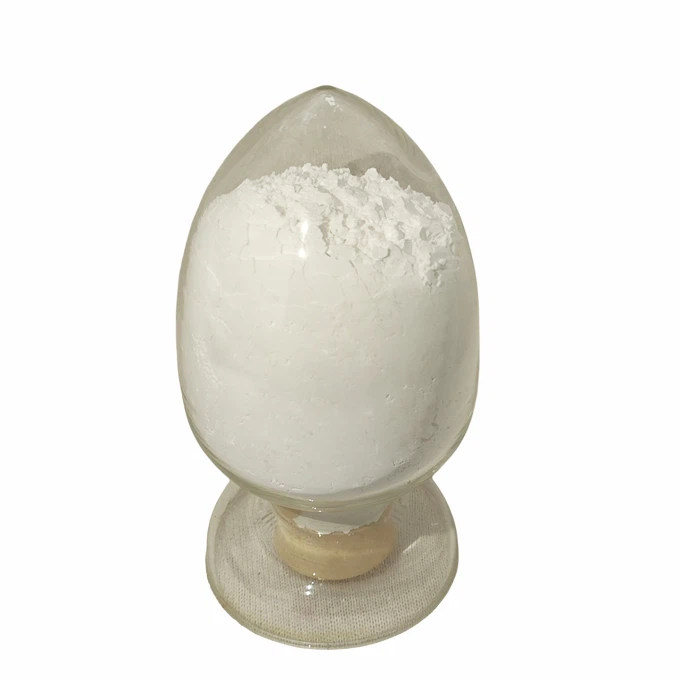
As a yttrium oxide supplier, we offer a variety of high - quality products, including Nano Yttrium Oxide, Yttrium Oxide Powder, and Yttrium Iii Oxide. These products can be further modified according to your specific needs. Whether you need a certain particle size, a particular surface coating, or a specific dopant, we can work with you to customize the yttrium oxide to fit your application requirements.

If you're interested in our yttrium oxide products or have any questions about surface modification, feel free to get in touch with us. We're always happy to have a chat and discuss how we can help you with your yttrium oxide needs. Let's work together to find the best solution for your projects!
References
- Smith, J. K. "Advances in Yttrium Oxide Modification for Catalytic Applications." Journal of Materials Science, 2018.
- Johnson, L. M. "Surface Functionalization of Rare - Earth Oxides." Chemical Reviews, 2019.
- Brown, A. R. "Physical and Chemical Modification of Yttrium Oxide for Electronic Devices." Electronics Research Journal, 2020.