

Terbium Oxide, terbium trioxide (IV) powder, is an inorganic chemical product. Its chemical formula is Tb4O7 and its molecular weight is 747.6972. This powder is usually tan in appearance and is insoluble in water but soluble in acid. Under certain conditions, terbium emits light that can appear green or blue. This substance is widely used in many fields, such as phosphors, especially X-ray fluorescent screens, and can also be used as oxidants, activators and additives.
Why Choose Us
Company Certificate
It has quality management system certification, environmental management system certification, occupational health and safety management system certification, innovation and entrepreneurship competition awards, quality and trustworthiness certificate, service and trustworthiness certificate, quality service integrity unit certificate.
Professional Team
The company has a professional team, which is one of the company's most valuable assets. Team members all have deep chemical engineering expertise and rich industry experience, and can provide customers with high-quality products and professional technical support.
Trade cooperation
At the same time, the company conducts trade cooperation with Europe, the United States, Japan, South Korea, the Middle East and other regions to increase sales performance, enhance brand influence, and strive to become a well-known enterprise of new rare earth materials in China.
Company strength
China's proven industrial reserves of rare earths are 52 million tons, accounting for about 50% of the world's total. China is the country with the richest rare earth resources and a complete range of mineral types.


Benefits of Terbium Oxide
Optical properties
Terbium Oxide powder has unique applications in the optical field. It can be used as a phosphor, especially in X-ray fluorescent screens, showing its excellent luminescence properties. Under certain conditions, terbium can emit green or blue light, making it potentially useful in display technology and lighting.
Chemical stability
Terbium Oxide powder is insoluble in water, but soluble in acid, which reflects its specific chemical stability. This stability allows it to maintain the stability of its structure and properties during certain chemical reactions and preparation processes.
As an oxidant, activator and additive
Terbium Oxide powder can be used as an oxidant in certain chemical reactions to provide the required oxygen atoms. At the same time, it can also serve as an activator to promote chemical reactions. In addition, it can be used as an additive to improve or adjust the properties of materials.
Application of Terbium Oxide
Optical field
Terbium Oxide powder has significant applications in the optical field. It can be used as a phosphor, especially in X-ray fluorescent screens, and its unique luminescent properties make it potentially useful in display technology and lighting. By adjusting its composition and process conditions, luminous effects of different colors and brightness can be achieved to meet the needs of different optical devices.
01
Electronic field
Terbium Oxide powder can also be used in the electronic field. Due to its special electrical properties, it can be used as an additive in electronic materials to improve the performance of electronic devices. For example, it can improve the conductivity, stability and reliability of electronic devices, thereby improving the performance of the entire electronic system.
02
Catalyst field
In chemical reactions, Terbium Oxide powder can be used as a catalyst or a component of a catalyst. It can promote certain chemical reactions and increase reaction rate and efficiency, thereby achieving a more efficient and environmentally friendly chemical synthesis process.
03
Material science field
Because Terbium Oxide powder has unique physical and chemical properties, it can also be used to prepare materials with special properties. For example, it can be combined with other materials to produce composite materials with excellent mechanical properties, thermal stability or corrosion resistance.
04
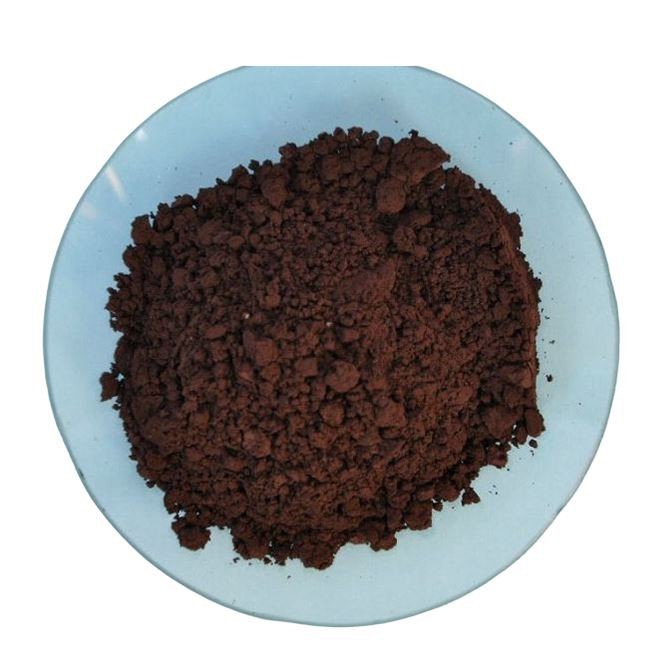
Terbium oxide is a silver-white soft metal. Soft enough to cut with a knife. Terbium is malleable and malleable, meaning it is easily bent and drawn into wire. It is a moderate conductor of heat, but a poor conductor of electricity. Only 15 elements have a lower electrical conductivity than terbium. Terbium can burn in air to form oxides, most commonly terbium(III) oxide. Terbium oxide acts as a weak base. It reacts slowly with cold water to form hydroxide, also in the oxidation state +3. Solid terbium is soluble in dilute sulfuric acid. Although +3 is the most common oxidation state, it can also form compounds such as terbium (I), (II), and (IV).
Chemical Reaction of Terbium Oxide
The Reaction of Terbium With Air
Terbium metal undergoes a gradual process of tarnishing when exposed to the atmosphere. In addition, it readily combusts to produce terbium oxide, which can be represented by the approximate chemical formula Tb4O7.
8 Tb + 7 O2 → 2 Tb4O7
The Reaction of Terbium With Water
Terbium exhibits a sluggish reaction when exposed to cold water, but demonstrates a rapid reaction when in contact with hot water. This reaction results in the formation of terbium (III) hydroxide, denoted as Tb(OH)3, along with the liberation of hydrogen gas, represented as H2.
2 Tb (s) + 6 H2O (g) → 2 Tb(OH)3 (aq) + 3 H2 (g)
The Reaction of Terbium With Halogens
The element terbium exhibits a propensity to engage in chemical reactions with various halogens, resulting in the formation of terbium (III) halides.The chemical reaction between terbium metal and fluorine gas (F2) results in the formation of terbium (III) fluoride, denoted as TbF3.
2 Tb (s) + 3 F2 (g) → 2 TbF3 (s) [white]
The Reaction of Terbium With Acid
Terbium metal readily undergoes dissolution in dilute sulphuric acid, resulting in the formation of solutions that contain the aquated Tb (III) ion, which exhibits a very pale pink color. Additionally, this reaction produces hydrogen gas, denoted as H2. The existence of Tb3+(aq) as the complex ion [Tb(OH2)9]3+ is highly probable.
2 Tb (s) + 3 H2SO4 (aq) → 2 Tb3+ (aq) + 3 SO42− (aq) + 3 H2 (g)
The Process for Purchasing Terbium Oxide Is As Follows
Inquiry
Contact the supplier through telephone, online communication, etc., and inquire about the price, specifications, quality standards and other information of terbium oxide.
Verify information
Confirm whether the product information provided by the supplier meets the requirements, including quality, packaging, delivery time, etc.
Place an order
According to the quotation and negotiated conditions given by the supplier, reach an agreement with the supplier and place an order.
Receipt of goods
Receive terbium oxide products at the agreed time and location, and conduct appearance and quality inspections to ensure that the products are in good condition.
Settlement payment
Payment shall be made according to the payment method and time agreed in the contract.
What Are the Production Processes of Terbium Oxide?
The first is the metallic calcium reduction method
The process of this method is: use anhydrous terbium fluoride as the raw material, use pure calcium particles or calcium powder as the reducing agent, mix the raw materials evenly, put the tantalum crucible into the medium frequency vacuum induction furnace, evacuate and use pure argon ( A r ) is restored at a temperature of 1500°C under protection. After taking out the reduction product and separating the metal and slag (CaF2), the metal is melted and cast into ingots to obtain metal Tb products. The process is simple and easy to operate; the equipment is simple and easy to maintain, the working environment is good and no harmful waste is produced; the product purity is high, The recovery rate is good and the yield is low; but it is a discontinuous operation with low efficiency and small output.
The second is the preparation of terbium by master alloy distillation.
The process of this method is: use anhydrous terbium fluoride as the raw material, use pure Ca as the reducing agent, pure Mg as the alloying agent (generating Tb-Mg), and use CaCl2 as the slag-forming agent. After batching, mix well and then put it into a tantalum crucible and place it in a medium frequency vacuum induction furnace. The temperature is raised and vacuumed, and the reduction is carried out under the protection of argon gas to generate Mg-Tb alloy. After the reduction is completed, the product is taken out and the metal and slag are separated. Then use a vacuum induction furnace with distillation and condensation of terbium metal to perform distillation and purification to remove Mg and Ca. Take out the pure Tb and melt the ingot to get the product (Tb≥99%).
The third method is reduction distillation
The process of this method is to use the difference in vapor pressure of each element to purify rare earth metals under high vacuum. The most basic requirement for the purified metal in this method is that the vapor pressure must be high enough to obtain a practical distillation or sublimation rate, and it must be carried out at a temperature lower than that of the oxide co-distillation or co-sublimation, usually about 1 600 ℃; but Tb vapor pressure is low, Tb1939 ℃, 1.33 ×10² Pa). This brings many difficulties to the distillation process, but with the improvement of production equipment and processes, very few technologically advanced factories also use distillation to produce high-purity Tb.
Storage Specifications for Terbium Oxide
Storage facilities
Terbium oxide should be stored in a dry, cool, and well-ventilated dedicated warehouse away from direct sunlight. The warehouse should be equipped with fire-fighting equipment and leakage emergency treatment equipment.
Storage container
Terbium oxide should be stored in a container with good sealing performance, and the container material should be corrosion-resistant. Containers and their closures should be checked regularly during storage to ensure they are intact.
Storage environment
The warehouse should be kept dry and the relative humidity should be controlled below 60%. Avoid mixing with acids, alkalis, food and other items.
Storage management
A strict storage management system for terbium oxide should be established, including regulations on storage, withdrawal, and use. Stored terbium oxide is inspected regularly to ensure product quality.
Transport Specifications For Terbium Oxide


Transport vehicles
Terbium oxide should be transported using dedicated dangerous goods transport vehicles. The vehicles should comply with relevant laws and regulations and have corresponding protective measures.
Transportation packaging
The packaging of terbium oxide should comply with the dangerous goods packaging specifications and have sufficient strength to withstand vibration and impact during transportation. The packaging should be marked with dangerous goods signs and related information.
Transport routes
Safe transport routes should be chosen and try to avoid passing through densely populated areas and sensitive areas. During transportation, the vehicle speed should be kept stable and operations such as sudden braking and sharp turns should be avoided.
Transport personnel
Staff who transport terbium oxide should receive professional training and have relevant knowledge and skills in the transportation of dangerous goods. You should remain vigilant during transportation and deal with any abnormal situations in a timely manner.
Terbium Oxide Recent Innovations and Advances
Nanotechnology and Tb4O7 Nanoparticles
Recent innovations have focused on leveraging terbium oxide in nanotechnology. Tb4O7 nanoparticles, derived from terbium oxide, exhibit unique quantum properties, opening new avenues for the development of advanced sensors and nanoelectronics. This innovation holds promise for creating smaller and more efficient electronic devices with enhanced performance.
Biomedical Applications
Ongoing research explores the potential of Tb4O7 powder in biomedical applications. Its biocompatibility and luminescent properties make it a candidate for targeted drug delivery systems and bioimaging. Innovations in this area could revolutionize medical treatments, providing improved precision and reduced side effects.
Environmental Remediation
Terbium oxide powder's applications have expanded into environmental remediation. Its adsorption capabilities make it effective in removing pollutants from water and air, showcasing its potential for addressing environmental challenges and promoting sustainable solutions.
Our Factory
Beijing FreeRun Technology Co.,Ltd. was established in 2020. It is located in Shandong Province, an important industrial province in China and one of China's rare earth mineral production areas. Its main products are polishing powder/liquid in semiconductors, optics and other fields, as well as nano rare earths and anhydrous rare earths. , the company integrates rare earth R&D, production and sales.The company's products include high-purity nano rare earth oxides, rare earth polishing powders, precision polishing fluids, rare earth compounds, anhydrous rare earth and other new rare earth materials. The company will provide high-quality products and services in the fields of semiconductor CMP, semiconductor ceramics, aerospace power systems, military guidance, electric vehicles, new energy, petroleum fission, grinding/precision polishing, pharmaceutical chemicals, electronic materials and other fields.
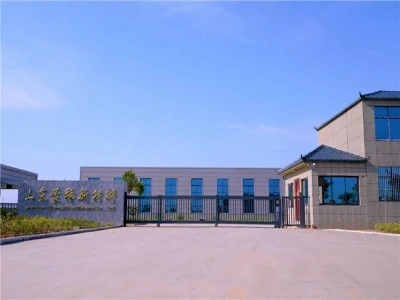

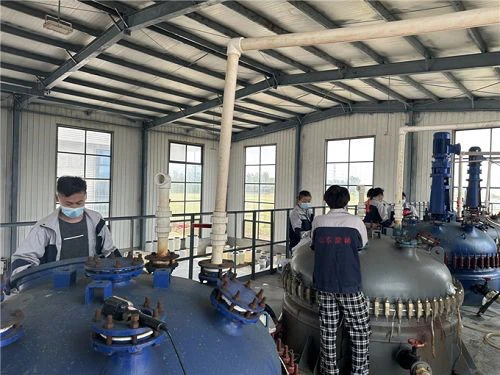
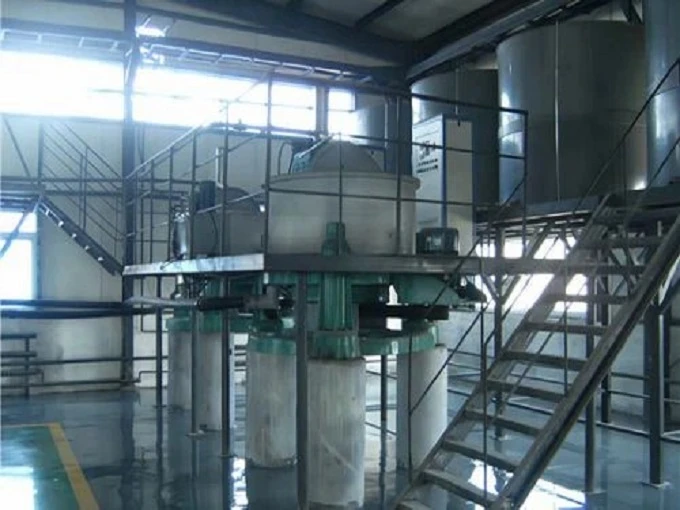
certificate


FAQ
Q: What are the uses of terbium oxide?
Q: Is terbium used in phones?
Q: Is terbium used in medicine?
Q: What is a unusual fact about terbium?
Q: What are the hazards of terbium?
Q: Where is terbium most commonly found?
Q: What is the compound named Trichloroethene?
Q: What is terbium used for in everyday life?
Q: What rare metal is used in cell phones in Africa?
Q: What is the rare earth metal in touch screens?
Q: What is another name for terbium?
Q: What happens when terbium reacts with water?
Q: What are some interesting facts about terbium?
Q: Is terbium soluble in water?
Q: Why is terbium important?
Q: Is terbium highly reactive?
Q: Is terbium magnetic?
Q: Is terbium natural or synthetic?
Q: What are the uses of terbium oxide?
Q: Why is terbium used in electronics?
We're professional terbium oxide manufacturers and suppliers in China, specialized in providing high quality customized service. We warmly welcome you to wholesale terbium oxide at competitive price from our factory. Contact us for pricelist.