

Anhydrous rare-earth halides are prepared by the conversion of the rare-earth oxide to the halide by means of its reaction with the appropriate ammonium halide. Without transfer from the reaction vessel, the halide is melted, then crystallized by slow cooling.
Why Choose Us
Company Certificate
It has quality management system certification, environmental management system certification, occupational health and safety management system certification, innovation and entrepreneurship competition awards, quality and trustworthiness certificate, service and trustworthiness certificate, quality service integrity unit certificate.
Professional Team
The company has a professional team, which is one of the company's most valuable assets. Team members all have deep chemical engineering expertise and rich industry experience, and can provide customers with high-quality products and professional technical support.
Trade cooperation
At the same time, the company conducts trade cooperation with Europe, the United States, Japan, South Korea, the Middle East and other regions to increase sales performance, enhance brand influence, and strive to become a well-known enterprise of new rare earth materials in China.
Company strength
China's proven industrial reserves of rare earths are 52 million tons, accounting for about 50% of the world's total. China is the country with the richest rare earth resources and a complete range of mineral types.

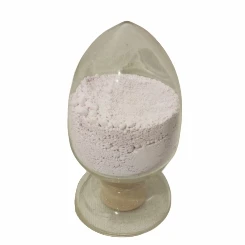
Benefits of Anhydrous Rare Earth
Improve crop yield and quality
Anhydrous rare earths can improve soil quality, provide plants with more adequate nutrients and growth environment, promote crop growth and development, and increase crop yield and quality.
Increase plant stress resistance and tolerance
Anhydrous rare earths can increase the stress resistance and tolerance of plants, making them more able to adapt to harsh environmental and climatic conditions, reducing crop mortality, and improving the stability and accuracy of agricultural production.
Improve soil quality
Anhydrous rare earths can improve the physical and chemical properties of soil, promote the growth of soil microorganisms, reduce soil hardening, increase soil permeability and fertility, and provide a better growing environment for crops.
Extend machine life
Anhydrous rare earths can be added to agricultural machinery as lubricants to reduce machine wear, extend the service life of the machine, and reduce farmers' mechanical losses.
Reduce chemical fertilizer use
Anhydrous rare earths can improve soil fertility and the nutrient absorption capacity of plants, reduce the use of chemical fertilizers, and reduce the cost of agricultural production.
Types of Anhydrous Rare Earth


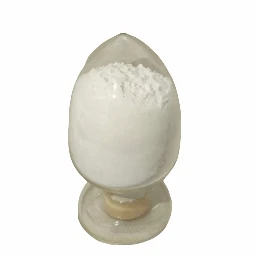
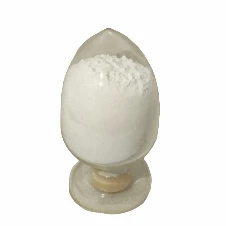
Anhydrous dysprosium chloride
Anhydrous dysprosium chloride is a high-purity compound with exceptional stability. It is used in a variety of applications, including OLED displays, nuclear power generation, and catalysts. This unique compound is known for its high melting point and low toxicity, making it an ideal choice for a range of industrial processes. With guaranteed purity levels and consistent quality, it is a reliable product for any application that demands the best in performance and reliability.
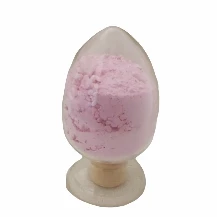
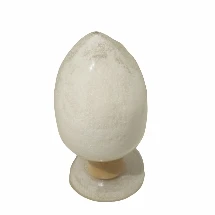
Europium Chloride Anhydrous
Europium Chloride Anhydrous is a high-quality rare earth compound that is widely used in various industries. This product is characterized by its stable performance and advanced purification process, which ensures high purity and quality. It is commonly used as a luminescent material in various optical devices, as a dopant in semiconductor production, and as a catalyst in many chemical reactions. With its excellent properties and broad application prospects, It is an essential material in modern industry.
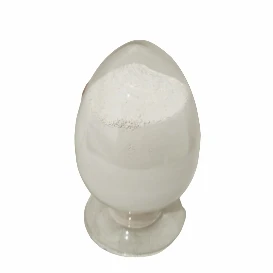
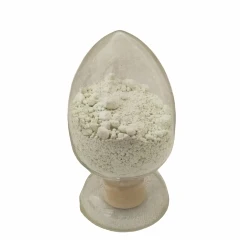
Gadolinium Chloride Anhydrous
Gadolinium Chloride Anhydrous is a high-purity, low-impurity product that is widely used in scientific research, medicine, electronics, and other fields. This product has excellent chemical stability and high solubility in water, making it an ideal material for various applications. It is widely used as a starting material for various gadolinium-based compounds, and is a key ingredient in various high-tech industries.
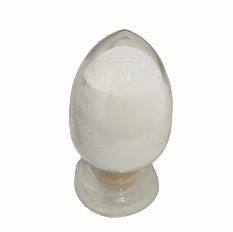
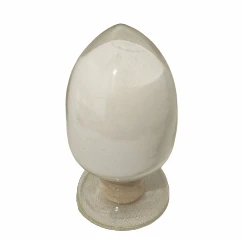
Praseodymium chloride
Praseodymium chloride is a widely used product. Our praseodymium chloride is of high purity and has excellent stability. Praseodymium chloride can be used in metallurgy, electronics and chemical manufacturing. Our product is highly rated by industry professionals. Our product has proven to be a reliable and effective choice. Trust us to provide high quality praseodymium chloride that meets and exceeds your expectations.
Application of Anhydrous Rare Earth
Chemical Properties
Anhydrous Rare Earth is widely used as catalyst and polishing agent. Due to its inertness, REE is the perfect material to remove chemical reactions by a mechanical abrasion process. For instance, cerium oxide is the best suitable material to polish glass surfaces.Lanthium based catalysts are often used in petroleum refining. Cerium based catalysts are used in automotive converter to protect environment.
Magnetic Properties
REEs show magnetic properties due to their atomic structures. Samarium, neodymium and praseodymium are ideal materials to make permanent magnets used in automotive systems such as power seats, audio speakers and etc. Neodymium-iron-boron magnet is the strongest magnet and is useful in space limiting environment. Samarium-cobalt magnet shows good performance under high temperature and it is widely used in military field as navigation system because of its thermostability.
Electrical Properties
Anhydrous Rare Earth have narrow and sharp emission/ absorption lines. This contribute to their application in the production of television and computer screens, lasers, and high-powered batteries. Gadolinium oxide is one of most important materials used in x-ray intensifiers. Some colorful glasses use neodymium or praseodymium because of their selective absorption ability.
Why Are Anhydrous Rare Earths Important?
Anhydrous rare earth are not that rare
Despite their name, anhydrous rare earth metals aren’t all that rare. Cerium – the most abundant of the anhydrous rare earth metals – is in fact the 25th most abundant element in the world, making it as plentiful as copper. It is followed by lanthanum and neodymium; all three are more abundant than lead. The term ‘rare earth’ was coined in 1788 when a miner in ytterby, sweden, discovered an unusual black rock. The ore was called ‘rare’ as it had never been seen before and ‘earth’ because that was the 18th century geological term for rocks that could be dissolved in acid. Despite being quite plentiful in the earth’s crust, anhydrous rare earth are scattered throughout the world, so it is difficult to find a lot in one place. Although perhaps a more accurate moniker, ‘scattered earths’ doesn’t have quite the same ring to it!
Anhydrous rare earth are superior magnets
In 2021, permanent magnets accounted for the largest share of global anhydrous rare earth consumption. Why? Neodymium anhydrous rare earth magnets are the strongest type of permanent magnets made, enabling high tech gadgets to become smaller, cheaper and lighter while maintaining optimal pull strength. Their superior magnetic quality has allowed designers to improve the efficiency of multiple technologies, such as hybrid and electric vehicles, mobile phones, televisions, computers, wind turbines, loudspeakers, aircraft controls, robots, and factory automation equipment. Ever wonder how manufacturers have been able to shrink your smartphone over the years? You can thank the superior quality of anhydrous rare earth magnets for that.
Anhydrous rare earth helped create colour tv
When it comes to anhydrous rare earth, we really are wearing rose-tinted glasses. For many years, the anhydrous rare earth elements yttrium and europium were used as phosphors to help us see the colour red on tube televisions. Compounds of gadolinium and terbium were used to make yellow-green phosphors. Mixing very small amounts of these anhydrous rare earth elements into the compound served to accentuate the colour on the screen, giving it a vivid quality that was pleasing to the eye.
Anhydrous rare earth are fluorescent crime fighters
Perhaps one of the quirkiest uses of anhydrous rare earth is in crime fighting technologies such as anti-counterfeiting. Anhydrous rare earth compounds dysprosium, europium and terbium are fluorescent under ultraviolet light, making them incredibly useful in the anti-counterfeiting industry. When small amounts of these specific anhydrous rare earth metals are mixed into genuine products, it is easy to identify counterfeit products when illuminated under an ultraviolet light. Not all heroes wear capes…Some wear fluorescent capes.

Anhydrous rare earths are very chemically active. When reacting with oxygen, a highly stable R2O3 type oxide (R represents rare earth metal) is formed. Cerium, praseodymium, and terbium also generate CeO2, Pr6O11, PrO2, Tb4O7, and TbO2 type oxides. Their standard heat of formation and negative standard free enthalpy are greater than those of calcium, aluminum, and magnesium oxides. The melting point of rare earth metal oxides is above 2000°C. Europium has the largest atomic radius and the most active properties. It immediately loses its metallic luster when exposed to air at room temperature and is quickly oxidized into powder. Lanthanum, cerium, praseodymium, and neodymium are also easily oxidized, forming an oxide film on the surface. Metals yttrium, gadolinium, and lutetium have strong corrosion resistance and can maintain their metallic luster for a long time. Rare earth metals can react with water at different rates. Europium reacts violently with cold water to release hydrogen.
How to Choose Anhydrous Rare Earth
Purity
Purity is an important factor affecting the quality of anhydrous rare earths. High-purity anhydrous rare earths have higher performance and wider application range.
Particle size
Particle size is the size of anhydrous rare earth particles. Anhydrous rare earths of different particle sizes have different applications in the preparation of high-performance materials and catalysts.
Form
Anhydrous rare earths come in many forms, such as powder, block, film, etc. Different forms have different physical and chemical properties, so different forms need to be selected according to usage scenarios.
Separation and Purification of Anhydrous Rare Earth
Chemical method
There are fractional crystallization method, fractional precipitation method and selective redox method. The first two separation methods have been replaced by ion exchange and organic solvent extraction. The selective redox method is based on the fact that some rare earth metals can be oxidized to the +4 valence state (Ce, Pr, Tb) or reduced to the +2 valence state (Sm, Eu, Yb), and their chemical properties are obviously different from those of the +3 valence rare earth metals. difference. The purpose of separation can be achieved by utilizing the different redox potentials of rare earth metals. The oxidation of cerium and the reduction and separation of samarium, europium and ytterbium are still widely used.
Ion exchange method
An effective method for separating high-purity single rare earths. The slight difference in the stability constants of rare earth complexes is used to cause the rare earth ions to undergo an exchange reaction on the resin bed, resulting in an uninterrupted desorption-adsorption process, thereby developing rare earth bands with different enrichment levels in different parts of the resin bed, and finally reaching separate purposes. The mixed rare earth ions are loaded on an ion exchange column equipped with sulfonated polystyrene-divinylbenzene resin, and are eluted with an aminocarboxylic complexing agent. In order to allow the separated rare earth ions to have sufficient exchange times on the resin bed and prevent the rare earth complex ions from quickly passing through the resin bed, delaying ions must be used (it can make the rare earth ions desorbed from the upper end of the rare earth band adsorbed on the resin again ), plays a blocking role to ensure effective separation. Commonly used delaying ions include Cu2+-H+, H+, etc.
Solvent extraction method
It has the characteristics of large scale and continuity, and is an important method for grouping or separating rare earth elements. In certain extraction systems and equipment, rare earth salts undergo multiple contact and redistribution between the organic phase and the aqueous phase to achieve multi-element grouping and single element separation. The extraction agents used include oxygen-containing solvents (ketones, ethers, alcohols, ester compounds), phosphorus (such as tributyl phosphate, di-2-ethylhexyl phosphate), amines (trialkylamine, chlorinated Trialkylamines), carboxylic acids (fatty acids, naphthenic acids) and chelating extractants that can form chelates with metal ions. The extraction equipment used include mixed-clarification extractors, extraction towers and centrifugal extractors.
How to Store Anhydrous Rare Earth
Packaging and storage method
This storage method is suitable for small particle materials such as anhydrous rare earth powder. After the rare earth is made into powder, it is put into a glass bottle or a plastic bottle, and then sealed with sealant to prevent oxidation and moisture. The advantages of this storage method are simple method, low cost, and easy operation. However, it has certain risks for some active anhydrous rare earth elements such as cerium and lanthanum.
Helium storage method
This storage method is suitable for anhydrous rare earth elements in the elemental state. Pour helium gas into a sealed container, put the rare earth elements into it, and seal it to ensure the purity and stability of the rare earth elements. The advantage of this storage method is that it has good stability and can be stored for a long time, but the cost is relatively high and it is not suitable for large-scale application.
Gadolinium manganese magnet storage method
This storage method is suitable for rare earths in elemental or compound state. After the anhydrous rare earth and gadolinium manganese magnets are evenly mixed, they are sintered under high pressure to form a magnet storage. The advantage of this storage method is that it can store a large amount of anhydrous rare earths in a centralized manner, and it has the advantages of maintaining high purity and good stability of rare earths, but it is also relatively difficult to operate.
Our Factory
Beijing FreeRun Technology Co.,Ltd. was established in 2020. It is located in Shandong Province, an important industrial province in China and one of China's rare earth mineral production areas. Its main products are polishing powder/liquid in semiconductors, optics and other fields, as well as nano rare earths and anhydrous rare earths. , the company integrates rare earth R&D, production and sales.The company's products include high-purity nano rare earth oxides, rare earth polishing powders, precision polishing fluids, rare earth compounds, anhydrous rare earth and other new rare earth materials. The company will provide high-quality products and services in the fields of semiconductor CMP, semiconductor ceramics, aerospace power systems, military guidance, electric vehicles, new energy, petroleum fission, grinding/precision polishing, pharmaceutical chemicals, electronic materials and other fields.
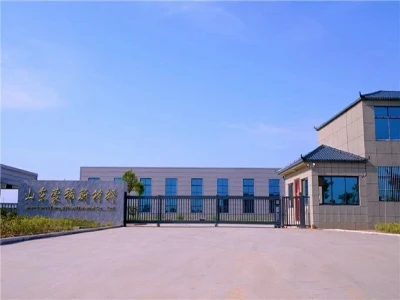

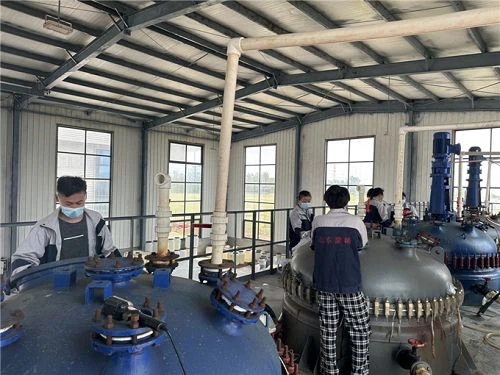
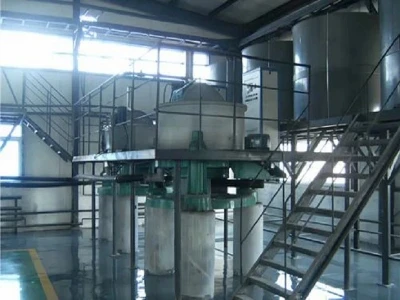
certificate


FAQ
Q: What are the 8 rare earth elements?
Q: What are rare earth oxides used for?
Q: What is rare earth mineral used for?
Q: Is zirconium a rare earth element?
Q: What is earth's rarest element?
Astatine is a chemical element; it has symbol At and atomic number 85. It is the rarest naturally occurring element in the Earth's crust, occurring only as the decay product of various heavier elements.
Q: What is the most useful rare earth element?
In the light REEs category, neodymium has the highest number of uses. For one, you can use it on mobile phones, medical equipment, and electric cars. It's the best rare metal for making permanent magnets. Neodymium magnets are strong and highly useful when weight and space are limiting factors.
Q: Which country has the most rare earth?
According to estimates, the total worldwide reserves of rare earths amount to approximately 110 million metric tons. Most of these reserves are located within China, estimated at some 44 million metric tons. After China, the major rare earth countries based on reserve volume are Vietnam, Russia, and Brazil.
Q: Is gold a rare earth metal?
Q: Why does China control rare earth metals?
Q: Does the US have any rare earth minerals?
Q: Is zirconium rarer than diamond?
Q: What are the disadvantages of rare earth?
Q: What are the problems with rare earth mining?
Q: What can you do with rare earth?
Q: How long until we run out of rare earth minerals?
Q: How toxic are rare earth metals?
Q: What are the risks of rare earth?
Q: Why does China have all the rare earth metals?
Q: Does the US have rare earth minerals?
Q: What is the future of rare earths?
We're professional anhydrous rare earth manufacturers and suppliers in China, specialized in providing high quality customized service. We warmly welcome you to wholesale anhydrous rare earth at competitive price from our factory. Contact us for pricelist.