

Thulium nitrate, a compound with the chemical formula Tm(NO₃)₃, has been a subject of growing interest in various scientific and industrial fields. As a supplier of thulium nitrate, I've witnessed firsthand the increasing inquiries about its potential applications, especially in optical materials. In this blog post, I'll delve into the properties of thulium nitrate and explore whether it can indeed be used in optical materials.
Properties of Thulium Nitrate
Thulium nitrate is a rare - earth metal nitrate. Rare - earth metals are known for their unique electronic structures, which give rise to a variety of optical, magnetic, and catalytic properties. Thulium, in particular, has a partially filled 4f electron shell. This characteristic allows it to exhibit interesting optical transitions.
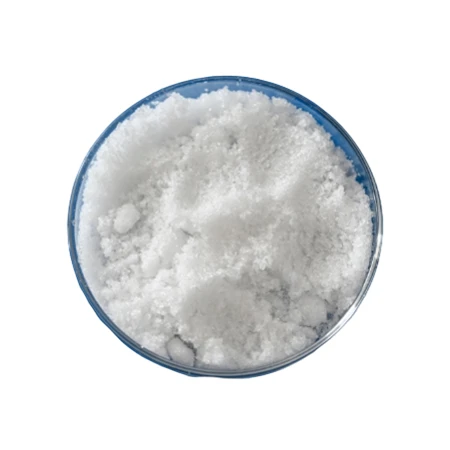
Thulium nitrate is typically a white crystalline solid that is highly soluble in water. It can be synthesized through the reaction of thulium oxide or thulium hydroxide with nitric acid. The compound is stable under normal conditions but should be stored away from heat, moisture, and reducing agents to prevent decomposition.
Optical Properties of Thulium
The optical properties of thulium are mainly due to the f - f transitions within its 4f electron shell. These transitions are relatively sharp and occur in specific wavelength regions. Thulium ions can absorb and emit light at various wavelengths, making them potentially useful in optical applications.
One of the most notable optical features of thulium is its ability to emit blue and infrared light. In the blue region, thulium - doped materials can be used to produce blue - emitting phosphors. These phosphors are essential in display technologies, such as in the production of blue pixels in LED displays. For infrared applications, thulium - based materials can be used in lasers. Thulium - doped fiber lasers, for example, operate in the 1.8 - 2.1 μm wavelength range, which is useful for medical applications, such as laser surgery, and in remote sensing.
Thulium Nitrate in Optical Materials
Phosphors
As mentioned earlier, thulium can be used to create blue - emitting phosphors. Thulium nitrate can serve as a precursor for the synthesis of these phosphors. When thulium nitrate is incorporated into a host material, such as a metal oxide or a silicate, and then subjected to high - temperature annealing, the thulium ions are incorporated into the crystal lattice of the host.
The host material provides a stable environment for the thulium ions, allowing them to undergo the necessary f - f transitions. The resulting phosphor can be used in lighting applications, such as in fluorescent lamps and white LEDs. In white LEDs, blue - emitting phosphors are combined with yellow - emitting phosphors (usually based on cerium - doped yttrium aluminum garnet) to produce white light. The use of thulium - based blue phosphors can potentially improve the color rendering index of white LEDs, making the light appear more natural.
Optical Fibers
Thulium nitrate can also be used in the production of optical fibers. Thulium - doped optical fibers are used in fiber lasers and amplifiers. When thulium nitrate is used as a dopant source, it can be added to the pre - form of the optical fiber during the manufacturing process.
The thulium ions in the fiber can absorb pump light, usually from a laser diode, and then emit light at the desired wavelength. Thulium - doped fiber lasers have several advantages, including high efficiency, good beam quality, and the ability to operate in the eye - safe wavelength range. These lasers are used in a wide range of applications, from telecommunications to materials processing.
Waveguides
Thulium - doped waveguides are another potential application of thulium nitrate in optical materials. Waveguides are structures that can confine and guide light. Thulium - doped waveguides can be fabricated using various techniques, such as ion implantation or thin - film deposition.
These waveguides can be used in integrated optical circuits, which are essential for the development of high - speed optical communication systems. Thulium - doped waveguides can act as amplifiers or lasers within the integrated circuit, allowing for the amplification and generation of optical signals on a chip - scale.
Comparison with Other Rare - Earth Nitrates
When considering the use of thulium nitrate in optical materials, it's also important to compare it with other rare - earth nitrates. For example, Praseodymium Nitrate is another rare - earth nitrate that can be used in optical applications. Praseodymium - doped materials can emit light in the green and red regions, which are useful for display and lighting applications.
Europium Iii Nitrate is well - known for its red - emitting properties. Europium - doped phosphors are widely used in red - emitting LEDs and in cathode - ray tubes. Gadolinium Nitrate can also be used in optical materials, especially in the production of scintillators, which are used in radiation detection.
Each rare - earth nitrate has its own unique optical properties, and the choice of which to use depends on the specific requirements of the application. Thulium nitrate offers the advantage of blue and infrared emission, which may not be available with other rare - earth nitrates.
Challenges and Considerations
While thulium nitrate shows great potential in optical materials, there are also some challenges and considerations. One of the main challenges is the cost. Thulium is a relatively rare element, and the production of thulium nitrate can be expensive. This cost factor may limit its widespread use in some applications.
Another challenge is the synthesis process. The incorporation of thulium nitrate into optical materials requires precise control of the synthesis conditions. For example, the annealing temperature and time need to be carefully optimized to ensure that the thulium ions are properly incorporated into the host material and that the desired optical properties are achieved.

Conclusion
In conclusion, thulium nitrate can indeed be used in optical materials. Its unique optical properties, such as blue and infrared emission, make it suitable for a variety of applications, including phosphors, optical fibers, and waveguides. While there are challenges, such as cost and synthesis complexity, the potential benefits of using thulium nitrate in optical materials are significant.
If you are interested in exploring the use of thulium nitrate in your optical projects or have any questions about our thulium nitrate products, please feel free to contact us for a detailed discussion and to initiate a procurement negotiation. We are committed to providing high - quality thulium nitrate and excellent technical support to meet your specific needs.
References
- "Rare Earth Elements: Fundamentals and Applications" by J. Bünzli and C. Piguet.
- "Optical Properties of Lanthanides in Solids" by A. A. Kaminskii.
- "Fiber Lasers: Principles and Applications" by D. J. Richardson, J. Nilsson, and W. A. Clarkson.