

Dysprosium(III) oxide is a chemical substance also known as dysprosium oxide. Its molecular formula is Dy2O3, and the molecule contains 3 oxygen atoms, 3 dysprosium atoms, and 24 electrons. Among them, the molecular structure of dysprosium (III) oxide is composed of multiple ion pairs and the oxonate structure of the ions, and 9 oxygen atoms are bonded with single bonds to form a cubic oxonate structure.The crystal structure of needle-shaped dysprosium (III) oxide is amorphous, its melting point ranges from 2330 to 2350°C, and its physical state is white crystalline powder. It is insoluble in water, but soluble in acid and ethanol.
Why Choose Us
Company Certificate
It has quality management system certification, environmental management system certification, occupational health and safety management system certification, innovation and entrepreneurship competition awards, quality and trustworthiness certificate, service and trustworthiness certificate, quality service integrity unit certificate.
Professional Team
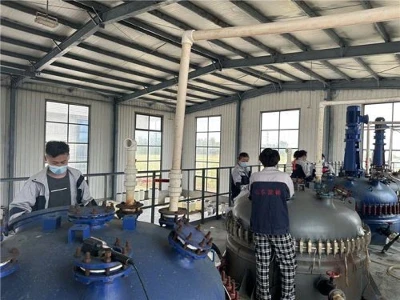
The company has a professional team, which is one of the company's most valuable assets. Team members all have deep chemical engineering expertise and rich industry experience, and can provide customers with high-quality products and professional technical support.
Trade cooperation
At the same time, the company conducts trade cooperation with Europe, the United States, Japan, South Korea, the Middle East and other regions to increase sales performance, enhance brand influence, and strive to become a well-known enterprise of new rare earth materials in China.
Company strength
China's proven industrial reserves of rare earths are 52 million tons, accounting for about 50% of the world's total. China is the country with the richest rare earth resources and a complete range of mineral types.
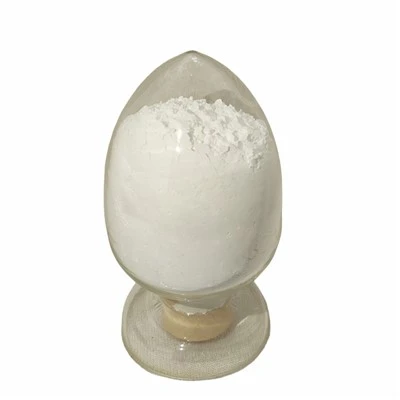

Dysprosium Oxide has similar properties to some rare-earth elements. These properties are responsible for its classification as a rare-earth element. However, it also has some properties that differentiate it from other rare-earth elements and make it unique.
Like other elements, its periodicity is responsible for its properties. In the periodic table, dysprosium belongs to period 6, f-block. Also, it is solid at room temperature. Its melting point is 1680 K, and its boiling point is 2840 K.
It features a lattice structure that is hexagonal and densely packed. Additionally, it possesses a powerful magnetic field. It is paramagnetic at roughly 179 K, antiferromagnetic between 87 and 90 K, and ferromagnetic between 87 and 90 K.
It has an atomic mass of 162.5 Like most metals, its density varies with its state. When it is solid, its density is 8.54 g/cm3. However, when it is liquid, its density decreases to 8.37 g/cm3. Dysprosium is electropositive, and its oxidation state is +3. As regards its chemical properties, it tarnishes slowly in a humid atmosphere, it is highly reactive with halogens at temperatures above 473 K, and it is easily soluble in H2SO4.
Application of Dysprosium Oxide
Dysprosium Oxide Used in Magneto-optic Recording
Magneto-Optic (MO) recording is a technique to write, read, erase, and store data using a laser and a magnet. Materials suitable for magneto-optical recording applications include magnetic oxides, metallic Pt-Co and Pd-Co multilayers, and magnetic alloys. Dysprosium Oxide powder is used as a magnetic oxide in magneto-optic Recording.
Dysprosium Oxide Used as The Luminescent Material
Luminescent materials refer to material that emits light during the process of returning from an excited state to a ground state after being excited by external energy. They are widely used in our daily life, as you can see in fluorescent lamps, plasma televisions, DVD players, etc. Most rare earth materials can be used as luminescent materials, and so can dysprosium oxide.
Dysprosium Oxide Used to Make Control Rod
A control rod is a device used to absorb neutrons and also to control the speed of the chain reaction. Commonly used control rod materials contain chemical elements such as boron, cadmium, silver, hafnium or indium. In addition, most rare earth elements, such as dysprosium, samarium, europium, gadolinium, terbium, ytterbium, and lutetium, are excellent neutron absorbers and are also used to make control rods.Dysprosium titanate has a high melting point, is easy to produce, does not produce radioactive substances, does not expand and does not outgas, and is a material that can potentially replace Ag-In-Cd alloys as pressurized water control rods.
Dysprosium Oxide Used as Rare Earth Based Catalyst
Rare earth oxides have become ubiquitous materials in catalytic systems, and small additions of rare earth can provide beneficial effects to various catalytic systems. They are widely used as catalysts and also as supports for various metal-containing catalytically active phases, for example, dysprosium oxide can be used as a reinforcing agent for ceramic materials for high-temperature applications.
Types of Salt and Salt and Pepper Grinder

Technical grade dysprosium oxide
This is a lower purity form of dysprosium oxide that is primarily used as a starting material for the production of other dysprosium compounds or as an additive in the production of high-performance magnets. It may contain impurities and byproducts from the manufacturing process.

Pure dysprosium oxide
This is a higher purity form of dysprosium oxide that meets stringent purity standards and is suitable for use in applications that require high purity materials. It is often used as a dopant in the semiconductor industry or as a catalyst in the production of other chemicals.
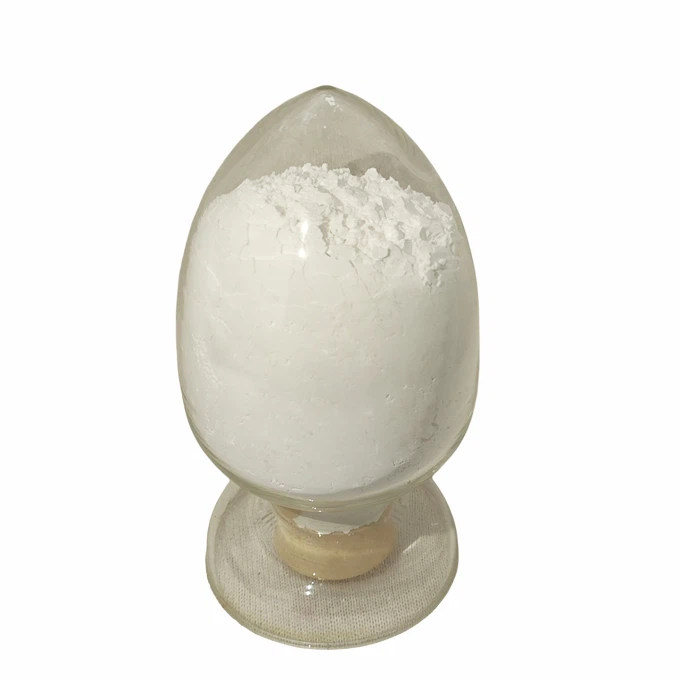
Dysprosium oxide nanoparticles
These are very small particles of dysprosium oxide that are typically less than 100 nanometers in size. Dysprosium oxide nanoparticles have unique physical and chemical properties that make them useful in a variety of applications, including as catalysts, in solid-state lasers, and in the production of high-performance magnets.
The Function of Dysprosium Oxide
Chemical formula and potential
The chemical formula of acicular dysprosium oxide is Dy2O3, and its potential is unstable 372.9982.
Appearance and color
Acicular dysprosium oxide is a white casting powder.
Melting point and density
Its melting point range is roughly between 2330~2350℃, and the relative density is about 7.81.
Solubility
Acicular dysprosium oxide is insoluble in water, but soluble in acid and ethanol.
Chemical properties
Acicular dysprosium oxide is a hydrophilic oxide that can react with water to form strongly alkaline dysprosium hydroxide, and can also react with acids to form corresponding salts. In addition, because it contains rare earth elements, the chemical properties of needle-shaped dysprosium oxide are relatively active and prone to chemical reactions.
Toxicity
Acicular dysprosium oxide has certain toxicity and toxicity, and has a certain irritating effect on the human respiratory system and skin. Long-term exposure may cause the rare earth elements in dysprosium oxide to accumulate in the human body, causing chronic poisoning.
How to Choose Dysprosium Oxide
Purity
Purity is one of the main factors affecting the performance of dysprosium oxide. High-purity dysprosium oxide has better photoelectromagnetic properties and wider application fields.
Particle size
Particle size is also an important indicator of dysprosium oxide. Different particle sizes of dysprosium oxide have different application requirements. For example, fine-grained dysprosium oxide can be used as an additive for ceramics, glass and other materials, while coarse-grained dysprosium oxide can be used to prepare advanced optical components.
Origin
The quality of dysprosium oxide will vary from different origins. Generally speaking, the products of well-known domestic rare earth companies are more reliable.
Process of Dysprosium Oxide
Extraction
Dysprosium oxide is not found naturally in its pure form and must be extracted from dysprosium-bearing minerals such as monazite, bastnaesite, and xenotime. The first step in the production process involves mining these minerals and then milling them to a fine powder. The dysprosium is then separated from the other elements present in the ore through a series of chemical separation processes, including solvent extraction and ion exchange.
Purification
The purified dysprosium is then further purified through a series of refining steps to remove any impurities or contaminants. This may involve processes such as distillation, electrolysis, or crystallization.
Oxidation
Once the dysprosium has been purified, it is then oxidized to form dysprosium oxide. This typically involves heating the dysprosium in the presence of oxygen, or by reacting it with a strong oxidizing agent such as peroxide or nitric acid. The resulting dysprosium oxide is then purified through further refining steps to remove any impurities or byproducts.It is important to note that the production of dysprosium oxide involves the handling of hazardous chemicals and requires specialized equipment and trained personnel. It should be carried out in a well-ventilated area with appropriate safety measures in place.
Recommendations for The Safe Use of Dysprosium Oxide
Avoid long-term contact
Dysprosium oxide is easy to form dust, so long-term contact should be avoided during use, let alone direct inhalation.
Storage requirements
Dysprosium oxide needs to be placed in a well-ventilated place, away from direct sunlight and moisture.
Precautions for use
When using dysprosium oxide, wear protective clothing, gas masks and gloves to avoid possible harm.
Emergency measures
When encountering dysprosium oxide leakage or accidents, emergency measures must be taken immediately, such as evacuating personnel, cutting off power, etc.
Our Factory
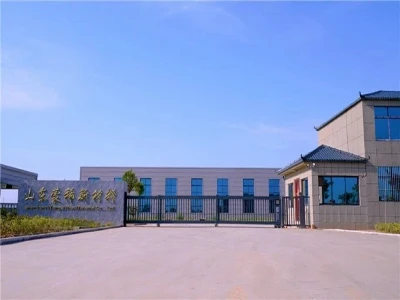
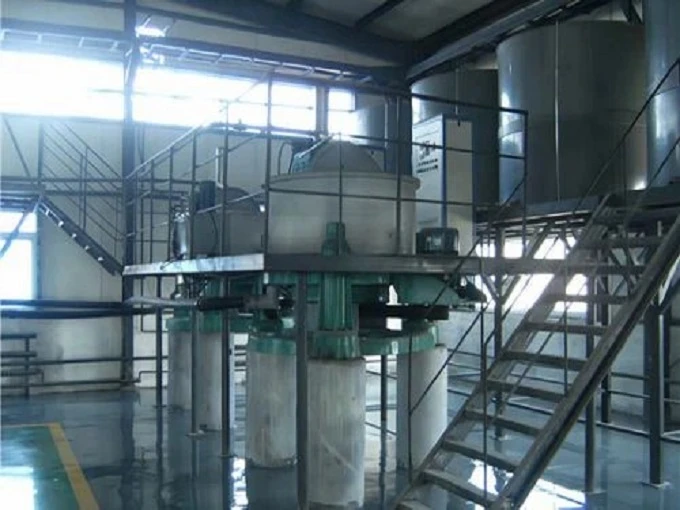
Beijing FreeRun Technology Co.,Ltd. was established in 2020. It is located in Shandong Province, an important industrial province in China and one of China's rare earth mineral production areas. Its main products are polishing powder/liquid in semiconductors, optics and other fields, as well as nano rare earths and anhydrous rare earths. , the company integrates rare earth R&D, production and sales.The company's products include high-purity nano rare earth oxides, rare earth polishing powders, precision polishing fluids, rare earth compounds, anhydrous rare earth and other new rare earth materials. The company will provide high-quality products and services in the fields of semiconductor CMP, semiconductor ceramics, aerospace power systems, military guidance, electric vehicles, new energy, petroleum fission, grinding/precision polishing, pharmaceutical chemicals, electronic materials and other fields.

certificate


FAQ
Q: What are the potential effects of the toxicity and radioactivity of acicular dysprosium oxide on the human body?
Q: What is the market demand and supply situation of needle-shaped dysprosium oxide?
Q: How to ensure the safe use and storage of needle-shaped dysprosium oxide?
Q: What is the production process of needle-shaped dysprosium oxide?
Q: What is dysprosium oxide used for?
Q: What do humans use dysprosium for?
Q: What is Dy used for?
Q: Is dysprosium explosive?
Q: Is dysprosium toxic to humans?
Q: What foods contain dysprosium?
Q: Where is dysprosium most commonly found?
Q: Where can I find dysprosium?
Q: What is the use of dysprosium oxide?
Q: What reacts with dysprosium?
Dysprosium is chiefly obtained from bastnasite and monazite, where it occurs as an impurity. Other dysprosium-bearing minerals include euxenite, fergusonite, gadolinite and polycrase. It is mined in the USA, China Russia, Australia, and India.
Q: What are some fun facts about dysprosium?
Q: Is dysprosium magnetic?
Q: Is dysprosium used in magnets?
Q: What is the magnetic moment of dysprosium?
Q: Where is dysprosium mined in the world?
Q: What are the magnetic properties of dysprosium?
We're professional dysprosium oxide manufacturers and suppliers in China, specialized in providing high quality customized service. We warmly welcome you to wholesale dysprosium oxide at competitive price from our factory. Contact us for pricelist.