

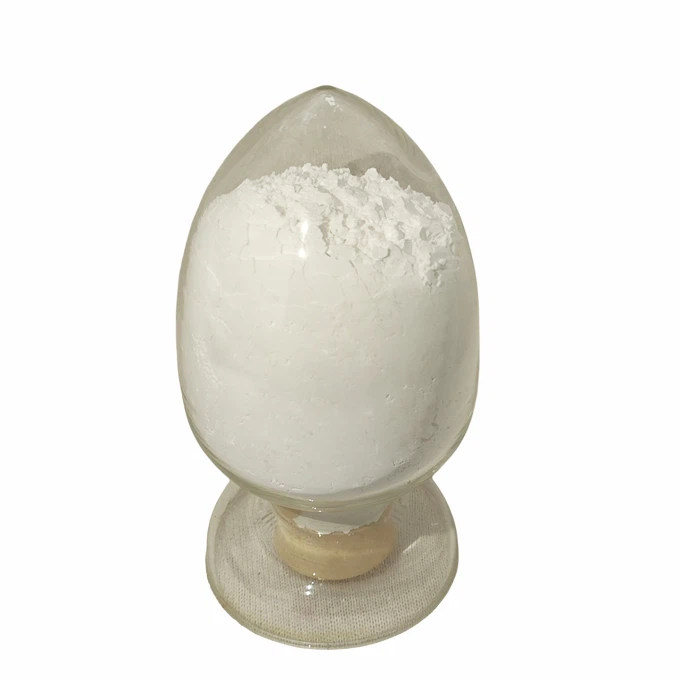
As a supplier of yttrium oxide, I've witnessed firsthand the growing interest in its remarkable properties, especially its radiation - resistance capabilities. Yttrium oxide, also known as yttria, is a white, odorless powder that has found numerous applications in high - tech industries due to its unique characteristics. In this blog, I will delve into the radiation - resistance properties of yttrium oxide and explore how these features make it a valuable material in various fields.

What is Yttrium Oxide?
Yttrium oxide (Y₂O₃) is an inorganic compound composed of yttrium and oxygen. It is a rare - earth metal oxide that has excellent thermal stability, high melting point, and good chemical resistance. There are different forms of yttrium oxide available in the market, such as Yttrium Iii Oxide, Yttrium Oxide Powder, and Nano Yttrium Oxide. Each form has its own set of advantages and applications based on its particle size, purity, and other physical properties.
Radiation - Resistance Mechanisms of Yttrium Oxide
The radiation - resistance of yttrium oxide can be attributed to several factors. Firstly, its crystal structure plays a crucial role. Yttrium oxide has a cubic crystal structure, which provides a stable lattice framework. This structure can effectively absorb and dissipate the energy of radiation particles. When high - energy radiation, such as gamma rays or neutrons, interacts with yttrium oxide, the lattice can withstand the impact and prevent the formation of long - term defects.
Secondly, the electronic properties of yttrium oxide contribute to its radiation - resistance. Yttrium has a relatively large atomic number, and its electrons can interact with radiation in a way that reduces the penetration and damage caused by the radiation. The electrons in yttrium oxide can scatter the radiation particles, thereby reducing their energy and the extent of damage to the material.
Applications of Yttrium Oxide's Radiation - Resistance
Nuclear Industry
In the nuclear industry, radiation protection is of utmost importance. Yttrium oxide is used in the construction of nuclear reactors and other nuclear facilities. It can be incorporated into shielding materials to protect workers and the environment from harmful radiation. For example, yttrium oxide - based ceramics can be used as a lining for nuclear reactors. These ceramics can absorb neutrons and gamma rays, reducing the radiation leakage and protecting the surrounding areas.
Space Technology
Space is filled with various types of radiation, including cosmic rays and solar flares. Yttrium oxide is used in space applications to protect sensitive electronic components and astronauts. Electronic devices in satellites and spacecraft are often coated with yttrium oxide - based materials to shield them from radiation damage. This helps to ensure the reliable operation of these devices in the harsh space environment.
Medical Field
In the medical field, radiation therapy is a common treatment for cancer. However, the radiation used in these treatments can also cause damage to healthy tissues. Yttrium oxide can be used as a contrast agent in some medical imaging techniques. Its radiation - resistance properties also make it a potential candidate for developing materials that can protect normal tissues during radiation therapy.
Factors Affecting Yttrium Oxide's Radiation - Resistance
The radiation - resistance of yttrium oxide can be influenced by several factors. Purity is one of the most important factors. High - purity yttrium oxide generally has better radiation - resistance properties because impurities can act as sites for radiation - induced defects. The particle size also matters. Nano - sized yttrium oxide may have enhanced radiation - resistance due to its large surface - to - volume ratio, which can provide more sites for radiation energy absorption.
Another factor is the processing method. The way yttrium oxide is synthesized and processed can affect its crystal structure and density, which in turn impact its radiation - resistance. For example, sintering at high temperatures can improve the density and crystal quality of yttrium oxide ceramics, leading to better radiation - shielding performance.
Quality Control of Yttrium Oxide for Radiation - Resistance Applications
As a supplier of yttrium oxide, we pay great attention to quality control. We ensure that our yttrium oxide products meet the highest standards in terms of purity, particle size, and crystal structure. We use advanced analytical techniques, such as X - ray diffraction (XRD) and scanning electron microscopy (SEM), to characterize the properties of our products. This allows us to provide our customers with yttrium oxide that has consistent and reliable radiation - resistance properties.
Conclusion
Yttrium oxide's radiation - resistance properties make it a highly valuable material in many industries. Its ability to withstand radiation and protect against its harmful effects has opened up a wide range of applications in the nuclear, space, and medical fields. As a supplier, we are committed to providing high - quality yttrium oxide products that meet the specific requirements of our customers.
If you are interested in purchasing yttrium oxide for radiation - resistance applications or have any questions about our products, please feel free to contact us for a detailed discussion. We look forward to working with you and helping you find the best yttrium oxide solution for your needs.
References
- "Handbook of Advanced Electronic and Photonic Materials and Devices", edited by H.S. Nalwa, Academic Press, 2001.
- "Radiation Effects in Solids: Fundamentals and Applications", by James S. Williams, Wiley - VCH, 2007.
- "Rare Earth Oxides: Properties, Processing, and Applications", by A. K. Singh and R. N. Singh, CRC Press, 2013.