

Hey there! As a supplier of holmium nitrate, I often get asked about its possible decomposition products. So, I thought I'd write this blog to share what I've learned over the years.
First off, let's understand what holmium nitrate is. Holmium nitrate, with the chemical formula Ho(NO₃)₃, is a water - soluble salt. It's part of the rare - earth nitrates family, which are quite useful in various industries.
Decomposition under different conditions
Thermal decomposition
When holmium nitrate is heated, it goes through a series of decomposition steps. At relatively low temperatures, the first thing that usually happens is the loss of water molecules if it's in a hydrated form. Holmium nitrate often exists as a hydrate, like Ho(NO₃)₃·xH₂O. The water molecules start to break free as the temperature rises.
As the temperature continues to increase, the nitrate groups start to decompose. Nitrates are generally unstable at high temperatures. The nitrate ions (NO₃⁻) in holmium nitrate will break down. One of the common decomposition products is nitrogen oxides. Nitrogen dioxide (NO₂) is a well - known product. It's a reddish - brown gas with a pungent odor. The reaction can be something like this:
[2Ho(NO₃)₃ \rightarrow 2HoO₃ + 6NO₂↑+ 3O₂↑]
But this is a simplified view. In reality, the decomposition might be more complex, and there could also be the formation of nitric oxide (NO). NO is a colorless gas that quickly reacts with oxygen in the air to form NO₂.
As the decomposition progresses further, holmium nitrate will eventually form holmium oxide (Ho₂O₃). Holmium oxide is a stable compound. It has a yellow - orange color and is used in the production of specialty glasses and ceramics. It can also be used as a catalyst in some chemical reactions.
Decomposition in the presence of reducing agents
If holmium nitrate is exposed to reducing agents, the decomposition pathway changes. Reducing agents can donate electrons, which can cause the nitrate groups to be reduced in a different way. For example, in the presence of a strong reducing agent like zinc powder, the nitrate might be reduced to ammonia (NH₃). The holmium ions might form other compounds depending on the reaction conditions. It could potentially form holmium hydroxide if there is water present in the reaction system.
Comparison with other rare - earth nitrates
Let's take a look at how holmium nitrate's decomposition compares to some other rare - earth nitrates.
Thulium Nitrate has similar decomposition behavior to holmium nitrate. When heated, thulium nitrate also loses water first if it's in a hydrated form and then decomposes to form thulium oxide and nitrogen oxides. However, the specific temperatures at which these reactions occur might be slightly different due to the differences in the electronic structure of thulium and holmium.
Praseodymium Nitrate also decomposes to form praseodymium oxide and nitrogen oxides. But praseodymium has multiple oxidation states, which can make its decomposition a bit more complex. During the decomposition process, different praseodymium oxides might form depending on the reaction conditions.
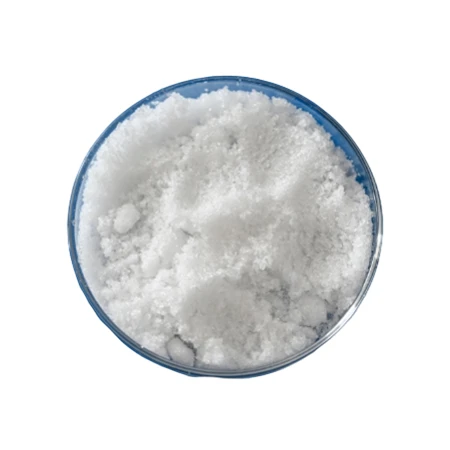

Gadolinium Nitrate follows a similar pattern as well. It decomposes thermally to form gadolinium oxide and nitrogen oxides. Gadolinium oxide has its own unique properties and is used in applications such as magnetic resonance imaging (MRI) contrast agents.
Applications related to decomposition products
The decomposition products of holmium nitrate have various applications. As mentioned earlier, holmium oxide is used in the glass and ceramic industries. It can be added to glass to give it a special color and also improve its optical properties. In ceramics, it can enhance the mechanical and thermal properties of the materials.
Nitrogen oxides, although they are pollutants in the environment, can be used in some chemical synthesis processes. For example, nitrogen dioxide can be used in the production of nitric acid through a series of reactions.
Why choose our holmium nitrate?
As a supplier, we ensure the high quality of our holmium nitrate. Our product has a high purity level, which means you can expect consistent decomposition results if you're using it in research or industrial processes. We also have a reliable supply chain, so you won't have to worry about running out of stock. Whether you're a researcher studying the decomposition mechanisms or an industrial user looking for high - quality raw materials, our holmium nitrate is a great choice.
If you're interested in purchasing holmium nitrate or have any questions about its decomposition products, don't hesitate to get in touch. We're here to help you with all your needs. Whether you need a small quantity for research or a large amount for industrial production, we can accommodate your requirements.
References
- Cotton, F. A.; Wilkinson, G.; Murillo, C. A.; Bochmann, M. (1999). Advanced Inorganic Chemistry (6th ed.). Wiley.
- Greenwood, N. N.; Earnshaw, A. (1997). Chemistry of the Elements (2nd ed.). Butterworth - Heinemann.
- Huheey, J. E.; Keiter, E. A.; Keiter, R. L. (1993). Inorganic Chemistry: Principles of Structure and Reactivity (4th ed.). HarperCollins.