

Erbium nitrate, a compound that has gained significant attention in various scientific and industrial applications, is a topic of great interest. As a supplier of erbium nitrate, I often receive inquiries about its properties, and one of the most frequently asked questions is: What is the melting point of erbium nitrate? In this blog post, I will delve into this question, exploring the science behind erbium nitrate and its melting point, as well as its applications and why it is a valuable compound in different fields.
Understanding Erbium Nitrate
Erbium nitrate is a salt composed of erbium, a rare - earth element, and nitrate ions. Its chemical formula is (Er(NO_3)_3). Rare - earth elements are a group of 17 elements in the periodic table that have unique electronic, magnetic, and optical properties. Erbium, in particular, has applications in lasers, fiber - optic amplifiers, and as a dopant in glass and ceramics.
When erbium metal reacts with nitric acid, erbium nitrate is formed. The reaction can be represented by the following chemical equation:
(2Er + 6HNO_3\rightarrow2Er(NO_3)_3+3H_2)
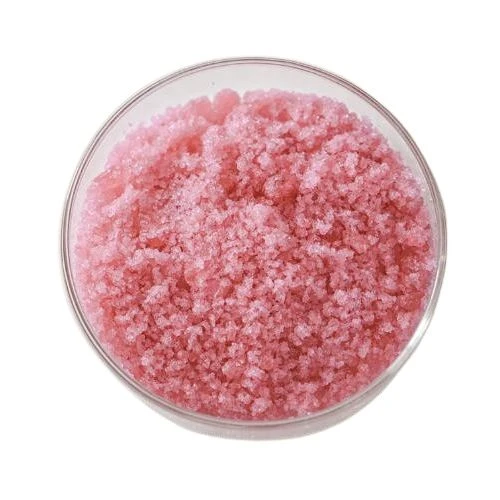
This compound is usually found in the hydrated form, such as erbium nitrate pentahydrate ((Er(NO_3)_3\cdot5H_2O)) or erbium nitrate hexahydrate ((Er(NO_3)_3\cdot6H_2O)). The water molecules in the hydrated form can significantly affect the physical properties of the compound, including its melting point.
The Melting Point of Erbium Nitrate
The melting point of a compound is the temperature at which it changes from a solid to a liquid state. For erbium nitrate, the melting point can vary depending on its hydration state.
In general, erbium nitrate hexahydrate has a melting point around 87 - 89 °C. When heated, the hydrated erbium nitrate first loses its water of crystallization. As the temperature rises further, the anhydrous erbium nitrate may decompose before reaching a true melting point. Anhydrous erbium nitrate is unstable at high temperatures and decomposes to form erbium oxide ((Er_2O_3)), nitrogen oxides, and oxygen.
The decomposition reaction can be represented as:
(4Er(NO_3)_3\rightarrow2Er_2O_3 + 12NO_2+3O_2)
This decomposition process occurs at relatively high temperatures, usually above 300 °C. It is important to note that handling erbium nitrate at high temperatures requires proper safety precautions due to the release of nitrogen oxides, which are toxic and can cause environmental pollution.
Factors Affecting the Melting Point
Several factors can influence the melting point of erbium nitrate. The degree of hydration is one of the most significant factors. As mentioned earlier, hydrated erbium nitrate has a lower melting point compared to the anhydrous form because the water molecules act as a sort of "lubricant" between the ions in the crystal lattice, making it easier for the structure to break down.
Impurities in the erbium nitrate sample can also affect the melting point. Even small amounts of impurities can disrupt the regular crystal structure of the compound, leading to a lower melting point or a broader melting range. Additionally, the pressure under which the measurement is taken can have a minor effect on the melting point, although for most practical purposes, the effect of pressure on erbium nitrate's melting point is negligible.

Applications of Erbium Nitrate
Erbium nitrate has a wide range of applications in different industries.
In the field of optics, erbium - doped fiber amplifiers (EDFAs) are widely used in telecommunications. Erbium nitrate can be used as a precursor for the preparation of erbium - doped optical fibers. When erbium ions are incorporated into the silica fiber, they can absorb light at specific wavelengths and emit light at longer wavelengths, allowing for signal amplification in optical communication systems.
In the ceramics industry, erbium nitrate can be used as a dopant to improve the properties of ceramic materials. Erbium - doped ceramics can have enhanced mechanical strength, thermal stability, and optical properties. For example, erbium - doped zirconia ceramics are used in dental applications due to their high strength and biocompatibility.
Another application is in the production of catalysts. Erbium nitrate can be used to prepare catalysts for various chemical reactions, such as oxidation and reduction reactions. The unique electronic properties of erbium ions can promote the activation of reactant molecules and increase the reaction rate.
Comparison with Other Nitrate Compounds
When comparing erbium nitrate with other rare - earth nitrates or common nitrates, we can see some differences in their properties. For example, Lithium Nitrate has a melting point of about 264 °C. Lithium nitrate is a much more stable compound compared to erbium nitrate, and it does not decompose as easily at moderate temperatures.
Yttrium Iii Nitrate Hexahydrate has a melting point similar to erbium nitrate hexahydrate. Yttrium is also a rare - earth element, and its nitrate compound shares some similarities with erbium nitrate in terms of chemical behavior and applications. However, the specific properties of each compound depend on the unique electronic configuration of the respective rare - earth element.
Our Erbium Nitrate Products
As a supplier of erbium nitrate, we offer high - quality products with different degrees of purity and hydration states. Our erbium nitrate products are carefully synthesized and purified to ensure consistent quality and performance. We have strict quality control measures in place to minimize impurities and ensure that the melting point and other physical properties meet the industry standards.
Whether you need erbium nitrate for research purposes, industrial applications, or other uses, we can provide you with the right product. Our team of experts is also available to offer technical support and answer any questions you may have about erbium nitrate.
Why Choose Our Erbium Nitrate
There are several reasons why you should choose our erbium nitrate. Firstly, we have a reliable supply chain that ensures a stable and timely delivery of products. We source high - quality raw materials and use advanced production processes to manufacture erbium nitrate with high purity.
Secondly, our products are competitively priced. We understand the cost - effectiveness requirements of our customers, and we strive to offer the best value for money without compromising on quality.
Finally, we provide excellent customer service. Our dedicated customer support team is always ready to assist you with your inquiries, from product selection to after - sales support.
Contact Us for Procurement
If you are interested in purchasing erbium nitrate, we encourage you to contact us for further discussions. We can provide you with detailed product information, pricing, and delivery options. Whether you need a small quantity for laboratory testing or a large - scale supply for industrial production, we can meet your requirements.
To learn more about our Erbium Nitrate products, please visit our website or send us an inquiry. We look forward to establishing a long - term business relationship with you.
References
- "Handbook of Chemistry and Physics". CRC Press.
- "Rare - Earth Elements: Chemistry and Applications". John Wiley & Sons.
- Research papers on erbium nitrate published in scientific journals such as "Journal of Inorganic Chemistry" and "Materials Research Bulletin".