

Yttrium oxide, with its unique chemical and physical properties, has found extensive applications in the field of phosphors. As a leading yttrium oxide supplier, I am delighted to delve into the various applications of yttrium oxide in phosphors and shed light on its significance in this domain.
1. Fundamentals of Yttrium Oxide
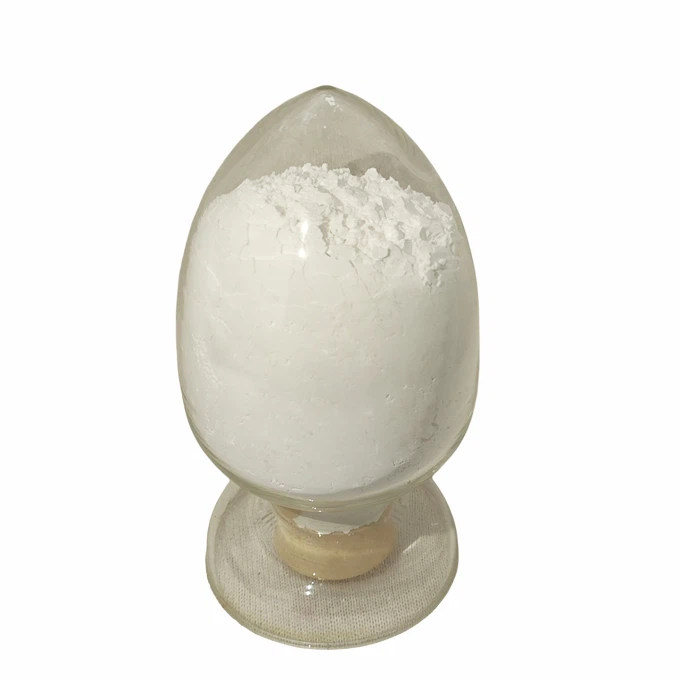
Yttrium oxide (Y₂O₃) is a white, odorless powder that is insoluble in water but soluble in strong mineral acids. It has a high melting point and excellent thermal stability, making it suitable for a wide range of high - temperature applications. The electronic structure of yttrium oxide allows it to act as an effective host material for various activators, which are crucial for the luminescent properties of phosphors.
There are different forms of yttrium oxide available in the market, such as Yttrium Iii Oxide, Yttrium Oxide Powder, and Nano Yttrium Oxide. Each form has its own characteristics and is used in different phosphor applications depending on the specific requirements.
2. Yttrium Oxide in Cathode - Ray Tube (CRT) Phosphors
In the past, CRTs were widely used in televisions and computer monitors. Yttrium oxide played a vital role in the phosphors used in these devices. When doped with europium (Eu), yttrium oxide forms a red - emitting phosphor (Y₂O₃:Eu³⁺).
The europium ions in the yttrium oxide lattice absorb the electron beam energy in the CRT. The excited europium ions then return to their ground state, emitting red light. The high brightness and color purity of Y₂O₃:Eu³⁺ made it the phosphor of choice for the red color in CRT displays. This phosphor has a narrow emission spectrum, which is essential for achieving accurate color reproduction in CRTs.

3. Yttrium Oxide in Fluorescent Lamp Phosphors
Fluorescent lamps are another area where yttrium oxide - based phosphors are widely used. In a fluorescent lamp, mercury vapor is excited by an electric discharge, producing ultraviolet (UV) light. This UV light is then absorbed by the phosphor coating on the inside of the lamp tube, which converts it into visible light.
Yttrium oxide doped with terbium (Y₂O₃:Tb³⁺) is used as a green - emitting phosphor in fluorescent lamps. Terbium ions in the yttrium oxide matrix absorb the UV light and emit green light. By combining different phosphors, including red - emitting and blue - emitting ones, white light can be produced. Yttrium oxide - based phosphors contribute to the high efficiency and good color rendering index (CRI) of fluorescent lamps.
4. Yttrium Oxide in Plasma Display Panel (PDP) Phosphors
Plasma display panels are used in large - screen televisions. In a PDP, a gas mixture is electrically excited to produce UV light, which then activates the phosphors to emit visible light.
Yttrium oxide - based phosphors are used for red, green, and blue emissions in PDPs. For red emission, Y₂O₃:Eu³⁺ is still a popular choice due to its excellent red - emitting properties. For green emission, Y₂O₃:Tb³⁺ can be used. These phosphors need to have high luminous efficiency, fast response times, and good stability under the high - energy plasma environment.
5. Yttrium Oxide in LED Phosphors
Light - emitting diodes (LEDs) are the future of lighting technology. Yttrium oxide - based phosphors are also making their mark in this field. One of the most common applications is in white LEDs.
A blue LED chip can be combined with a yellow - emitting phosphor to produce white light. Yttrium aluminum garnet (YAG) doped with cerium (Y₃Al₅O₁₂:Ce³⁺) is a well - known phosphor for this purpose. Yttrium oxide is an important raw material in the synthesis of YAG. The YAG:Ce³⁺ phosphor absorbs the blue light from the LED chip and emits yellow light. The combination of blue and yellow light results in white light.
Moreover, for high - color - rendering white LEDs, multiple phosphors are used. Yttrium oxide - based red - emitting phosphors can be added to improve the color rendering of white LEDs, especially in the red region of the spectrum.
6. Yttrium Oxide in Scintillator Phosphors
Scintillator phosphors are used in radiation detection applications, such as in medical imaging (e.g., X - ray detectors) and high - energy physics experiments.
Yttrium oxide - based scintillators, such as yttrium aluminum perovskite (YAP) and yttrium orthosilicate (YSO), are used. These materials can convert high - energy radiation (such as X - rays or gamma rays) into visible light, which can then be detected by photodetectors. The high density and good scintillation properties of yttrium oxide - based scintillators make them suitable for these applications.
7. Advantages of Using Yttrium Oxide in Phosphors
- High Luminous Efficiency: Yttrium oxide - based phosphors can convert a large proportion of the absorbed energy into visible light, resulting in high - efficiency lighting and display devices.
- Good Color Purity: The narrow emission spectra of yttrium oxide - doped phosphors allow for accurate color reproduction, which is crucial in applications such as displays and lighting.
- Thermal and Chemical Stability: Yttrium oxide has high thermal and chemical stability, which means that the phosphors can maintain their performance over a long period of time, even under harsh conditions.
- Versatility: By doping yttrium oxide with different activators, phosphors with different emission colors can be obtained, making it suitable for a wide range of applications.
8. Our Role as a Yttrium Oxide Supplier
As a yttrium oxide supplier, we are committed to providing high - quality yttrium oxide products for the phosphor industry. We have strict quality control measures in place to ensure that our yttrium oxide meets the specific requirements of our customers.
Our Yttrium Iii Oxide, Yttrium Oxide Powder, and Nano Yttrium Oxide are produced using advanced manufacturing processes, resulting in products with consistent quality and performance. We also offer technical support to our customers, helping them to select the most suitable yttrium oxide products for their specific phosphor applications.
If you are in the phosphor industry and are looking for a reliable yttrium oxide supplier, we would be more than happy to discuss your requirements. Whether you need yttrium oxide for CRTs, fluorescent lamps, PDPs, LEDs, or scintillators, we have the products and expertise to meet your needs. Contact us today to start a fruitful business relationship.
References
- Blasse, G., & Grabmaier, B. C. (1994). Luminescent Materials. Springer - Verlag.
- Shionoya, S., & Yen, W. M. (1999). Phosphor Handbook. CRC Press.
- Srivastava, A. M. (2009). Oxide Phosphors for Solid - State Lighting. Wiley - VCH.