

Hey there! As a supplier of yttrium oxide, I've been getting a lot of questions lately about how yttrium oxide interacts with other metal oxides. So, I thought I'd take a moment to delve into this topic and share some insights with you all.

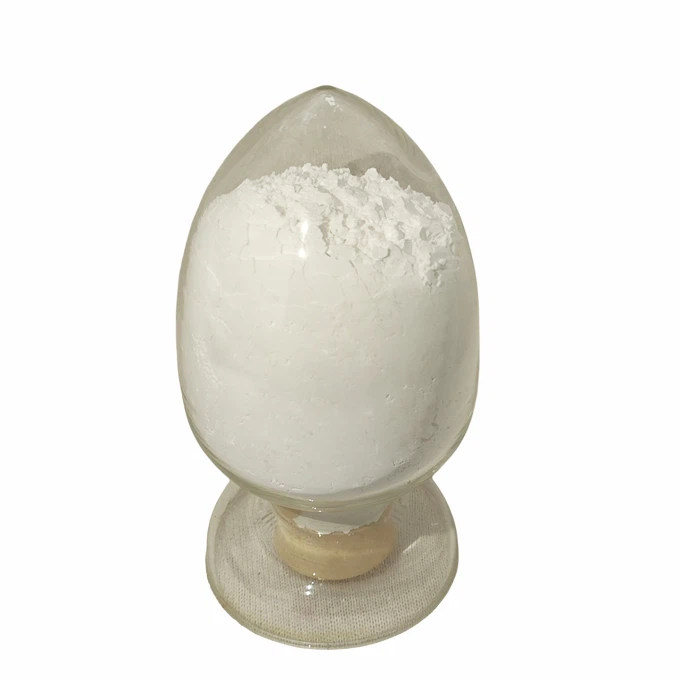
First off, let's talk a bit about yttrium oxide itself. Yttrium oxide, also known as yttria, is a white, odorless powder. It's a rare - earth metal oxide that has a bunch of cool properties and uses. You can find different types of yttrium oxide on our website, like Nano Yttrium Oxide, Yttrium Iii Oxide, and Yttrium Oxide Powder.
Now, when it comes to how yttrium oxide interacts with other metal oxides, there are several ways this can happen, and it really depends on the specific metal oxide it's paired with and the conditions under which they interact.
Solid - State Reactions
One of the most common ways yttrium oxide interacts with other metal oxides is through solid - state reactions. In these reactions, the yttrium oxide and the other metal oxide are heated together at high temperatures. For example, when yttrium oxide reacts with zirconium dioxide (ZrO₂), they form a solid - solution called yttria - stabilized zirconia (YSZ).
The way this works is that some of the yttrium ions (Y³⁺) replace the zirconium ions (Zr⁴⁺) in the zirconium dioxide lattice. Since yttrium has a lower charge than zirconium, this creates oxygen vacancies in the lattice. These oxygen vacancies are super important because they allow oxygen ions to move more easily through the material. YSZ is widely used in solid oxide fuel cells (SOFCs) because of its high oxygen ion conductivity at elevated temperatures.
Formation of Complex Oxides
Yttrium oxide can also react with other metal oxides to form complex oxides. For instance, when yttrium oxide reacts with iron oxide (Fe₂O₃) and barium oxide (BaO), it can form yttrium - barium - copper - oxide (YBCO), which is a well - known high - temperature superconductor.
The reaction to form YBCO is a complex process that involves carefully controlling the stoichiometry and the reaction conditions. The yttrium, barium, and copper ions arrange themselves in a specific crystal structure, and at low enough temperatures, this material can conduct electricity without any resistance. This property has huge implications for things like power transmission and magnetic levitation.
Catalytic Interactions
Yttrium oxide can act as a catalyst or a promoter in reactions involving other metal oxides. For example, in some oxidation reactions, yttrium oxide can enhance the catalytic activity of other metal oxides like manganese oxide (MnO₂).
The yttrium oxide can influence the surface properties of the manganese oxide, such as the number of active sites and the oxidation state of the manganese ions. This can lead to an increase in the reaction rate and selectivity of the oxidation reaction. In the chemical industry, these types of catalytic interactions are crucial for producing a wide range of products more efficiently.
Influence on Physical Properties
When yttrium oxide is mixed with other metal oxides, it can also have a significant impact on the physical properties of the resulting material. For example, adding yttrium oxide to aluminum oxide (Al₂O₃) can improve its mechanical properties.
Yttrium oxide can act as a grain - growth inhibitor in aluminum oxide ceramics. During the sintering process, it prevents the grains of aluminum oxide from growing too large, which results in a finer - grained and stronger ceramic material. This is useful in applications where high - strength ceramics are needed, like in cutting tools and aerospace components.
Factors Affecting Interactions
There are several factors that can affect how yttrium oxide interacts with other metal oxides. One of the most important factors is temperature. As I mentioned earlier, solid - state reactions usually require high temperatures to occur. The higher the temperature, the more likely the atoms in the yttrium oxide and the other metal oxide are to move around and react with each other.
The stoichiometry, or the ratio of the different elements in the mixture, also plays a crucial role. If the ratio of yttrium oxide to the other metal oxide is off, it can lead to the formation of different phases or an incomplete reaction. For example, in the formation of YSZ, the amount of yttrium oxide added to zirconium dioxide needs to be carefully controlled to get the desired oxygen ion conductivity.
The particle size of the yttrium oxide and the other metal oxide can also affect the interaction. Smaller particle sizes generally lead to faster reaction rates because there is more surface area available for the reaction to take place. That's one of the reasons why Nano Yttrium Oxide can be so useful in some applications.
Applications Based on Interactions
The interactions between yttrium oxide and other metal oxides have led to a wide range of applications. In addition to the ones I've already mentioned, like SOFCs, high - temperature superconductors, and high - strength ceramics, there are many others.
For example, yttrium - aluminum - garnet (YAG), which is formed by the reaction of yttrium oxide and aluminum oxide, is widely used in lasers. The optical properties of YAG can be tuned by doping it with other rare - earth ions, and this makes it suitable for various laser applications, from medical lasers to industrial cutting lasers.
Yttrium oxide - based materials are also used in the production of phosphors. When yttrium oxide is combined with other metal oxides and doped with specific rare - earth elements, it can emit light of different colors when excited by an external energy source. These phosphors are used in things like fluorescent lamps and LCD displays.
Conclusion
In conclusion, the interactions between yttrium oxide and other metal oxides are incredibly diverse and have a wide range of applications in various industries. Whether it's through solid - state reactions, the formation of complex oxides, catalytic interactions, or influencing physical properties, yttrium oxide has a lot to offer.
If you're interested in learning more about yttrium oxide or are looking to purchase some for your own projects, feel free to reach out. We're here to help you find the right type of yttrium oxide, such as Nano Yttrium Oxide, Yttrium Iii Oxide, or Yttrium Oxide Powder, and answer any questions you might have about how it can interact with other metal oxides in your specific application. Let's have a chat and see how we can work together!
References
- Kittel, C. (1996). Introduction to Solid State Physics. John Wiley & Sons.
- Park, J. H., & Lee, H. K. (2007). Yttrium - stabilized zirconia for solid oxide fuel cells. Journal of Power Sources, 172(1), 122 - 133.
- Chu, C. W., et al. (1987). Superconductivity at 93 K in a new mixed - phase Y - Ba - Cu - O compound system at ambient pressure. Physical Review Letters, 58(9), 908 - 910.