

Hey there! As a yttrium oxide supplier, I've gotten a ton of questions about how yttrium oxide interacts with organic compounds. It's a super interesting topic, and I'm stoked to share what I know with you.
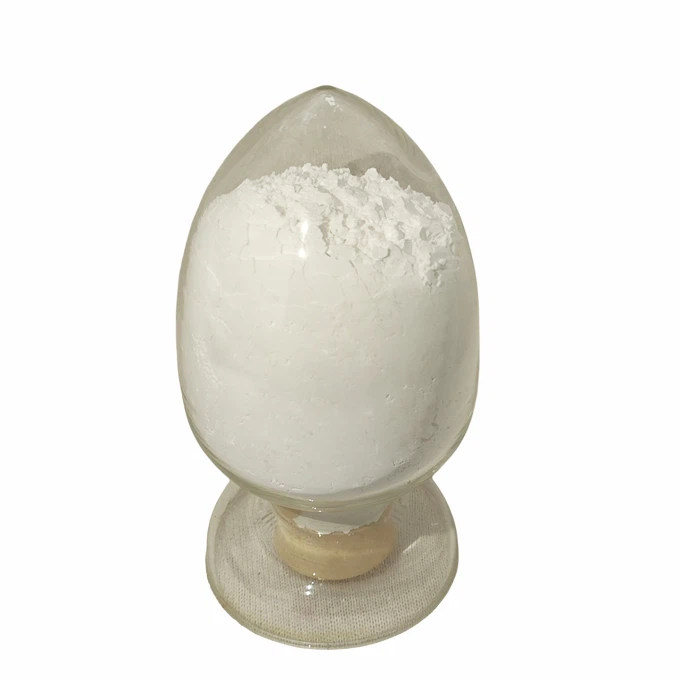
First off, let's talk a bit about yttrium oxide itself. Yttrium oxide, also known as Yttrium Iii Oxide, is a white, powdery substance. We offer it in different forms, like Yttrium Oxide Powder and Nano Yttrium Oxide. Nano yttrium oxide, in particular, has some unique properties due to its small particle size, which can affect how it interacts with other substances.
When it comes to the interaction between yttrium oxide and organic compounds, there are a few key ways this can happen. One of the main interactions is through surface adsorption. Yttrium oxide has a large surface area, especially in its nano form. Organic compounds can stick to the surface of yttrium oxide particles. This adsorption can be physical or chemical.
Physical adsorption is like when a piece of paper sticks to a wall with a bit of static electricity. The organic molecules are attracted to the surface of the yttrium oxide due to weak forces like van der Waals forces. These forces are relatively weak and can be affected by things like temperature and pressure. For example, if you increase the temperature, the organic molecules might start to wiggle around more and break free from the surface of the yttrium oxide.
Chemical adsorption, on the other hand, is a bit more like a chemical reaction. The organic compounds form chemical bonds with the yttrium oxide surface. This can happen when the organic molecules have certain functional groups that can react with the yttrium atoms on the surface. For instance, if an organic compound has a carboxyl group (-COOH), it might react with the yttrium ions on the surface of the yttrium oxide to form a new compound.
Another way yttrium oxide can interact with organic compounds is through catalytic activity. Yttrium oxide can act as a catalyst in some chemical reactions involving organic compounds. A catalyst is like a helper that speeds up a chemical reaction without getting used up itself. In the presence of yttrium oxide, some organic reactions can happen more quickly or under milder conditions.

For example, in some oxidation reactions of organic compounds, yttrium oxide can help transfer oxygen atoms to the organic molecules. This can be really useful in industries where you want to convert one organic compound into another. Maybe you're trying to make a certain type of plastic or a pharmaceutical compound, and yttrium oxide can help make that reaction happen more efficiently.
The particle size of yttrium oxide also plays a big role in its interaction with organic compounds. As I mentioned earlier, nano yttrium oxide has a much larger surface area compared to regular yttrium oxide powder. This means there are more places for the organic molecules to interact with the yttrium oxide. So, in general, nano yttrium oxide can adsorb more organic compounds and be more catalytically active than larger-sized yttrium oxide particles.
The pH of the environment can also affect the interaction between yttrium oxide and organic compounds. Yttrium oxide can have different surface charges depending on the pH. In an acidic environment, the surface of yttrium oxide might become positively charged, while in a basic environment, it could become negatively charged. Organic compounds with different charges will be attracted or repelled by the yttrium oxide surface based on these charges. For example, if an organic compound has a negative charge and the yttrium oxide surface is also negative at a certain pH, they'll repel each other, and adsorption won't happen as easily.
Now, why is all this important? Well, understanding how yttrium oxide interacts with organic compounds has a lot of practical applications. In the electronics industry, yttrium oxide can be used in combination with organic materials to make better-performing electronic devices. For example, it can be used in organic light-emitting diodes (OLEDs) to improve their efficiency and lifespan.
In the environmental field, yttrium oxide can be used to remove organic pollutants from water or air. The adsorption properties of yttrium oxide can help trap the organic pollutants on its surface, making it easier to separate them from the environment.
In the pharmaceutical industry, yttrium oxide can be used in drug delivery systems. Organic compounds can be attached to the surface of yttrium oxide particles, and these particles can then be used to carry the drugs to specific parts of the body.
If you're in an industry that could benefit from the unique properties of yttrium oxide and its interaction with organic compounds, I'd love to talk to you. Whether you're looking for Nano Yttrium Oxide, Yttrium Iii Oxide, or Yttrium Oxide Powder, we've got you covered. Reach out to us to discuss your specific needs and how we can work together to make your projects a success.
References
- Smith, J. (2018). "Interactions of Rare Earth Oxides with Organic Compounds." Journal of Chemical Sciences.
- Chen, L. (2020). "Catalytic Applications of Yttrium Oxide in Organic Reactions." Catalysis Today.
- Wang, H. (2021). "Effect of Particle Size on the Adsorption of Organic Compounds by Yttrium Oxide." Materials Research Bulletin.