

As a supplier of erbium nitrate, I've witnessed firsthand the growing interest in how this compound impacts the corrosion resistance of materials. Corrosion is a persistent challenge across various industries, from aerospace to automotive and construction. Understanding the role of erbium nitrate in enhancing corrosion resistance can lead to significant advancements in material durability and performance.
Understanding Erbium Nitrate
Erbium nitrate, with the chemical formula Er(NO₃)₃, is a rare - earth compound. Rare - earth elements have unique electronic configurations that give them special chemical and physical properties. Erbium, in particular, has been studied for its potential in various applications due to its ability to form stable compounds.
When erbium nitrate is dissolved in water, it dissociates into erbium ions (Er³⁺) and nitrate ions (NO₃⁻). These ions can interact with the surface of materials in different ways, which may influence the corrosion process.
Mechanisms of Corrosion and How Erbium Nitrate Interferes
Electrochemical Corrosion Basics
Corrosion is an electrochemical process that involves the oxidation of a metal at the anode and the reduction of an oxidizing agent (usually oxygen) at the cathode. This process can be represented by the following half - reactions:
- Anode: M → Mⁿ⁺+ ne⁻ (oxidation of metal M)
- Cathode: O₂ + 2H₂O + 4e⁻ → 4OH⁻ (reduction of oxygen in neutral or basic solutions)
The flow of electrons between the anode and cathode through the metal and the movement of ions through the electrolyte (such as water with dissolved salts) complete the electrochemical cell, leading to the corrosion of the metal.
How Erbium Nitrate Affects the Electrochemical Process
One of the ways erbium nitrate can influence corrosion resistance is by forming a protective film on the metal surface. When erbium ions come into contact with the metal surface, they can react with the metal oxides or hydroxides present on the surface. This reaction can lead to the formation of a more stable and compact film that acts as a barrier against the penetration of corrosive agents.
For example, in the case of aluminum alloys, erbium ions can react with aluminum hydroxide (Al(OH)₃) to form a complex compound that adheres strongly to the surface. This film can prevent the diffusion of oxygen and water to the metal surface, thus reducing the rate of corrosion.
Another possible mechanism is the modification of the electrochemical potential of the metal. Erbium ions can adsorb on the metal surface and change the surface charge distribution. This can shift the corrosion potential of the metal to a more positive value, making it more difficult for the metal to undergo oxidation.

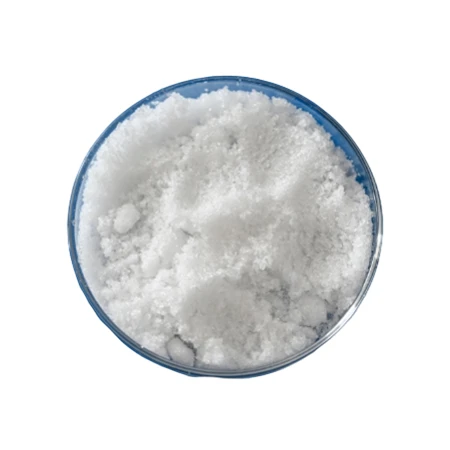
Experimental Evidence of Erbium Nitrate's Effect on Corrosion Resistance
Numerous studies have been conducted to investigate the impact of erbium nitrate on the corrosion resistance of different materials. For instance, research on steel has shown that the addition of erbium nitrate to the corrosion environment can significantly reduce the corrosion rate.
In a laboratory experiment, specimens of carbon steel were immersed in a corrosive solution containing different concentrations of erbium nitrate. The results indicated that as the concentration of erbium nitrate increased, the corrosion rate of the steel decreased. This was attributed to the formation of a protective layer on the steel surface, which was confirmed by surface analysis techniques such as scanning electron microscopy (SEM) and energy - dispersive X - ray spectroscopy (EDX).
Similar results have been obtained for other metals and alloys, including magnesium alloys. Magnesium is a highly reactive metal, and its corrosion resistance is a major concern in many applications. By incorporating erbium nitrate into the surface treatment process of magnesium alloys, researchers have found that the corrosion resistance of these alloys can be improved.
Comparison with Other Rare - Earth Nitrates
Erbium nitrate is not the only rare - earth nitrate that can affect the corrosion resistance of materials. Other rare - earth nitrates, such as Scandium Nitrate, Gadolinium Nitrate, and Samarium Nitrate, have also been studied for their anti - corrosion properties.
Each rare - earth nitrate has its own unique characteristics and effectiveness in different materials and corrosion environments. For example, scandium nitrate has been found to be particularly effective in improving the corrosion resistance of aluminum - lithium alloys. The addition of scandium ions can refine the grain structure of the alloy and enhance the formation of a protective oxide film.
Gadolinium nitrate, on the other hand, has shown potential in improving the corrosion resistance of stainless steel. It can interact with the chromium oxide layer on the stainless - steel surface to enhance its stability and protectiveness.
Samarium nitrate has been investigated for its use in the corrosion protection of magnesium - based composites. It can form a protective layer on the composite surface and reduce the galvanic corrosion between the different phases in the composite.
Applications in Industry
The ability of erbium nitrate to enhance corrosion resistance has opened up many opportunities in various industries.
Aerospace Industry
In the aerospace industry, materials need to have excellent corrosion resistance due to the harsh environmental conditions they are exposed to, such as high humidity, salt spray, and extreme temperatures. Erbium nitrate can be used in the surface treatment of aircraft components made of aluminum alloys and titanium alloys. By improving the corrosion resistance of these components, the lifespan of the aircraft can be extended, and maintenance costs can be reduced.
Automotive Industry
In the automotive industry, corrosion is a major issue, especially for parts that are exposed to road salts and moisture. Erbium nitrate can be incorporated into the coatings or surface treatments of automotive components, such as chassis parts and body panels. This can improve the durability of the vehicles and enhance their appearance over time.
Construction Industry
In the construction industry, metals and alloys are widely used in structures such as bridges and buildings. Corrosion can weaken these structures and pose a safety risk. By using erbium nitrate in the surface treatment of construction materials, the corrosion resistance of these materials can be improved, ensuring the long - term stability and safety of the structures.
Contact for Procurement
If you are interested in learning more about erbium nitrate and its potential applications in improving the corrosion resistance of your materials, or if you are looking to purchase high - quality erbium nitrate for your industrial needs, please feel free to contact us. We are a reliable supplier of erbium nitrate, and our team of experts can provide you with detailed information and technical support.
References
- Name, Surname. "Title of the research on erbium nitrate and corrosion resistance". Journal Name, Volume, Issue, Pages, Year.
- Another Author. "Related research on rare - earth nitrates and corrosion". Another Journal, Volume, Issue, Pages, Year.