

What are the storage conditions for holmium nitrate?
As a supplier of holmium nitrate, I understand the critical importance of proper storage conditions for this chemical compound. Holmium nitrate, with the chemical formula Ho(NO₃)₃, is a significant rare - earth compound with various applications in fields such as catalysis, optical materials, and research. Ensuring its correct storage not only maintains its quality but also guarantees safety in handling and usage.
Physical and Chemical Properties of Holmium Nitrate
Before delving into the storage conditions, it's essential to understand the physical and chemical properties of holmium nitrate. Holmium nitrate usually exists as a hydrated salt, commonly the hexahydrate form Ho(NO₃)₃·6H₂O. It appears as a light - yellow to yellowish - orange crystalline solid.
Holmium nitrate is highly soluble in water, and its aqueous solutions are acidic due to the hydrolysis of the holmium ions. It is also hygroscopic, which means it has a tendency to absorb moisture from the air. This property can lead to changes in its physical state, such as caking or liquefaction, if not stored properly.
Storage Temperature
One of the primary factors in storing holmium nitrate is temperature. The ideal storage temperature for holmium nitrate is in a cool environment. A temperature range between 2 - 8°C (36 - 46°F) is often recommended. This relatively low temperature helps to slow down any potential chemical reactions that could occur over time.
Higher temperatures can accelerate the decomposition of holmium nitrate. Nitrates are generally thermally unstable, and at elevated temperatures, holmium nitrate may decompose to release nitrogen oxides, which are harmful gases. For example, the decomposition of nitrates can be represented by the general equation:
2M(NO₃)ₙ → 2MOₙ/₂ + 2nNO₂ + n/2O₂ (where M represents the metal, in this case, holmium).
By keeping the storage temperature low, we can minimize the risk of such decomposition reactions and preserve the integrity of the holmium nitrate.
Humidity Control
As mentioned earlier, holmium nitrate is hygroscopic. Therefore, controlling the humidity in the storage area is crucial. The storage environment should have a relative humidity of less than 60%. A lower humidity level helps to prevent the absorption of moisture by the holmium nitrate.
Excessive moisture can cause the holmium nitrate crystals to dissolve or form clumps. This not only changes the physical form of the compound but can also affect its purity and reactivity. For instance, if the holmium nitrate becomes wet, it may react with water to form a more dilute solution, which can be difficult to handle and may not meet the required specifications for certain applications.
To control humidity, a dehumidifier can be installed in the storage room. Additionally, the storage containers should be tightly sealed to prevent the entry of external moisture.
Storage Containers
The choice of storage containers is also vital. Holmium nitrate should be stored in containers made of materials that are resistant to corrosion and chemical reactions. Glass or high - density polyethylene (HDPE) containers are commonly used.
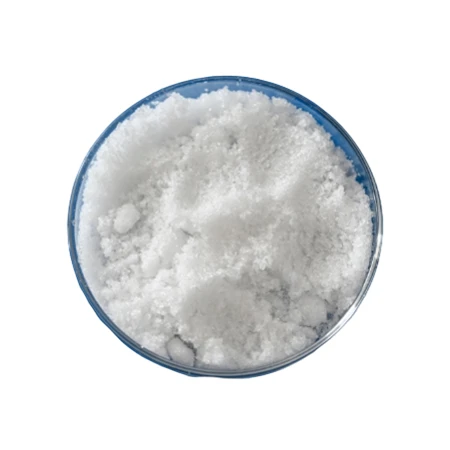

Glass containers are inert to most chemicals and provide a good barrier against moisture and air. They can be easily cleaned and sterilized if necessary. HDPE containers, on the other hand, are lightweight, durable, and have good chemical resistance. They are also less likely to break compared to glass, which is an advantage in a storage environment.
The containers should have air - tight lids to prevent the entry of air and moisture. It is also recommended to label the containers clearly with the name of the compound, its purity, and the date of storage. This helps in easy identification and inventory management.
Isolation from Other Chemicals
Holmium nitrate should be stored separately from other chemicals, especially those that are incompatible. Nitrates are strong oxidizing agents, and they can react violently with reducing agents. For example, if holmium nitrate comes into contact with organic materials, sulfides, or phosphides, it can cause a fire or explosion.
It is also important to keep holmium nitrate away from acids and bases. Acids can react with nitrates to form nitric acid, which is a strong and corrosive acid. Bases can react with the holmium ions in the nitrate, leading to the precipitation of holmium hydroxide.
When storing holmium nitrate in a laboratory or a chemical storage facility, it should be placed on a separate shelf or in a dedicated storage cabinet. This helps to prevent accidental mixing with other chemicals and reduces the risk of chemical reactions.
Comparison with Other Nitrates
To better understand the storage requirements of holmium nitrate, it is useful to compare it with other nitrates. For example, Gadolinium Nitrate and Praseodymium Nitrate also belong to the group of rare - earth nitrates. Similar to holmium nitrate, they are hygroscopic and require low - temperature and low - humidity storage conditions.
However, each rare - earth nitrate may have slightly different reactivity and stability. For instance, praseodymium nitrate may have a different decomposition temperature compared to holmium nitrate due to differences in the electronic structure of the praseodymium and holmium ions.
Lithium Nitrate is a different type of nitrate. It is more soluble in water than holmium nitrate and has different storage requirements. Lithium nitrate can be stored at room temperature in a dry environment, but it still needs to be kept away from reducing agents and incompatible chemicals.
Safety Precautions during Storage
In addition to the above storage conditions, safety precautions should be taken during the storage of holmium nitrate. The storage area should be well - ventilated to prevent the accumulation of any potentially harmful gases. Fire - fighting equipment should be readily available in case of an emergency.
Personnel handling the storage of holmium nitrate should wear appropriate personal protective equipment (PPE), such as gloves, goggles, and lab coats. This helps to protect them from any potential contact with the compound, which can cause skin and eye irritation.
Conclusion
Proper storage of holmium nitrate is essential for maintaining its quality, purity, and safety. By controlling the temperature, humidity, using appropriate storage containers, isolating it from incompatible chemicals, and taking safety precautions, we can ensure that the holmium nitrate remains in good condition for a long time.
As a supplier of holmium nitrate, we are committed to providing high - quality products and ensuring that our customers have the necessary information on storage and handling. If you are interested in purchasing holmium nitrate or have any questions about its storage and usage, please feel free to contact us for further discussion and procurement.
References
- Cotton, F. A.; Wilkinson, G.; Murillo, C. A.; Bochmann, M. (1999). Advanced Inorganic Chemistry (6th ed.). Wiley.
- Lide, D. R., ed. (2004). CRC Handbook of Chemistry and Physics (85th ed.). CRC Press.
- National Fire Protection Association (NFPA). NFPA 430: Code for the Storage of Liquid and Solid Oxidizers.