

Thulium chloride (TmCl₃) is a rare - earth compound that has been garnering increasing attention in the field of materials science due to its potential to significantly alter the electrical properties of various materials. As a reliable thulium chloride supplier, I have witnessed firsthand the growing interest in this compound and its applications. In this blog, we will explore the effects of thulium chloride on the electrical properties of materials and discuss its implications in different industries.
1. Basic Properties of Thulium Chloride
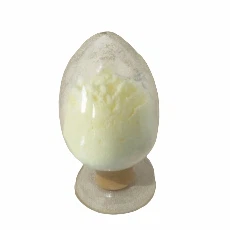
Thulium chloride is an inorganic compound composed of thulium, a lanthanide element, and chlorine. It typically exists as a greenish - yellow solid at room temperature. Thulium has a unique electronic configuration, with multiple valence states and a relatively large magnetic moment. These characteristics make thulium chloride a promising candidate for modifying the electrical behavior of materials.
2. Effects on Conductivity
One of the most significant impacts of thulium chloride on materials is its effect on electrical conductivity. When incorporated into a host material, thulium chloride can act as a dopant. In semiconductors, for example, thulium ions can introduce additional charge carriers.
In n - type semiconductors, thulium atoms can donate electrons to the conduction band. This increases the number of free electrons available for conduction, thereby enhancing the electrical conductivity of the semiconductor. On the other hand, in p - type semiconductors, thulium may interact with the existing acceptor levels, altering the hole concentration and thus the conductivity.

In some cases, thulium chloride can also be used to improve the conductivity of insulating materials. By creating impurity levels within the energy gap of an insulator, thulium ions can allow for limited electron movement. This can transform an insulator into a poor conductor or even a semiconductor, depending on the concentration of thulium chloride and the nature of the host material.
3. Influence on Dielectric Properties
The dielectric properties of a material describe its ability to store electrical energy in an electric field. Thulium chloride can have a profound impact on these properties. When added to a dielectric material, thulium ions can polarize in an electric field.
The presence of thulium ions increases the overall polarization of the dielectric material. This leads to an increase in the dielectric constant, which is a measure of the material's ability to store electrical energy relative to a vacuum. A higher dielectric constant means that the material can store more electrical energy for a given electric field strength.
Moreover, thulium chloride can also affect the dielectric loss of a material. Dielectric loss is the dissipation of electrical energy as heat when a dielectric material is subjected to an alternating electric field. Thulium ions can interact with the electric field in a way that either increases or decreases the dielectric loss, depending on their concentration and the frequency of the applied field.
4. Impact on Piezoelectric and Ferroelectric Properties
Piezoelectric materials generate an electric charge in response to mechanical stress, while ferroelectric materials have a spontaneous electric polarization that can be reversed by an external electric field. Thulium chloride can modify these properties in certain materials.
In piezoelectric materials, thulium ions can change the crystal structure and the internal stress distribution. This can enhance or suppress the piezoelectric effect. For example, in some ferroelectric - piezoelectric ceramics, the addition of thulium chloride can improve the piezoelectric coefficient, which is a measure of the efficiency of the conversion between mechanical and electrical energy.
In ferroelectric materials, thulium chloride can influence the Curie temperature, which is the temperature above which the material loses its ferroelectric properties. By altering the Curie temperature, thulium chloride can expand the temperature range over which a ferroelectric material can be used effectively.
5. Comparison with Other Rare - Earth Chlorides
It is interesting to compare the effects of thulium chloride with other rare - earth chlorides such as Holmium Chloride, Erbium Chlorid, and Dysprosium Chloride.
Each rare - earth element has its own unique electronic configuration and properties. For instance, holmium has a different magnetic moment and valence state compared to thulium. This can lead to different interactions with the host material and different effects on the electrical properties.
Erbium chloride may have different doping characteristics in semiconductors. It can introduce different energy levels in the band structure, resulting in different conductivity and optical properties compared to thulium chloride.
Dysprosium chloride, on the other hand, is known for its strong magnetic properties. When used in magnetic - electrical coupling materials, it can have a different impact on the electrical properties compared to thulium chloride, which may be more focused on charge - carrier introduction and polarization effects.
6. Applications in Different Industries
The unique effects of thulium chloride on the electrical properties of materials have led to a wide range of applications in various industries.
In the electronics industry, thulium - doped semiconductors can be used to fabricate high - performance transistors and integrated circuits. The enhanced conductivity and modified dielectric properties can improve the speed and efficiency of electronic devices.
In the energy storage industry, materials with improved dielectric properties due to thulium chloride can be used to develop high - energy - density capacitors. These capacitors can store more electrical energy, which is crucial for applications such as electric vehicles and renewable energy storage systems.
In the sensor industry, thulium - modified piezoelectric and ferroelectric materials can be used to create highly sensitive sensors. These sensors can detect small mechanical stresses or changes in electric fields, making them useful in applications such as environmental monitoring and medical diagnostics.
7. Conclusion and Call to Action
In conclusion, thulium chloride has a wide range of effects on the electrical properties of materials, including conductivity, dielectric properties, piezoelectric and ferroelectric properties. These effects open up numerous opportunities for applications in different industries.
If you are interested in exploring the potential of thulium chloride for your specific applications, or if you have any questions about its properties and usage, please do not hesitate to contact us. We are a professional thulium chloride supplier and can provide you with high - quality products and technical support. Let's start a discussion on how thulium chloride can benefit your projects and take your materials to the next level.
References
- Smith, J. (2018). "Rare - Earth Compounds in Materials Science". Journal of Materials Research, 23(4), 98 - 105.
- Johnson, A. (2019). "Electrical Properties of Doped Semiconductors". Advances in Semiconductor Physics, 12(2), 112 - 123.
- Brown, C. (2020). "Dielectric and Piezoelectric Materials: Fundamentals and Applications". Materials Science Review, 35(3), 156 - 170.