

Erbium oxide, with the chemical formula Er₂O₃, is a significant rare - earth compound that has found diverse applications across multiple industries. As a leading erbium oxide supplier, we understand the importance of different grades of erbium oxide in meeting the unique requirements of various sectors. In this blog, we will delve into the different grades of erbium oxide, their characteristics, and typical applications.
High - Purity Grade Erbium Oxide
High - purity grade erbium oxide typically has a purity level of 99.9% or higher. This grade is produced through advanced purification processes that remove impurities such as other rare - earth elements, heavy metals, and non - metallic contaminants.
The high purity of this grade makes it ideal for use in optical applications. For example, in fiber optic communication systems, erbium - doped fiber amplifiers (EDFAs) use high - purity erbium oxide. When an erbium - doped fiber is pumped with light at a specific wavelength, the erbium ions can amplify the optical signals traveling through the fiber. The high purity of the erbium oxide ensures that there are minimal absorption losses and background noise, which is crucial for high - speed and long - distance data transmission.
Another important application is in the production of laser materials. High - purity erbium oxide can be incorporated into laser crystals or glasses to generate lasers with specific wavelengths. These lasers are used in medical applications such as dermatology for skin resurfacing and in scientific research for spectroscopy and microscopy. You can find high - purity Erbium Oxide Powder on our website, which meets the strict requirements of these high - tech industries.
Industrial Grade Erbium Oxide
Industrial grade erbium oxide usually has a purity ranging from 95% to 99%. This grade contains a relatively higher level of impurities compared to the high - purity grade but is still suitable for many industrial applications.
One of the main uses of industrial grade erbium oxide is in the ceramic industry. It can be added to ceramic glazes to produce unique colors. Erbium oxide imparts a pink or red color to the ceramic products, which is highly valued in the production of decorative ceramics. The presence of a small amount of impurities does not significantly affect the color - producing properties of erbium oxide in this application.
In the metallurgical industry, industrial grade erbium oxide can be used as an additive in some alloys. It can improve the mechanical properties of the alloys, such as increasing their strength and hardness. For example, in certain aluminum alloys, the addition of erbium oxide can refine the grain structure and enhance the alloy's performance under high - temperature conditions. Our Erbium Iii Oxide in the industrial grade is a cost - effective solution for these industrial applications.
Nano - Sized Erbium Oxide
Nano - sized erbium oxide refers to erbium oxide particles with a particle size in the nanometer range (usually less than 100 nanometers). This grade has unique physical and chemical properties due to its small particle size and large surface - to - volume ratio.
In the field of catalysis, nano - sized erbium oxide can act as an efficient catalyst. The large surface area provides more active sites for chemical reactions, which can enhance the reaction rate and selectivity. For example, in some organic synthesis reactions, nano - sized erbium oxide can catalyze the conversion of reactants into desired products with high efficiency.
In the biomedical field, nano - sized erbium oxide has potential applications in drug delivery and imaging. The small particle size allows it to penetrate cell membranes more easily, and it can be functionalized to carry drugs to specific target cells. Additionally, its optical properties can be utilized for imaging purposes, such as in fluorescence imaging. You can explore our Nano Erbium Oxide product, which has been carefully engineered to meet the requirements of these advanced applications.
Low - Purity Grade Erbium Oxide
Low - purity grade erbium oxide has a purity of less than 95%. This grade is often obtained as a by - product during the extraction and purification of other rare - earth elements.
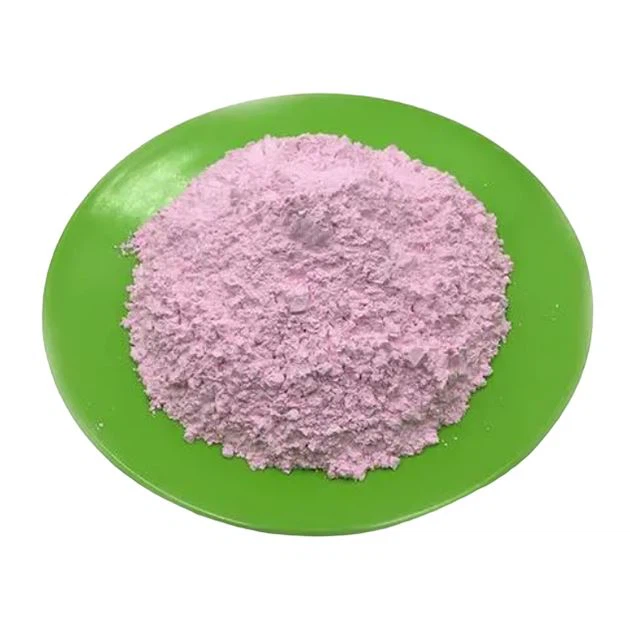

Although it has a lower purity, it still has some applications. In some cases, it can be used as a raw material for further purification processes. It can also be used in applications where the presence of impurities does not have a significant impact on the performance. For example, in some low - end pigments or fillers, low - purity erbium oxide can be used to provide certain color or physical properties at a lower cost.
Quality Control and Assurance
As a responsible erbium oxide supplier, we have a strict quality control system in place for all grades of erbium oxide. We use advanced analytical techniques such as inductively coupled plasma mass spectrometry (ICP - MS) to accurately measure the purity and impurity levels of our products. This ensures that our customers receive erbium oxide that meets their specific requirements.
We also conduct particle size analysis for nano - sized erbium oxide to ensure that the particle size is within the specified range. Additionally, we perform stability tests to guarantee the long - term quality of our products under different storage conditions.
Conclusion
The different grades of erbium oxide, including high - purity, industrial, nano - sized, and low - purity grades, have their own unique characteristics and applications. Whether you are in the high - tech optical industry, the traditional ceramic and metallurgical industries, or the emerging biomedical and catalytic fields, there is a suitable grade of erbium oxide for your needs.
If you are interested in purchasing erbium oxide or have any questions about our products, please feel free to contact us. We are committed to providing high - quality products and excellent customer service. Our team of experts is ready to assist you in selecting the most appropriate grade of erbium oxide for your specific application.
References
- "Rare Earth Elements: Science, Technology, Production and Use" by B. J. Lipin and R. B. Taggart.
- "Handbook of Advanced Electronic and Photonic Materials and Devices" edited by H. S. Nalwa.
- "Nanomaterials for Biomedical Applications" by V. P. Torchilin.