

Hey there! I'm a supplier of gallium chloride, and today I'm super stoked to chat about how gallium chloride interacts with other metal salts. It's a pretty fascinating topic, and I hope you'll find it as interesting as I do.
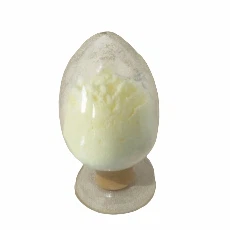
First off, let's get a basic understanding of gallium chloride. Gallium chloride (GaCl₃) is a compound that's commonly used in various industries, especially in electronics and as a catalyst in chemical reactions. It's a white or yellowish solid at room temperature and has some unique chemical properties that make its interactions with other metal salts quite intriguing.
One of the key things to know about gallium chloride is its ability to form complexes with other metal ions. This happens because of the way the gallium atom in GaCl₃ can share its electrons with other metal ions. When gallium chloride comes into contact with certain metal salts, it can form coordination compounds. These are compounds where the gallium chloride acts as a ligand, attaching itself to the central metal ion in the salt.
For example, when gallium chloride reacts with transition metal salts, such as those of iron or copper, it can form complexes that have different colors and chemical reactivities compared to the original metal salts. This is due to the change in the electronic structure of the metal ion when it binds to the gallium chloride. These complexes can be useful in a variety of applications, like in the synthesis of new materials or in the development of sensors.
Let's take a closer look at how gallium chloride interacts with some specific metal salts.
Interaction with Scandium Iii Chloride
Scandium Iii Chloride (ScCl₃) is a rare - earth metal salt that has some interesting properties on its own. When gallium chloride interacts with ScCl₃, they can form mixed - metal complexes. The gallium and scandium ions can share chloride ions between them, creating a new structure. This interaction can lead to changes in the solubility and reactivity of the salts. You can learn more about Scandium Iii Chloride here.
In some cases, the formation of these mixed - metal complexes can enhance the catalytic activity of the compounds. For instance, in certain organic reactions, the combination of gallium chloride and Scandium Iii Chloride can act as a more efficient catalyst compared to using either salt alone. This is because the unique electronic environment created by the interaction between the two metal ions can better activate the reactant molecules.
Interaction with Dysprosium Chloride
Dysprosium Chloride (DyCl₃) is another rare - earth metal salt. When gallium chloride meets Dysprosium Chloride, they can form coordination polymers. These are long - chain structures where the gallium and dysprosium ions are connected by chloride bridges. The formation of these polymers can change the physical properties of the salts, such as their melting points and conductivity.
The interaction between gallium chloride and Dysprosium Chloride can also have implications in the field of magnetism. Dysprosium is known for its magnetic properties, and the presence of gallium chloride can modify these properties. This can be useful in the development of magnetic materials for applications like data storage. If you want to know more about Dysprosium Chloride, check out this link.
Interaction with Lanthanum Chloride Cerium
Lanthanum Chloride Cerium is a complex rare - earth metal salt. When gallium chloride reacts with it, the interaction can be quite complex. The gallium chloride can disrupt the existing structure of the Lanthanum Chloride Cerium salt and form new compounds. This can lead to changes in the optical properties of the salts.
For example, some of the new compounds formed from the reaction of gallium chloride and Lanthanum Chloride Cerium can have different fluorescence properties. This makes them potentially useful in applications such as lighting and imaging. To find out more about Lanthanum Chloride Cerium, click here.
The factors that influence how gallium chloride interacts with other metal salts include temperature, concentration, and the nature of the solvent. At higher temperatures, the reactions between gallium chloride and metal salts can proceed more quickly. The concentration of the salts also plays a role. If the concentration of gallium chloride is too high or too low, it can affect the formation and stability of the complexes.
The solvent can also have a significant impact. Polar solvents, like water or ethanol, can solvate the metal ions and the gallium chloride, which can either promote or inhibit the interaction between them. Non - polar solvents, on the other hand, can have a different effect on the reaction kinetics and the structure of the resulting compounds.
In industrial applications, understanding these interactions is crucial. For example, in the production of semiconductors, the interaction between gallium chloride and other metal salts can be used to dope the semiconductor materials with specific metal ions. This can change the electrical properties of the semiconductors, making them more suitable for different electronic devices.
In the field of catalysis, the complexes formed from the interaction of gallium chloride and other metal salts can be used to catalyze reactions that are important in the production of pharmaceuticals, plastics, and other chemicals. By carefully controlling the reaction conditions and the choice of metal salts, chemists can design catalysts that are more efficient and selective.

If you're in the business of working with metal salts or are interested in exploring the potential applications of gallium chloride and its interactions with other metal salts, I'd love to have a chat. Whether you're a researcher looking for high - quality gallium chloride for your experiments or an industry professional in need of a reliable supplier, I'm here to help. Contact me to discuss your requirements and let's see how we can work together to achieve your goals.
References
- Cotton, F. A., & Wilkinson, G. (1988). Advanced Inorganic Chemistry. Wiley.
- Housecroft, C. E., & Sharpe, A. G. (2012). Inorganic Chemistry. Pearson.