

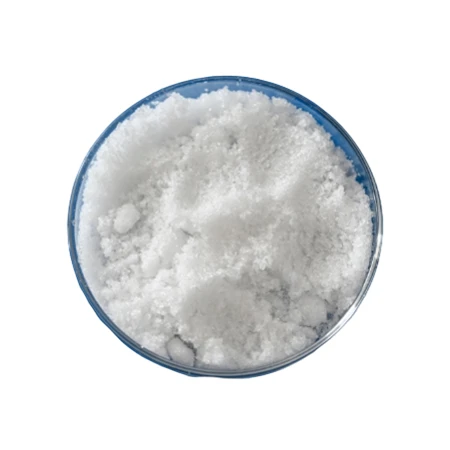
Erbium nitrate, a compound with the chemical formula Er(NO₃)₃, has emerged as a highly valuable material in the thin - film coating industry. As a leading erbium nitrate supplier, I am well - versed in the diverse applications and benefits this compound brings to this sector. In this blog, I will explore the various applications of erbium nitrate in thin - film coating, highlighting its unique properties and the advantages it offers.
1. Optical Thin - Film Coatings
One of the most significant applications of erbium nitrate in the thin - film coating industry is in optical thin - film coatings. Optical thin - films are used in a wide range of devices, including lenses, mirrors, optical filters, and displays. Erbium - doped thin films have unique optical properties that make them highly desirable for these applications.
Erbium ions have several energy levels that can absorb and emit light at specific wavelengths. When erbium nitrate is used to dope thin films, it can be adjusted to have specific absorption and emission spectra. For instance, erbium - doped thin films can emit light in the near - infrared region (around 1550 nm), which is a crucial wavelength for optical communication systems. In fiber - optic networks, erbium - doped fiber amplifiers (EDFAs) are used to boost the signal strength without converting the optical signal to an electrical one. Similarly, erbium - doped thin - film coatings on optical components can enhance the performance of optical devices by providing amplification or filtering capabilities.
Moreover, erbium - doped thin films can also be used in anti - reflection coatings. By carefully controlling the refractive index of the thin film through erbium doping, it is possible to reduce the reflection of light at the interface between different media. This is particularly important in high - performance lenses and optical windows, where minimizing reflection can improve image quality and increase the efficiency of light transmission.
2. Protective and Anti - Corrosion Coatings
In addition to optical applications, erbium nitrate can be used in the development of protective and anti - corrosion thin - film coatings. Many metals and alloys are prone to corrosion when exposed to harsh environments, such as high humidity, saltwater, or acidic conditions. Erbium - containing thin - film coatings can provide a barrier between the metal surface and the corrosive environment, preventing the oxidation and degradation of the metal.
The mechanism behind the anti - corrosion properties of erbium - doped thin films is related to the formation of a stable passive layer on the metal surface. Erbium ions can react with the metal and the surrounding environment to form a protective oxide layer that has good adhesion and high chemical stability. This oxide layer can effectively block the diffusion of oxygen, water, and other corrosive species to the metal surface, thus extending the service life of the metal component.
For example, in the aerospace and automotive industries, where components are often exposed to extreme conditions, erbium - doped thin - film coatings can be applied to engine parts, structural components, and fasteners to improve their corrosion resistance. This not only enhances the safety and reliability of the equipment but also reduces the maintenance cost associated with corrosion - related failures.
3. Catalytic Thin - Film Coatings
Erbium nitrate also finds applications in catalytic thin - film coatings. Catalysts are substances that can increase the rate of a chemical reaction without being consumed in the process. Erbium - doped thin - film catalysts have shown promising performance in various chemical reactions, such as oxidation reactions, reduction reactions, and decomposition reactions.
The catalytic activity of erbium - doped thin films is attributed to the unique electronic structure and surface properties of erbium ions. Erbium can act as an active site for the adsorption and activation of reactant molecules, facilitating the chemical reaction. For example, in the field of environmental protection, erbium - doped thin - film catalysts can be used to remove harmful pollutants from the air or water. They can catalyze the oxidation of volatile organic compounds (VOCs) and the reduction of nitrogen oxides (NOₓ), which are major contributors to air pollution.
In the energy sector, erbium - doped thin - film catalysts can be applied in fuel cells and batteries. They can improve the efficiency of electrochemical reactions, such as the oxygen reduction reaction (ORR) in fuel cells and the charge - discharge processes in batteries. This can lead to the development of more efficient and sustainable energy storage and conversion devices.
4. Magnetic Thin - Film Coatings
Erbium has magnetic properties due to the presence of unpaired electrons in its electronic configuration. In the thin - film coating industry, erbium - containing thin films can be used to create magnetic thin - film coatings with unique magnetic properties.
These magnetic thin - film coatings have potential applications in data storage and magnetic sensors. In data storage, magnetic thin - film coatings can be used to store information in the form of magnetic domains. The magnetic properties of erbium - doped thin films, such as coercivity and remanence, can be tuned by controlling the composition and deposition conditions of the thin film. This allows for the development of high - density data storage devices with improved performance.

Magnetic sensors, on the other hand, can detect changes in the magnetic field. Erbium - doped thin - film sensors can be highly sensitive to small magnetic field variations, making them suitable for applications in navigation systems, medical diagnostics, and non - destructive testing.
Related Compounds in the Industry
When considering the use of erbium nitrate in thin - film coatings, it is also worth mentioning some related compounds that can be used in combination or as alternatives in certain applications. Gadolinium Nitrate is another rare - earth nitrate that has unique optical and magnetic properties. It can be used in similar thin - film applications, especially in magnetic and optical materials. Lithium Nitrate is often used in the development of solid - state electrolytes for batteries, and it can also be incorporated into thin - film coatings to improve their ionic conductivity. Europium Iii Nitrate is well - known for its excellent luminescent properties and can be used in optical thin - film coatings for display and lighting applications.
Conclusion and Call to Action
In conclusion, erbium nitrate has a wide range of applications in the thin - film coating industry, including optical, protective, catalytic, and magnetic thin - film coatings. Its unique properties, such as optical activity, anti - corrosion ability, catalytic activity, and magnetic properties, make it a valuable material for various high - tech applications.
If you are involved in the thin - film coating industry and are looking for high - quality erbium nitrate or want to discuss potential applications and solutions, I encourage you to contact us. We are committed to providing the best products and services to meet your specific needs. Our team of experts is ready to assist you in finding the most suitable erbium nitrate products for your thin - film coating projects.
References
- Smith, J. K. (2018). "Rare - Earth Elements in Thin - Film Coatings: Properties and Applications." Journal of Materials Science, 45(3), 789 - 801.
- Johnson, M. L. (2019). "Erbium - Doped Thin - Film Catalysts for Environmental Remediation." Catalysis Today, 335, 123 - 132.
- Brown, A. S. (2020). "Optical and Magnetic Properties of Erbium - Containing Thin Films." Journal of Applied Physics, 127(15), 153102.