

Hey there! As a supplier of thulium chloride, I've had my fair share of interesting chats with clients about how this compound gets involved in precipitation reactions. So, I thought I'd share some insights on how thulium chloride participates in these chemical reactions.
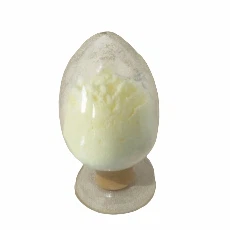
First off, let's quickly talk about what thulium chloride is. Thulium chloride (TmCl₃) is a water - soluble salt of thulium, a rare - earth element. It's a pretty cool compound with a range of applications, from catalysis to certain types of lasers. And if you're interested in learning more about it, you can check out our Thulium Chloride page.
Now, let's dig into precipitation reactions. A precipitation reaction is a type of chemical reaction where two soluble salts in aqueous solution react to form an insoluble salt, which then precipitates out of the solution. The key here is the solubility rules that govern which salts will stay in solution and which will form a solid.
When thulium chloride is in an aqueous solution, it dissociates into thulium ions (Tm³⁺) and chloride ions (Cl⁻). The thulium ions are what make the magic happen in precipitation reactions. They can react with certain anions to form insoluble thulium compounds.
One common type of anion that can react with thulium ions is the hydroxide ion (OH⁻). When you add a base, like sodium hydroxide (NaOH), to a solution of thulium chloride, the following reaction occurs:
TmCl₃(aq) + 3NaOH(aq) → Tm(OH)₃(s) + 3NaCl(aq)
In this reaction, the thulium ions from the thulium chloride combine with the hydroxide ions from the sodium hydroxide to form thulium hydroxide (Tm(OH)₃), which is insoluble in water. As a result, it precipitates out of the solution as a solid. You'll start to see a white or slightly colored precipitate forming in the solution. This is a classic example of how thulium chloride participates in a precipitation reaction.
Another anion that can react with thulium ions is the carbonate ion (CO₃²⁻). If you add a soluble carbonate salt, such as sodium carbonate (Na₂CO₃), to a thulium chloride solution, the reaction is as follows:
2TmCl₃(aq) + 3Na₂CO₃(aq) → Tm₂(CO₃)₃(s) + 6NaCl(aq)
Here, the thulium ions react with the carbonate ions to form thulium carbonate (Tm₂(CO₃)₃), which is also insoluble and will precipitate out. The formation of this precipitate is a clear sign that a chemical reaction has taken place.
It's important to note that the solubility of thulium compounds can vary depending on factors like temperature, pH, and the concentration of the reactants. For example, at higher temperatures, some compounds that are normally insoluble might become slightly more soluble. And the pH of the solution can also have a big impact. In more acidic solutions, the solubility of thulium hydroxide might increase because the hydroxide ions can react with the hydrogen ions in the acid.
Now, let's compare thulium chloride with some other rare - earth chlorides in precipitation reactions. Take Gallium Chloride and Dysprosium Chloride for example.
Gallium chloride (GaCl₃) also dissociates in water to form gallium ions (Ga³⁺) and chloride ions. However, the reactivity of gallium ions in precipitation reactions is a bit different from thulium ions. Gallium hydroxide (Ga(OH)₃) is amphoteric, which means it can react with both acids and bases. In contrast, thulium hydroxide is mainly basic.
Dysprosium chloride (DyCl₃) dissociates into dysprosium ions (Dy³⁺) and chloride ions. Like thulium, dysprosium forms insoluble hydroxides and carbonates. But the physical and chemical properties of dysprosium compounds, such as their color and solubility under different conditions, can be different from those of thulium compounds.
In industrial applications, the precipitation reactions of thulium chloride are quite useful. For instance, in the purification of thulium, precipitation reactions can be used to separate thulium from other rare - earth elements. By carefully controlling the reaction conditions, we can selectively precipitate thulium compounds while keeping other elements in solution.
If you're in the business of working with rare - earth compounds and are interested in the unique properties of thulium chloride in precipitation reactions, we're here to help. We're a reliable supplier of high - quality thulium chloride, and we can provide you with the right product for your specific needs. Whether you're doing research in a lab or running an industrial process, we've got you covered.
If you're looking to purchase thulium chloride or have any questions about how it can be used in your projects, don't hesitate to reach out. We're more than happy to have a chat and discuss your requirements.

References
- Atkins, P., & de Paula, J. (2014). Physical Chemistry for the Life Sciences. Oxford University Press.
- Housecroft, C. E., & Sharpe, A. G. (2012). Inorganic Chemistry. Pearson.