

Holmium nitrate, a chemical compound with significant applications in various industries, has been a subject of interest for many researchers and businesses alike. As a trusted supplier of holmium nitrate, I am often asked about its molar mass and its implications. In this blog post, I will delve into the details of the molar mass of holmium nitrate, its calculation, and its importance in different fields.
Understanding Holmium Nitrate
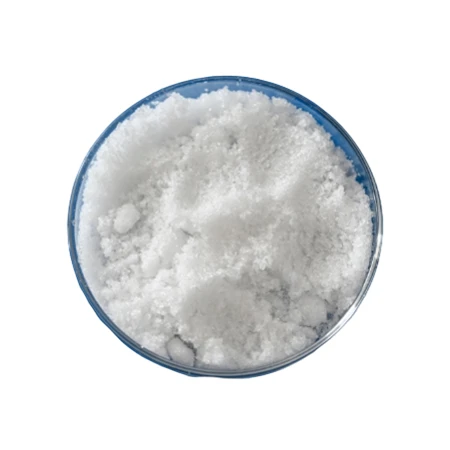
Holmium nitrate is an inorganic compound with the chemical formula Ho(NO₃)₃. It consists of one holmium (Ho) atom, three nitrate (NO₃⁻) ions. Holmium is a rare - earth element, a soft, malleable, and ductile metal with a bright silvery - metallic luster. Nitrate ions are polyatomic anions composed of one nitrogen atom and three oxygen atoms.
Calculating the Molar Mass of Holmium Nitrate
The molar mass of a compound is the mass of one mole of that substance, expressed in grams per mole (g/mol). To calculate the molar mass of holmium nitrate (Ho(NO₃)₃), we need to consider the atomic masses of each element present in the compound.
The atomic mass of holmium (Ho) is approximately 164.93 g/mol. The nitrate ion (NO₃⁻) consists of one nitrogen (N) atom with an atomic mass of about 14.01 g/mol and three oxygen (O) atoms with an atomic mass of approximately 16.00 g/mol each.
The molar mass of a nitrate ion (NO₃⁻) can be calculated as follows:
[M(NO₃⁻)=M(N)+3\times M(O)=14.01 + 3\times16.00=14.01+48.00 = 62.01\ g/mol]
Since there are three nitrate ions in holmium nitrate (Ho(NO₃)₃), the total mass contributed by the nitrate ions is (3\times62.01 = 186.03\ g/mol)
The molar mass of holmium nitrate (Ho(NO₃)₃) is the sum of the mass of the holmium atom and the total mass of the nitrate ions:
[M(Ho(NO₃)₃)=M(Ho)+3\times M(NO₃⁻)=164.93+186.03 = 350.96\ g/mol]
Significance of the Molar Mass of Holmium Nitrate
In Chemical Reactions
The molar mass is crucial in stoichiometry, which is the calculation of reactants and products in chemical reactions. When holmium nitrate is used in a chemical reaction, knowing its molar mass allows chemists to determine the correct amounts of reactants needed to obtain the desired products. For example, if a reaction requires a specific number of moles of holmium nitrate, the molar mass can be used to convert between moles and grams, ensuring the reaction proceeds as planned.
In Analytical Chemistry
In analytical chemistry, the molar mass is used in techniques such as titration and gravimetric analysis. When analyzing a sample containing holmium nitrate, the molar mass helps in quantifying the amount of the compound present. This information is essential for quality control in industries that use holmium nitrate, such as the electronics and ceramics industries.
In Material Science
Holmium nitrate is used in the synthesis of advanced materials, such as phosphors and catalysts. The molar mass plays a role in determining the composition and properties of these materials. By accurately controlling the amount of holmium nitrate used in the synthesis process, researchers can tailor the properties of the final material, such as its luminescence or catalytic activity.
Other Related Rare - Earth Nitrates
In addition to holmium nitrate, there are other rare - earth nitrates that have important applications. For example, Ceric Ammonium Nitrate is a strong oxidizing agent used in organic synthesis and analytical chemistry. Europium Iii Nitrate is used in the production of red phosphors for display devices, and Gadolinium Nitrate is used in magnetic resonance imaging (MRI) contrast agents.
Our Supply of Holmium Nitrate
As a reliable supplier of holmium nitrate, we ensure the highest quality of our products. Our holmium nitrate is produced using advanced manufacturing processes and undergoes strict quality control measures. We offer a range of purity levels to meet the diverse needs of our customers, whether they are in research laboratories or large - scale industrial production.
If you are interested in purchasing holmium nitrate or have any questions about its properties and applications, please feel free to contact us for further discussion. We are committed to providing excellent customer service and will work with you to find the best solutions for your specific requirements.

References
- Emsley, John. "The Elements." Oxford University Press, 2011.
- Housecroft, Catherine E., and Alan G. Sharpe. "Inorganic Chemistry." Pearson Education, 2012.