

Yttrium chloride (YCl₃) is a significant inorganic compound that has found its place in various industrial and scientific applications. As a leading supplier of yttrium chloride, I am often asked about its properties, including its boiling point. In this blog post, I will delve into the boiling point of yttrium chloride, its significance, and related aspects, providing you with in - depth knowledge to make informed decisions when considering purchasing this compound.
Understanding Yttrium Chloride
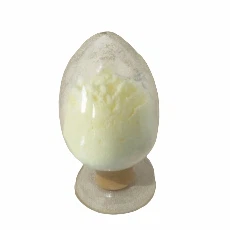
Yttrium chloride is a hygroscopic solid that appears as white to yellowish crystals. It belongs to the family of rare - earth metal chlorides. Yttrium, the metal component, is a soft, silver - gray transition metal. When combined with chlorine, yttrium chloride is formed through a chemical reaction. This compound has unique chemical and physical properties that make it useful in many fields, such as catalysis, electronics, and materials science.
What is the Boiling Point of Yttrium Chloride?
The boiling point of yttrium chloride is approximately 1507 °C (2745 °F). This high boiling point is characteristic of many metal chlorides, especially those of rare - earth elements. The strong ionic bonds between the yttrium cations (Y³⁺) and chloride anions (Cl⁻) require a large amount of energy to break, which is why a high temperature is needed to transform yttrium chloride from a liquid to a gaseous state.
The boiling point is an important physical property as it provides insights into the compound's stability and behavior under different temperature conditions. For example, in industrial processes where yttrium chloride is used, knowing its boiling point helps in designing appropriate heating and cooling systems. If a process involves heating yttrium chloride, the temperature must be carefully controlled to avoid reaching its boiling point, which could lead to loss of the compound through vaporization.
Factors Affecting the Boiling Point
Several factors can influence the boiling point of yttrium chloride. One of the main factors is the purity of the compound. Impurities in yttrium chloride can disrupt the regular arrangement of the ions in the crystal lattice, weakening the ionic bonds and potentially lowering the boiling point. Therefore, high - purity yttrium chloride usually has a more consistent and accurate boiling point.
The pressure also plays a role in determining the boiling point. The boiling point of a substance is defined as the temperature at which its vapor pressure equals the external pressure. At lower pressures, such as in a vacuum, the boiling point of yttrium chloride will be lower than at standard atmospheric pressure (1 atm). This principle is used in some purification processes, where substances are distilled under reduced pressure to lower the boiling point and prevent thermal decomposition.
Applications of Yttrium Chloride
Yttrium chloride has a wide range of applications due to its unique properties. In the field of catalysis, it can be used as a catalyst or a catalyst precursor in various chemical reactions. For example, it can catalyze the polymerization of olefins, which is an important process in the production of plastics.
In electronics, yttrium chloride is used in the production of phosphors. Phosphors are materials that emit light when excited by an external energy source, such as an electron beam or ultraviolet light. Yttrium - based phosphors are used in cathode - ray tubes (CRTs), fluorescent lamps, and light - emitting diodes (LEDs).
In materials science, yttrium chloride can be used to synthesize yttrium - containing materials, such as yttrium aluminum garnet (YAG). YAG is a well - known laser material that has high optical quality and excellent mechanical and thermal properties.
Comparison with Other Rare - Earth Chlorides
When comparing yttrium chloride with other rare - earth chlorides, it is interesting to note the differences in their boiling points. For example, Holmium Chloride has a boiling point of around 1500 °C, which is quite similar to that of yttrium chloride. This similarity is due to the similar chemical nature of holmium and yttrium, both being rare - earth elements with comparable ionic radii and bonding characteristics.
Neodymium Trichloride has a boiling point of approximately 1600 °C. The higher boiling point of neodymium trichloride may be attributed to its larger ionic charge and different crystal structure compared to yttrium chloride.
Dysprosium Chloride has a boiling point of about 1547 °C. The differences in boiling points among these rare - earth chlorides can be exploited in separation and purification processes. For instance, fractional distillation can be used to separate a mixture of these chlorides based on their different boiling points.
Quality Assurance as a Supplier
As a supplier of yttrium chloride, we are committed to providing high - quality products. Our yttrium chloride is produced using advanced manufacturing processes to ensure high purity and consistent quality. We conduct rigorous quality control tests on every batch of yttrium chloride, including analysis of its purity, chemical composition, and physical properties such as the boiling point.
Our quality control team uses state - of - the - art equipment, such as gas chromatography - mass spectrometry (GC - MS) and differential scanning calorimetry (DSC), to accurately measure the properties of yttrium chloride. This ensures that our customers receive a product that meets their specific requirements and performs reliably in their applications.
Why Choose Our Yttrium Chloride
There are several reasons to choose our yttrium chloride. Firstly, our products are of high purity, typically above 99.9%. This high purity ensures better performance in various applications, such as in the production of high - quality phosphors and catalysts.
Secondly, we offer a wide range of packaging options to meet different customer needs. Whether you need small - scale samples for research purposes or large - scale bulk orders for industrial production, we can provide the appropriate packaging.
Thirdly, our customer service team is dedicated to providing excellent support. We can offer technical advice on the use of yttrium chloride, answer any questions you may have about its properties, and assist with the ordering process.
Contact Us for Purchasing
If you are interested in purchasing yttrium chloride or have any questions about our products, we encourage you to contact us. Our team of experts is ready to discuss your specific requirements and provide you with a detailed quotation. We look forward to establishing a long - term business relationship with you and supplying you with high - quality yttrium chloride for your various applications.

References
- Greenwood, N. N., & Earnshaw, A. (1997). Chemistry of the Elements (2nd ed.). Butterworth - Heinemann.
- Cotton, F. A., & Wilkinson, G. (1988). Advanced Inorganic Chemistry (5th ed.). John Wiley & Sons.
- Handbook of Chemistry and Physics (89th ed.). CRC Press.