

What is the appearance of holmium nitrate? This is a question that often piques the curiosity of those involved in the rare - earth industry, researchers, and even some hobbyists in the field of chemistry. As a dedicated holmium nitrate supplier, I am more than happy to share detailed insights into this topic.
Holmium nitrate, with the chemical formula Ho(NO₃)₃, typically exists in a hydrated form, most commonly as the pentahydrate, Ho(NO₃)₃·5H₂O. In its pure and well - prepared state, holmium nitrate pentahydrate presents as a beautiful, crystalline solid. The crystals are usually in a light yellow to amber color. This distinct coloration is due to the unique electronic structure of the holmium ion (Ho³⁺). The electrons in the holmium ion absorb and emit light in specific wavelengths, resulting in the observed color.
The crystals of holmium nitrate are often well - formed, with a regular geometric shape. Under a microscope, one can observe their smooth surfaces and well - defined edges. This is a characteristic feature of high - quality holmium nitrate, indicating a high degree of purity and a well - controlled crystallization process.
The physical appearance of holmium nitrate can be affected by several factors. One of the most significant factors is purity. Impurities in the holmium nitrate sample can cause color variations and affect the crystal structure. For example, if there are trace amounts of other rare - earth elements or metallic impurities, the color of the holmium nitrate may deviate from the typical light yellow to amber range. It could become darker or take on an unusual hue.
Another factor is the method of preparation. Different synthesis methods can lead to different crystal morphologies. For instance, a slow crystallization process under carefully controlled temperature and pressure conditions is more likely to produce large, well - formed crystals. In contrast, a rapid precipitation method may result in smaller, less - regular crystals or even an amorphous powder.
When it comes to handling and storage, the appearance of holmium nitrate can also change over time. Holmium nitrate is hygroscopic, which means it has a tendency to absorb moisture from the air. If stored in a humid environment, the crystals may start to lose their luster and become sticky as they absorb water. This can also lead to the formation of a thin layer of solution on the surface of the crystals, which may cause them to clump together.
In the context of the rare - earth nitrate market, holmium nitrate is just one of the many valuable products. There are other rare - earth nitrates that share some similarities in appearance and properties. For example, Europium Iii Nitrate is another important rare - earth nitrate. Europium nitrate also exists as a hydrated salt, and its crystals are usually white or light pink. The color difference between europium nitrate and holmium nitrate is due to the different electronic configurations of the europium (Eu³⁺) and holmium (Ho³⁺) ions.
Yttrium Iii Nitrate Hexahydrate is also a well - known rare - earth nitrate. Yttrium nitrate hexahydrate forms colorless, transparent crystals. The lack of color in yttrium nitrate is because the yttrium ion (Y³⁺) has a relatively simple electronic structure that does not absorb visible light in the same way as holmium or europium ions.

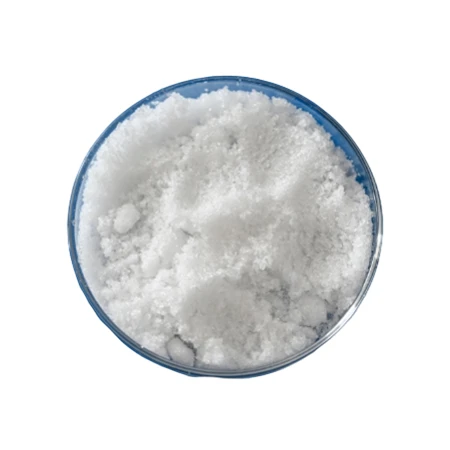
Gadolinium Nitrate is yet another example. Gadolinium nitrate usually appears as a white crystalline solid. Similar to holmium nitrate, its appearance can be influenced by purity and storage conditions.
As a holmium nitrate supplier, we take great pride in providing high - quality products. Our holmium nitrate is carefully synthesized and purified to ensure a consistent and desirable appearance. We use advanced analytical techniques to monitor the purity of our products, and our production process is strictly controlled to produce well - formed crystals with the characteristic light yellow to amber color.
We understand that the appearance of holmium nitrate is not just a matter of aesthetics. It is also an important indicator of its quality and suitability for various applications. Holmium nitrate is widely used in the fields of catalysis, optical materials, and nuclear medicine. In catalysis, the purity and crystal structure of holmium nitrate can affect its catalytic activity. In optical materials, the color and transparency of holmium nitrate are crucial for achieving the desired optical properties.
If you are interested in purchasing holmium nitrate for your research, industrial production, or other applications, we invite you to contact us for a detailed discussion. Our team of experts is ready to answer all your questions and provide you with the best possible solutions. Whether you need a small - scale sample for testing or a large - scale supply for continuous production, we can meet your requirements.
In conclusion, the appearance of holmium nitrate is a fascinating topic that is closely related to its chemical properties, purity, and production process. As a reliable supplier, we are committed to providing high - quality holmium nitrate with a consistent and attractive appearance. We look forward to the opportunity to work with you and contribute to your success in the rare - earth industry.
References
- Cotton, F. A., & Wilkinson, G. (1988). Advanced Inorganic Chemistry (5th ed.). John Wiley & Sons.
- Greenwood, N. N., & Earnshaw, A. (1997). Chemistry of the Elements (2nd ed.). Butterworth - Heinemann.