

Hey there! As a supplier of holmium nitrate, I often get asked about the stability constants of holmium nitrate complexes. So, I thought I'd take a moment to share some insights on this topic.
First off, let's talk a bit about what stability constants are. In simple terms, stability constants are a measure of how stable a complex is. When we're talking about holmium nitrate complexes, we're looking at how well holmium ions (Ho³⁺) bind to nitrate ions (NO₃⁻) and other ligands in solution.
The stability of these complexes can have a big impact on a variety of applications. For example, in the field of analytical chemistry, the stability of holmium nitrate complexes can affect the accuracy of measurements. In materials science, it can influence the properties of materials made using holmium nitrate.
Now, let's dive into the details of the stability constants of holmium nitrate complexes. The formation of these complexes is an equilibrium process. That means there's a balance between the free holmium ions and the holmium ions that are bound to the nitrate ions or other ligands.
The stability constant, often denoted as β, is defined as the ratio of the concentration of the complex to the product of the concentrations of the free ions at equilibrium. Mathematically, for a simple complex formation reaction like Ho³⁺ + nL ⇌ HoLₙ⁽³⁻ⁿ⁾⁺ (where L is a ligand), the stability constant βₙ = [HoLₙ⁽³⁻ⁿ⁾⁺] / ([Ho³⁺][L]ⁿ).
The value of the stability constant depends on several factors. One of the most important factors is the nature of the ligand. Different ligands have different affinities for holmium ions. For example, ligands with more electron - donating groups tend to form more stable complexes with holmium ions.
Temperature also plays a role. Generally, as the temperature increases, the stability of the complex may change. In some cases, an increase in temperature can lead to a decrease in the stability constant because the complex may start to dissociate more readily at higher temperatures.
The ionic strength of the solution can also affect the stability constants. Higher ionic strength can sometimes shield the charges on the ions, reducing the electrostatic interactions between the holmium ions and the ligands, and thus affecting the stability of the complex.
In the case of holmium nitrate complexes specifically, nitrate ions are relatively weak ligands. They form complexes with holmium ions, but the stability of these complexes is not extremely high compared to some other ligands. However, the presence of nitrate ions can still have an impact on the behavior of holmium in solution.
For example, in a solution containing holmium nitrate, the holmium ions may exist in different forms depending on the pH and the concentration of other species. At low pH, the holmium ions are more likely to be in their free form or form simple complexes with nitrate ions. As the pH increases, hydrolysis of the holmium ions may occur, leading to the formation of hydroxide complexes, which can have different stability characteristics.
Now, you might be wondering how this all relates to the products we supply. Well, understanding the stability constants of holmium nitrate complexes is crucial for us as suppliers. It helps us ensure the quality and consistency of our holmium nitrate products.
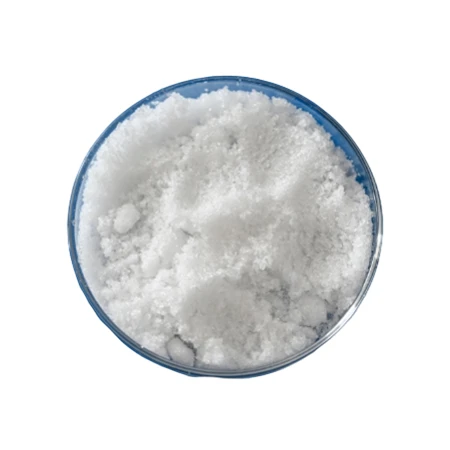
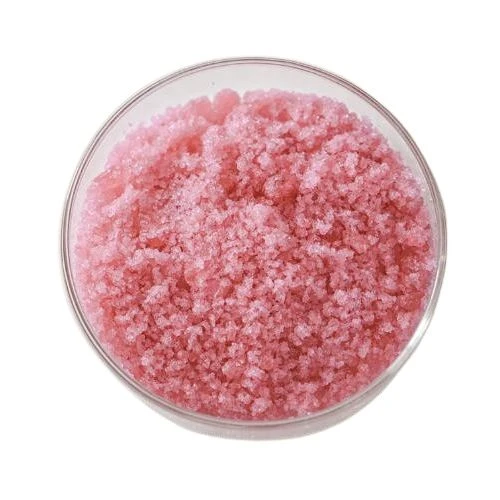
For instance, if we know the stability constants under different conditions, we can better control the production process. We can adjust the reaction conditions to optimize the formation of the desired holmium nitrate complexes and minimize the formation of unwanted by - products.
Moreover, when our customers use our holmium nitrate products in their applications, the stability of the complexes can affect the performance of their end - products. For example, if a customer is using holmium nitrate in a chemical synthesis, the stability of the complexes can influence the reaction rate and the yield of the final product.
If you're in the market for rare - earth nitrates, you might also be interested in some related products. We also supply Erbium Nitrate, Yttrium Iii Nitrate Hexahydrate, and Gadolinium Nitrate. These products have their own unique properties and stability characteristics, which can be useful in a wide range of applications.
Whether you're a researcher working on a new project or a manufacturer looking for high - quality rare - earth nitrates, we're here to help. Our team has extensive knowledge of the properties of holmium nitrate and other rare - earth nitrates, and we can provide you with the technical support you need.
If you're interested in learning more about our products or have any questions regarding the stability constants of holmium nitrate complexes, don't hesitate to get in touch. We're always happy to discuss your specific requirements and find the best solutions for you.
References
- Martell, A. E., & Smith, R. M. (1974). Critical Stability Constants. Plenum Press.
- Burgess, J. (1978). Metal Ions in Solution. Ellis Horwood Limited.