

Reaction kinetics is a fundamental aspect of understanding chemical reactions, providing insights into how reactants transform into products over time. When it comes to holmium nitrate, a compound with various applications in different industries, exploring its reaction kinetics can help us better understand its behavior in chemical processes. As a trusted holmium nitrate supplier, we are committed to sharing in - depth knowledge about this compound to support our customers in their research and industrial applications.
Basic Information about Holmium Nitrate
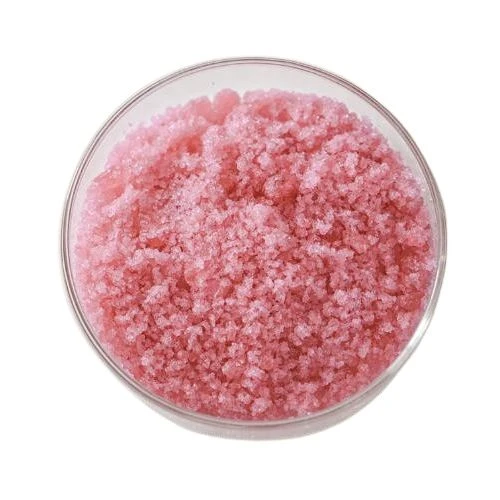
Holmium nitrate, with the chemical formula Ho(NO₃)₃, is a rare - earth metal nitrate. Holmium is a lanthanide element, and its nitrates are known for their unique chemical and physical properties. Holmium nitrate usually exists as a hydrated salt, such as Ho(NO₃)₃·xH₂O, where x can vary depending on the conditions of preparation and storage. It is a water - soluble compound, which makes it suitable for use in aqueous - phase reactions.
Reaction Kinetics Principles
Before delving into the reaction kinetics of holmium nitrate, it is essential to understand the basic principles of reaction kinetics. Reaction kinetics is concerned with the rate at which a chemical reaction occurs. The rate of a reaction is influenced by several factors, including the concentration of reactants, temperature, presence of catalysts, and surface area (in the case of heterogeneous reactions).
The rate law of a reaction expresses the relationship between the rate of the reaction and the concentrations of the reactants. For a general reaction (aA + bB\rightarrow cC + dD), the rate law can be written as (rate = k[A]^m[B]^n), where (k) is the rate constant, ([A]) and ([B]) are the concentrations of reactants (A) and (B), and (m) and (n) are the reaction orders with respect to (A) and (B) respectively.
Reaction Kinetics of Holmium Nitrate
1. Hydrolysis Reactions
One of the common reactions of holmium nitrate in aqueous solutions is hydrolysis. In water, holmium nitrate can react with water molecules to form holmium hydroxide species and nitric acid. The hydrolysis reaction can be represented as follows:
(Ho(NO₃)₃ + 3H₂O\rightleftharpoons Ho(OH)₃+ 3HNO₃)
The rate of this hydrolysis reaction is affected by the pH of the solution, temperature, and the initial concentration of holmium nitrate. At low pH values, the equilibrium of the hydrolysis reaction is shifted to the left, as the high concentration of (H^+) ions from the nitric acid suppresses the formation of holmium hydroxide. As the pH increases, the hydrolysis reaction proceeds more readily, and the rate of formation of holmium hydroxide increases.
Temperature also plays a crucial role in the hydrolysis reaction. According to the Arrhenius equation (k = A\mathrm{e}^{-E_a/RT}), where (A) is the pre - exponential factor, (E_a) is the activation energy, (R) is the gas constant, and (T) is the absolute temperature. An increase in temperature leads to an increase in the rate constant (k), which means that the hydrolysis reaction of holmium nitrate occurs more rapidly at higher temperatures.
2. Redox Reactions
Although holmium nitrate is not typically involved in common redox reactions under normal conditions, it can participate in redox processes in the presence of strong oxidizing or reducing agents. For example, in the presence of a strong reducing agent, holmium(III) in holmium nitrate may be reduced to a lower oxidation state. However, such reactions are relatively rare due to the stability of the +3 oxidation state of holmium.
The rate of redox reactions involving holmium nitrate depends on the nature of the redox agent, the concentration of the reactants, and the reaction conditions. The reaction mechanism of these redox reactions is often complex and may involve multiple steps.
3. Complexation Reactions
Holmium nitrate can form complexes with various ligands. Ligands are molecules or ions that can donate a pair of electrons to the central holmium ion. For example, it can form complexes with organic ligands such as ethylenediaminetetraacetic acid (EDTA).
The reaction kinetics of complexation reactions are influenced by the structure and properties of the ligands, the concentration of holmium nitrate and the ligands, and the reaction conditions. The formation of complexes usually involves a series of steps, including the approach of the ligand to the holmium ion, the formation of coordinate bonds, and the rearrangement of the complex structure.

Comparison with Other Nitrates
It is interesting to compare the reaction kinetics of holmium nitrate with other nitrates, such as Dysprosium Nitrate, Lithium Nitrate, and Erbium Nitrate.
Dysprosium nitrate, like holmium nitrate, is a rare - earth metal nitrate. Both dysprosium and holmium belong to the lanthanide series, and their nitrates have similar chemical properties. However, due to the differences in the ionic radii and electronic configurations of dysprosium and holmium, their reaction kinetics in hydrolysis, complexation, and other reactions may vary slightly.
Lithium nitrate is an alkali metal nitrate. Unlike holmium nitrate, lithium nitrate is highly soluble in water and has a relatively simple chemical behavior. The hydrolysis of lithium nitrate is negligible compared to that of holmium nitrate because lithium hydroxide is a strong base, and the equilibrium of the hydrolysis reaction is strongly shifted to the left.
Erbium nitrate is another rare - earth metal nitrate. Similar to holmium nitrate, erbium nitrate can undergo hydrolysis and complexation reactions. However, the reaction rates and equilibrium constants of these reactions may differ due to the differences in the chemical properties of erbium and holmium.
Applications Based on Reaction Kinetics
Understanding the reaction kinetics of holmium nitrate is crucial for its applications in various fields. In the field of materials science, the hydrolysis reaction of holmium nitrate can be used to prepare holmium - based nanoparticles or thin films. By controlling the reaction rate and conditions, we can obtain materials with desired particle sizes and morphologies.
In the field of catalysis, the complexation reactions of holmium nitrate can be utilized to design new catalysts. The ability of holmium nitrate to form complexes with different ligands can be exploited to tune the catalytic activity and selectivity of the catalysts.
Conclusion
In conclusion, the reaction kinetics of holmium nitrate is a fascinating area of study. The hydrolysis, redox, and complexation reactions of holmium nitrate are influenced by various factors such as concentration, temperature, and the nature of the reactants. By understanding these reaction kinetics, we can better control the chemical processes involving holmium nitrate and develop new applications for this compound.
As a reliable holmium nitrate supplier, we are dedicated to providing high - quality holmium nitrate products and technical support to our customers. Whether you are conducting research on reaction kinetics or using holmium nitrate in industrial applications, we are here to assist you. If you are interested in purchasing holmium nitrate or have any questions about its properties and applications, please feel free to contact us for further discussion and procurement negotiation.
References
- Atkins, P. W., & de Paula, J. (2014). Physical Chemistry. Oxford University Press.
- Housecroft, C. E., & Sharpe, A. G. (2012). Inorganic Chemistry. Pearson Education.
- Cotton, F. A., Wilkinson, G., Murillo, C. A., & Bochmann, M. (1999). Advanced Inorganic Chemistry. Wiley.