

Hey there! As a terbium oxide supplier, I'm super stoked to dive into the physical properties of this pretty cool compound. Terbium oxide, which can come in different forms like terbium(III,IV) oxide (Tb₄O₇) and terbium(III) oxide (Tb₂O₃), has some really interesting characteristics that make it useful in a bunch of applications.
Appearance and Color
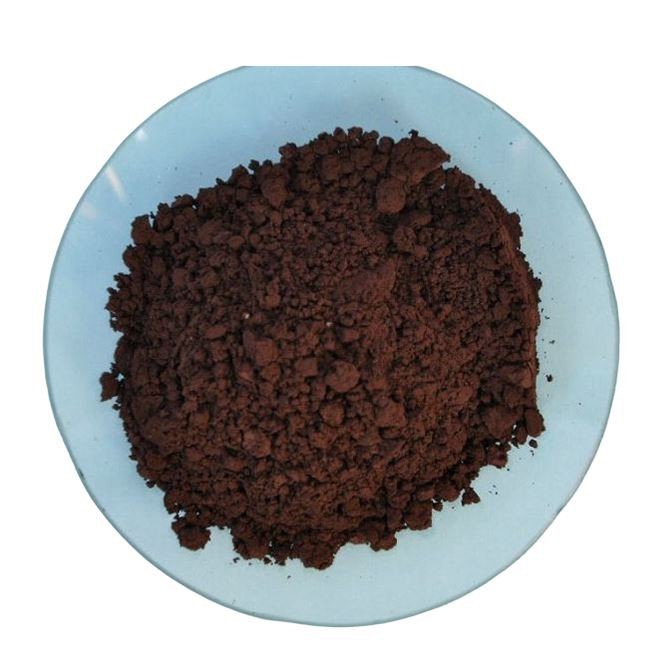
First off, let's talk about how terbium oxide looks. Terbium(III,IV) oxide, the most common form, is a dark-brown to black powder. It's not the kind of bright, flashy color you might expect, but that's part of its charm. The color comes from the way the terbium atoms interact with oxygen and how they absorb and reflect light. This dark color can be a key identifier when you're working with different rare - earth oxides.
On the other hand, terbium(III) oxide is a pale - pink to white powder. The difference in color between these two forms is due to the oxidation state of terbium. In terbium(III,IV) oxide, terbium exists in both +3 and +4 oxidation states, while in terbium(III) oxide, it's only in the +3 state. This change in oxidation state affects the electronic structure of the compound, which in turn influences its color.
Density
Terbium oxide has a relatively high density. For terbium(III,IV) oxide, the density is around 7.3 g/cm³. This high density is typical of many rare - earth oxides. It's related to the large atomic mass of terbium and the way the atoms are packed in the crystal lattice. The high density can be an important factor in applications where weight or mass is a consideration, like in some high - performance materials.
Melting and Boiling Points
Terbium(III,IV) oxide has a very high melting point, around 2330 °C. This extreme heat resistance makes it suitable for use in high - temperature applications. For example, it can be used in refractory materials that need to withstand intense heat without melting or degrading. As for the boiling point, it's not as well - defined, but it's likely to be extremely high, given the strong ionic bonds in the compound.
Solubility
Terbium oxide is insoluble in water. This is a common property among many metal oxides. However, it can react with acids to form terbium salts. For instance, when terbium(III,IV) oxide reacts with hydrochloric acid, it forms terbium chloride salts and water. This solubility behavior is important in chemical processing, as it allows for the extraction and purification of terbium from its oxide form.

Crystal Structure
The crystal structure of terbium(III,IV) oxide is a cubic fluorite - type structure. In this structure, each terbium atom is surrounded by eight oxygen atoms, and each oxygen atom is surrounded by four terbium atoms. This highly ordered structure gives terbium oxide its stability and contributes to its physical properties, such as its high melting point and density.
Particle Size and Surface Area
When it comes to terbium oxide powders, the particle size can vary. We offer different products like Terbium Iii Iv Oxide Powder and Nano Terbium Oxide. Nano terbium oxide, as the name suggests, has extremely small particle sizes in the nanometer range. These small particles have a large surface area compared to larger particles. A large surface area can enhance the reactivity of the compound, making it more useful in catalytic applications. For example, in some chemical reactions, the large surface area of nano terbium oxide provides more active sites for the reaction to occur, increasing the reaction rate.
Applications Based on Physical Properties
The physical properties of terbium oxide make it useful in a wide range of applications. One of the well - known uses is in Terbium Oxide Glaze. The high melting point and color properties of terbium oxide make it suitable for creating unique glazes for ceramics. The dark color of terbium(III,IV) oxide can be used to produce interesting color effects in glazes, and its heat resistance ensures that the glaze doesn't melt or deform during the firing process.
Terbium oxide is also used in phosphors. The electronic transitions in terbium ions can emit light of specific wavelengths when excited. This property is used in lighting applications, such as fluorescent lamps and LED displays. The high density and stability of terbium oxide contribute to the long - term performance of these phosphors.
In addition, due to its high melting point and chemical stability, terbium oxide can be used in the production of special glasses. It can improve the refractive index and other optical properties of the glass, making it useful in optical lenses and other precision optical devices.
Why Choose Our Terbium Oxide?
As a supplier, we take pride in offering high - quality terbium oxide products. We ensure that our products meet strict quality standards in terms of purity, particle size, and physical properties. Whether you need terbium oxide for glazes, phosphors, or other applications, we have the right product for you. Our team of experts is always ready to provide technical support and answer any questions you might have about terbium oxide.
If you're interested in purchasing terbium oxide for your project, we'd love to have a chat with you. We can discuss your specific requirements, provide samples if needed, and work out the best deal for you. Contact us to start the procurement process and explore how terbium oxide can benefit your business.
References
- Greenwood, N. N., & Earnshaw, A. (1997). Chemistry of the Elements (2nd ed.). Butterworth - Heinemann.
- Cotton, F. A., Wilkinson, G., Murillo, C. A., & Bochmann, M. (1999). Advanced Inorganic Chemistry (6th ed.). John Wiley & Sons.