

Yo! I'm a supplier of terbium oxide, and I'm super stoked to chat with you about its chemical properties. Terbium oxide is a pretty fascinating compound, and understanding its chemistry can open up a whole world of possibilities for various applications.
First off, let's talk about the basic stuff. Terbium oxide mainly comes in two common forms: terbium(III) oxide (Tb₂O₃) and terbium(III,IV) oxide (Tb₄O₇). Terbium(III) oxide is a pale - yellow powder, while terbium(III,IV) oxide is a dark - brown to black powder.
One of the key chemical properties of terbium oxide is its oxidation states. Terbium can exist in multiple oxidation states, with +3 and +4 being the most common ones in its oxides. The ability to switch between these oxidation states makes terbium oxide a great candidate for redox reactions. In chemical reactions where oxidation and reduction are crucial, terbium oxide can act as an electron donor or acceptor. This property is exploited in many catalytic processes. For example, in some oxidation reactions in the chemical industry, terbium oxide can be used as a catalyst to speed up the reaction by facilitating the transfer of electrons between reactants.
Another important chemical characteristic is its reactivity with acids. Terbium oxide readily reacts with strong acids. Take hydrochloric acid (HCl) for example. When terbium oxide reacts with HCl, it forms terbium chloride and water. The reaction is as follows for terbium(III) oxide:
Tb₂O₃ + 6HCl → 2TbCl₃+ 3H₂O
This reaction is pretty straightforward and is often used in the purification and separation of terbium from other elements. If you have a mixture that contains terbium oxide along with other oxides, using acid treatment can help to dissolve the terbium compounds selectively, allowing for easier separation from the non - reactive components.
Terbium oxide also has interesting properties when it comes to its behavior in high - temperature environments. At elevated temperatures, terbium(III) oxide can be oxidized to terbium(III,IV) oxide. This oxidation process is thermodynamically driven, and it involves the transfer of oxygen atoms to the terbium ions. High - temperature oxidation can change the color, structure, and other physical properties of the oxide as well. In some high - temperature applications, like in certain electronic devices or refractory materials, this change in oxidation state needs to be carefully controlled to ensure the stability and performance of the final product.
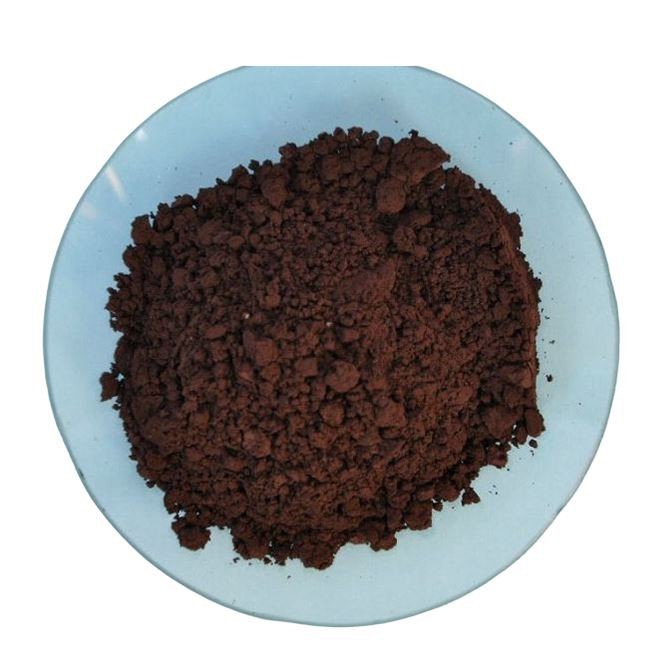

In terms of solubility, terbium oxide is generally insoluble in water. This is a common property among many metal oxides. However, as we've mentioned before, it can dissolve in acidic solutions. Its low solubility in water makes it useful in applications where water resistance is required. For instance, in some ceramic glazes, terbium oxide can be added. You can check out Terbium Oxide Glaze to learn more about how terbium oxide is used in this context. The non - solubility of terbium oxide in water helps to keep the glaze intact and prevents it from being washed away by moisture.
Let's move on to the electrical and magnetic properties, which are closely related to its chemical structure. Terbium oxide shows interesting magnetic behavior due to the unpaired electrons in the terbium ions. In terbium(III) oxide, the terbium ions have a +3 oxidation state, which means they have a certain number of unpaired electrons. These unpaired electrons give rise to magnetic moments, making terbium oxide paramagnetic. Paramagnetic materials are attracted to magnetic fields, and their magnetic properties can be exploited in applications such as magnetic resonance imaging (MRI) contrast agents, although more research is still ongoing in this area to fully develop the use of terbium oxide in such applications.
When it comes to its applications in the form of powder, Terbium Iii Iv Oxide Powder has a wide range of uses. The fine particle size of the powder gives it a large surface area, which enhances its reactivity in chemical reactions. For example, in the production of certain advanced ceramics, the powder form of terbium oxide can be easily mixed with other ceramic precursors. During the sintering process (a high - temperature process to form a solid mass), the terbium oxide can react with other components to improve the mechanical and electrical properties of the ceramic.
Now, let's talk about nano terbium oxide. Nano Terbium Oxide takes the properties of terbium oxide to a whole new level. Nano - sized particles have unique physical and chemical properties compared to their bulk counterparts. In the case of nano terbium oxide, the extremely small particle size leads to a much higher surface - to - volume ratio. This means that there are more atoms available on the surface for chemical reactions, making it even more reactive than regular - sized terbium oxide. Nano terbium oxide is being explored for applications in areas such as fluorescence materials, where the enhanced surface properties can improve the emission efficiency of light.
As a supplier of terbium oxide, I've seen how these chemical properties translate into real - world applications. Whether you're in the electronics industry, the ceramics field, or involved in research, understanding these properties is key to getting the most out of terbium oxide.
If you're interested in purchasing terbium oxide for your projects, whether it's the glaze form, the powder, or the nano version, I'd be more than happy to have a chat with you. We can discuss the specific requirements you have based on the applications you're looking at and the chemical properties you need. So, don't hesitate to reach out and start a conversation about how terbium oxide can fit into your plans.
References
- Cotton, F. A.; Wilkinson, G.; Murillo, C. A.; Bochmann, M. (1999). Advanced Inorganic Chemistry (6th ed.). Wiley.
- Greenwood, N. N.; Earnshaw, A. (1997). Chemistry of the Elements (2nd ed.). Butterworth - Heinemann.