

Terbium oxide, a significant rare - earth compound, has carved out a niche for itself in the vast field of metallurgy. As a terbium oxide supplier, I've witnessed firsthand the diverse and game - changing applications of this compound. In this blog, I'll take you through some of the most prominent uses of terbium oxide in metallurgy.
1. Improving Metal Properties
One of the primary applications of terbium oxide in metallurgy is its use as an alloying agent. When added to metals in small amounts, terbium oxide can significantly enhance the mechanical and physical properties of the base metal. For example, in the case of steel, terbium oxide can improve its strength, hardness, and corrosion resistance.
The addition of terbium oxide to steel can refine the grain structure. A finer grain structure leads to increased strength and toughness. This is because the smaller grains act as barriers to the movement of dislocations within the metal lattice. Dislocations are essentially defects in the crystal structure of the metal, and their movement is what causes the metal to deform under stress. With a finer grain structure, the dislocations have a harder time moving, resulting in a stronger and more ductile material.
Moreover, terbium oxide can also enhance the corrosion resistance of steel. It forms a protective layer on the surface of the steel, which acts as a barrier against corrosive agents such as oxygen and moisture. This is particularly important in applications where the steel is exposed to harsh environments, like in marine or chemical processing industries. You can find high - quality terbium oxide for such alloying purposes on our website, like the Terbium Iii Iv Oxide Powder.
2. Magnetic Materials
Terbium oxide is a key component in the production of high - performance magnetic materials. It has unique magnetic properties due to the presence of unpaired electrons in its terbium ions. These magnetic properties make it ideal for use in various magnetic applications in metallurgy.
One of the most well - known applications is in the production of magnetostrictive materials. Magnetostriction is the property of a material to change its shape or dimensions in response to a magnetic field. Terbium - based magnetostrictive materials, such as Terfenol - D (a terbium - dysprosium - iron alloy), are widely used in actuators, sensors, and vibration control systems.
In actuators, the magnetostrictive effect is used to convert electrical energy into mechanical energy. When a magnetic field is applied to a Terfenol - D rod, it changes its length, which can be used to move or control other components. These actuators are used in a wide range of industries, from aerospace to automotive. For instance, in aerospace, they can be used in flight control systems to adjust the position of control surfaces.
The Nano Terbium Oxide we offer is especially useful in the production of these advanced magnetic materials. The nanoscale size of the terbium oxide particles can enhance the magnetic properties of the final material, allowing for more efficient and powerful magnetic devices.
3. Refining Metals
Terbium oxide also plays a role in the refining process of some metals. In the purification of certain rare - earth metals, terbium oxide can be used as a scavenger to remove impurities. It has a high affinity for certain elements, such as sulfur and phosphorus, which are common impurities in metals.
During the refining process, terbium oxide reacts with these impurities to form stable compounds that can be easily separated from the metal. This helps in obtaining a purer form of the metal, which is essential for applications where high - purity metals are required, such as in electronics and semiconductor industries.
4. Metallurgical Coatings
Metallurgical coatings are used to protect metals from wear, corrosion, and oxidation. Terbium oxide can be incorporated into these coatings to enhance their performance. For example, in ceramic - based coatings, terbium oxide can improve the hardness and wear resistance of the coating.
These coatings are often used in high - temperature and high - stress applications, such as in engine components. The addition of terbium oxide can increase the coating's ability to withstand extreme conditions, thereby extending the lifespan of the coated component. You can explore the potential of terbium oxide in coatings with our Terbium Oxide Glaze, which can be used to create high - performance coatings.
5. Catalytic Applications
In metallurgy, terbium oxide can also act as a catalyst in certain chemical reactions. It can accelerate the rate of a reaction without being consumed in the process. For example, in the production of certain metals from their ores, terbium oxide can be used as a catalyst to speed up the reduction process.
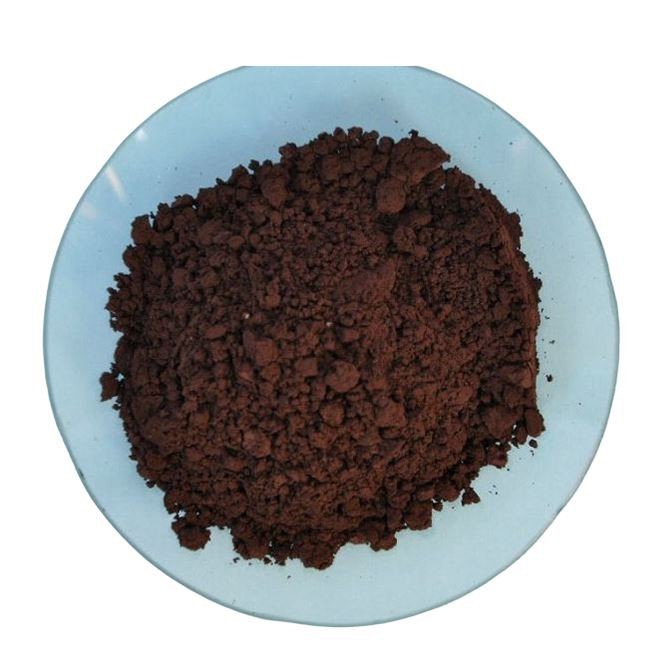

This can lead to more efficient and cost - effective metal production. By reducing the reaction time, less energy is required, and the overall production cost can be lowered. Additionally, the use of terbium oxide as a catalyst can also improve the selectivity of the reaction, leading to a higher - quality final product.
Conclusion
As you can see, terbium oxide has a wide range of applications in metallurgy. From improving metal properties to enabling advanced magnetic materials and playing a role in refining and coating processes, it's a compound that offers a lot of value.
If you're in the metallurgy industry and are looking for a reliable source of terbium oxide, look no further. We're a leading terbium oxide supplier, and we offer high - quality products at competitive prices. Whether you need terbium oxide for alloying, magnetic materials, refining, coatings, or catalytic applications, we've got you covered. Don't hesitate to reach out to us for more information or to start a procurement discussion.
References
- "Rare Earth Metals: Science, Technology, Production and Use" by B.K. Mishra, D. G. Rout, and S. K. Srivastava
- "Handbook of Magnetic Materials" edited by Klaus H. J. Buschow