

Terbium oxide is a compound that packs a punch in the world of chemical engineering. As a terbium oxide supplier, I've seen firsthand how this rare earth oxide plays a key role in various applications. Today, I'm gonna dive into its uses in chemical engineering to give you a better idea of its value.

Catalysts
One of the major applications of terbium oxide is in catalysis. In chemical reactions, catalysts are substances that speed up the reaction without being consumed themselves. Terbium oxide can be used as a component in catalysts for many reasons.
First, it has unique redox properties. Redox reactions involve the transfer of electrons. Terbium can exist in multiple oxidation states, mainly +3 and +4. This ability to switch between oxidation states allows terbium oxide to facilitate electron transfer in chemical reactions. For example, in some oxidation reactions, terbium oxide can act as an oxygen carrier. It can store and release oxygen atoms, which is crucial for the oxidation of organic compounds.
Industrial processes like the oxidation of volatile organic compounds (VOCs) in the air can benefit from terbium - based catalysts. VOCs are harmful pollutants emitted from various sources such as paints, solvents, and industrial exhausts. Terbium oxide - containing catalysts can help break down these VOCs into less harmful substances like carbon dioxide and water at relatively low temperatures. This not only reduces environmental pollution but also saves energy compared to traditional high - temperature oxidation methods.
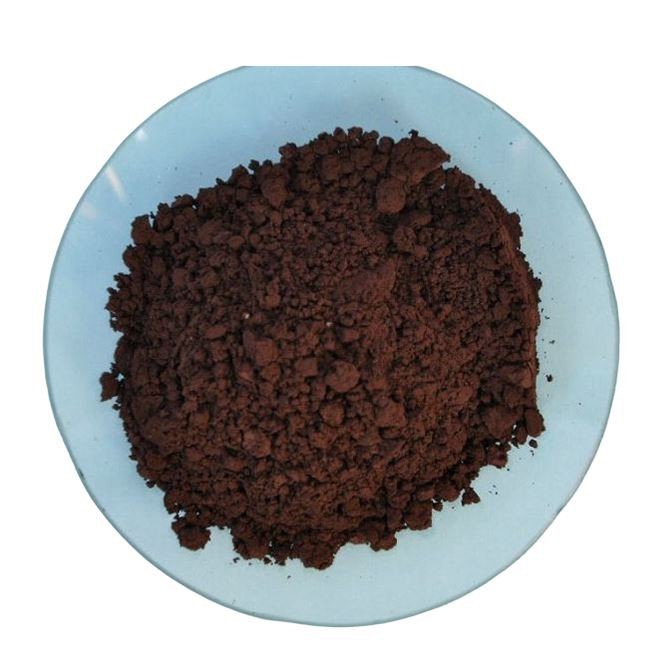
You can check out our Terbium Iii Iv Oxide Powder, which is a great option if you're looking for a catalyst material. Its high purity and fine particle size make it suitable for efficient catalytic reactions.
Glass and Ceramics
Terbium oxide also has a big presence in the glass and ceramics industry. In glass manufacturing, it's used as a colorant. When added to glass, terbium oxide can impart unique colors. Depending on the concentration and the type of glass matrix, it can produce colors ranging from green to yellow - green. This is due to the absorption and emission of specific wavelengths of light by the terbium ions in the glass.
Colored glass has various applications. For instance, in art glass pieces, terbium - colored glass can add a touch of elegance and uniqueness. In some cases, it's also used in safety glasses where the specific color can help filter out certain wavelengths of light, such as infrared or ultraviolet rays.
In ceramics, terbium oxide is used in the production of glazes. Terbium Oxide Glaze is known for its stability and the beautiful colors it can create. When fired, the terbium - containing glaze forms a smooth and shiny surface on the ceramic object. It also enhances the physical properties of the ceramic, such as its hardness and resistance to wear and corrosion. Ceramics with terbium oxide glazes are often used in high - end decorative items and in some industrial applications where durability is required.
Phosphors
Phosphors are materials that can absorb energy and then emit light. Terbium oxide is an important component in phosphors used in lighting and display technologies.
In fluorescent lamps, terbium - doped phosphors are used to produce green light. When an electric current passes through the lamp, the gas inside is excited, and this energy is transferred to the phosphor coating on the inside of the lamp. The terbium ions in the phosphor absorb the energy and then re - emit it as visible green light. By combining phosphors that emit different colors, such as red and blue, along with the green from terbium, white light can be produced, which is what we commonly use in our daily lighting.
In display technologies like cathode - ray tubes (CRTs) and some types of liquid - crystal displays (LCDs), terbium - based phosphors are also used. They contribute to the bright and vivid colors on the screen. The high efficiency and color - rendering properties of terbium - doped phosphors make them ideal for these applications. If you're in the lighting or display industry, our Nano Terbium Oxide can be a great choice. Its nano - sized particles offer better dispersion and higher luminous efficiency.
Magnetic Materials
Terbium oxide has some interesting magnetic properties that make it useful in the production of magnetic materials. Terbium is a rare earth element with a relatively large magnetic moment. When incorporated into magnetic materials, it can enhance their magnetic properties.
In some magnetic alloys, terbium oxide can be used to improve the coercivity, remanence, and Curie temperature. Coercivity is the ability of a magnetic material to resist demagnetization, remanence is the residual magnetization after the external magnetic field is removed, and the Curie temperature is the temperature above which the material loses its magnetic properties. By adding terbium oxide, these magnetic alloys can have better performance in various applications, such as in electric motors, generators, and magnetic storage devices.
Other Applications
There are also some emerging applications of terbium oxide in chemical engineering. For example, in fuel cells, terbium oxide can be used as a component in the electrolyte or electrode materials. It can improve the ionic conductivity of the electrolyte, which is crucial for the efficient operation of fuel cells. Fuel cells are a promising alternative to traditional energy sources, as they can convert chemical energy directly into electrical energy with high efficiency and low emissions.
In addition, terbium oxide is being studied for its potential use in sensors. Its unique optical and electrical properties can be used to detect certain substances or environmental changes. For example, it can be used to detect gases such as oxygen or hydrogen, or to sense changes in temperature or pH.
In conclusion, terbium oxide is a versatile compound with a wide range of applications in chemical engineering. Whether it's for catalysis, glass and ceramics, phosphors, magnetic materials, or emerging technologies, it offers unique properties that can't be easily replaced. As a terbium oxide supplier, I'm well - equipped to provide high - quality terbium oxide products to meet your specific needs. If you're interested in purchasing terbium oxide for your projects, don't hesitate to get in touch for procurement and business discussions.
References
- "Handbook of Rare Earth Elements"
- "Chemical Engineering Journal"
- "Journal of Materials Chemistry"