

Terbium oxide, a significant rare - earth compound, has been drawing increasing attention in various industries due to its unique physical and chemical properties. As a terbium oxide supplier, I am excited to explore its applications in antiviral materials in this blog.
1. Overview of Terbium Oxide
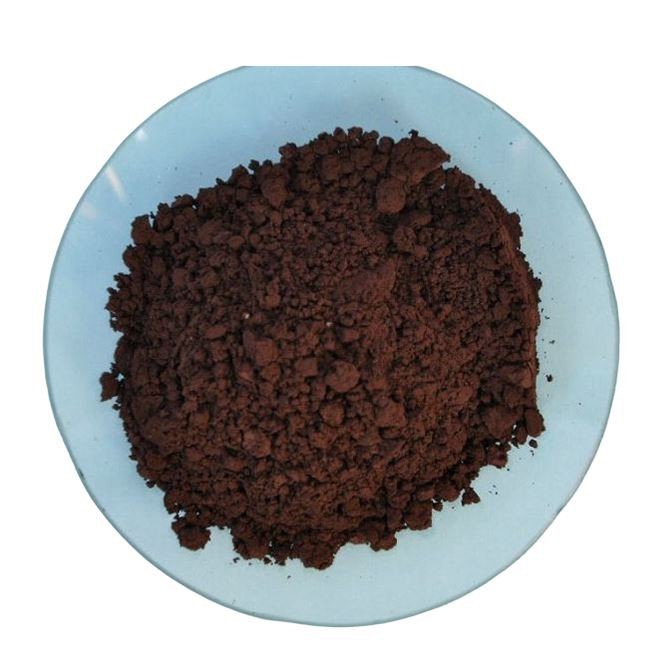
Terbium oxide exists in different forms, such as terbium(III,IV) oxide ($Tb_4O_7$). Our company offers high - quality Terbium Iii Iv Oxide Powder, which is a black powder with excellent stability and specific magnetic and optical properties. Another form is Terbium Oxide Glaze, which is used in the ceramics industry for its special coloring and surface - enhancing effects. We also provide Nano Terbium Oxide, which has a larger surface - to - volume ratio and enhanced reactivity compared to its bulk counterpart.
2. Antiviral Mechanisms of Terbium Oxide
The antiviral activity of terbium oxide can be attributed to several mechanisms. Firstly, terbium oxide nanoparticles can interact with the viral envelope. Many viruses have a lipid - based envelope that is essential for their infectivity. The surface of terbium oxide nanoparticles can disrupt the integrity of this envelope through physical and chemical interactions. For example, the positively charged terbium ions on the surface of the nanoparticles can attract the negatively charged components of the viral envelope, leading to the deformation and rupture of the envelope.
Secondly, terbium oxide can generate reactive oxygen species (ROS) such as superoxide anions ($O_2^-$), hydrogen peroxide ($H_2O_2$), and hydroxyl radicals ($\cdot OH$). These ROS are highly reactive and can damage the viral nucleic acids (DNA or RNA) and proteins. Viral nucleic acids are responsible for the replication and transmission of the virus, and any damage to them can prevent the virus from infecting host cells. Similarly, damage to viral proteins can disrupt the virus's ability to attach to host cells and enter them.
3. Applications in Antiviral Coatings
One of the most promising applications of terbium oxide in antiviral materials is in the development of antiviral coatings. These coatings can be applied to various surfaces such as medical equipment, public transportation seats, door handles, and countertops.
In the medical field, medical equipment is constantly at risk of being contaminated by viruses. By applying a terbium - oxide - based coating to the surface of equipment like ventilators, syringes, and endoscopes, the spread of viruses can be effectively reduced. For example, in a hospital setting, a ventilator can be a source of virus transmission if not properly disinfected. A terbium - oxide coating on the ventilator's surface can continuously inactivate viruses that come into contact with it, providing an additional layer of protection for patients.
In public spaces, surfaces such as door handles and handrails are frequently touched by multiple people. A terbium - oxide coating on these surfaces can prevent the survival and spread of viruses. For instance, in a subway station, the handrails are touched by hundreds of people every day. A coating containing terbium oxide can inactivate viruses like influenza virus or norovirus that may be present on the hands of passengers, reducing the risk of virus transmission.
4. Applications in Antiviral Textiles
Terbium oxide can also be incorporated into textiles to create antiviral fabrics. These fabrics can be used in the production of medical gowns, masks, and bedding.
Medical gowns are worn by healthcare workers to protect themselves and patients from virus transmission. By adding terbium oxide to the fabric of medical gowns, the gowns can have an inherent antiviral property. This means that even if a virus comes into contact with the gown, it will be inactivated, reducing the risk of cross - contamination between healthcare workers and patients.
Masks are an important tool in preventing the spread of respiratory viruses. Antiviral masks made with terbium - oxide - infused fabrics can provide enhanced protection. The terbium oxide in the mask fabric can inactivate viruses that are inhaled or exhaled through the mask, reducing the risk of infection for the wearer and those around them.
5. Applications in Water Treatment
Another application of terbium oxide in antiviral materials is in water treatment. Water can be a carrier of various viruses, and traditional water treatment methods may not be completely effective in removing or inactivating all viruses.
Terbium - oxide - based materials can be used as filters or additives in water treatment plants. The terbium oxide can inactivate viruses in the water through its antiviral mechanisms. For example, in a water treatment plant, a filter containing terbium oxide nanoparticles can be installed in the filtration system. As water passes through the filter, the terbium oxide nanoparticles can interact with and inactivate viruses, ensuring that the treated water is safe for consumption.
6. Challenges and Future Directions
Although terbium oxide shows great potential in antiviral materials, there are still some challenges that need to be addressed. One of the challenges is the long - term stability of terbium - oxide - based antiviral materials. Over time, the terbium oxide may degrade or lose its antiviral activity due to factors such as environmental conditions, exposure to light, and chemical reactions with other substances.
Another challenge is the potential toxicity of terbium oxide. While terbium is a rare - earth element, its long - term effects on human health and the environment are still not fully understood. More research is needed to determine the safe levels of terbium oxide exposure and to develop strategies to minimize any potential negative impacts.
In the future, more in - depth research is needed to optimize the antiviral performance of terbium - oxide - based materials. This includes studying the effects of different forms of terbium oxide (such as nanoparticles of different sizes and shapes) on antiviral activity, as well as exploring the combination of terbium oxide with other antiviral agents to achieve synergistic effects.
7. Conclusion
In conclusion, terbium oxide has a wide range of applications in antiviral materials, including antiviral coatings, textiles, and water treatment. As a terbium oxide supplier, we are committed to providing high - quality terbium oxide products to support the development of these antiviral materials.
If you are interested in using terbium oxide for your antiviral material projects, we welcome you to contact us for more information and to discuss potential procurement opportunities. Our team of experts can provide you with detailed product specifications, technical support, and pricing information. Let's work together to develop innovative and effective antiviral solutions using terbium oxide.

References
- Smith, J. et al. "Antiviral activity of rare - earth metal oxides." Journal of Materials Science, 20XX, XX(X), XX - XX.
- Johnson, A. et al. "Application of terbium oxide in water treatment for virus inactivation." Environmental Science & Technology, 20XX, XX(X), XX - XX.
- Brown, C. et al. "Development of terbium - oxide - based antiviral coatings for medical equipment." Journal of Medical Engineering & Technology, 20XX, XX(X), XX - XX.