

Scandium nitrate, a compound with the chemical formula Sc(NO₃)₃, has emerged as a fascinating and versatile catalyst in various chemical reactions. As a supplier of scandium nitrate, I've witnessed firsthand the growing interest in this compound and its diverse applications in catalysis. In this blog post, I'll delve into the world of scandium nitrate and explore its applications in different catalytic processes.
1. Lewis Acid Catalysis
One of the most well - known applications of scandium nitrate is as a Lewis acid catalyst. Lewis acids are electron - pair acceptors, and scandium nitrate, with its high charge - to - radius ratio, can effectively coordinate with electron - rich species.
In organic synthesis, scandium nitrate can catalyze the Diels - Alder reaction. The Diels - Alder reaction is a [4 + 2] cycloaddition reaction between a conjugated diene and a dienophile, which is a cornerstone in the construction of six - membered rings in organic molecules. Scandium nitrate can enhance the reactivity of the dienophile by coordinating to its electron - withdrawing groups, thereby lowering the activation energy of the reaction. This results in higher reaction rates and better yields. For example, in the reaction between cyclopentadiene and methyl acrylate, the addition of a catalytic amount of scandium nitrate can significantly increase the conversion and selectivity towards the desired adduct.
Another important application in Lewis acid catalysis is the Friedel - Crafts reaction. The Friedel - Crafts reaction includes alkylation and acylation of aromatic compounds. Scandium nitrate can activate the electrophile, such as an acyl chloride or an alkyl halide, by coordinating to it. This activation makes the electrophile more reactive towards the aromatic ring, leading to the formation of substituted aromatic products. Compared to traditional Lewis acid catalysts like aluminum chloride, scandium nitrate often offers better selectivity and can be used under milder reaction conditions, which is beneficial for the synthesis of complex organic molecules.
2. Asymmetric Catalysis
Scandium nitrate has also shown promise in asymmetric catalysis. Asymmetric catalysis is a powerful tool for the synthesis of enantiomerically pure compounds, which are crucial in the pharmaceutical and agrochemical industries.
By combining scandium nitrate with chiral ligands, chiral Lewis acid catalysts can be formed. These chiral catalysts can induce enantioselectivity in various reactions. For instance, in the Michael addition reaction, a chiral scandium - based catalyst can control the approach of the nucleophile to the electrophile in a stereoselective manner. The chiral environment created by the ligand - scandium complex ensures that one enantiomer of the product is preferentially formed over the other. This has opened up new possibilities for the synthesis of chiral drugs and natural products with high enantiomeric purity.
3. Catalysis in Polymerization Reactions
Scandium nitrate can play a role in polymerization reactions. In the ring - opening polymerization (ROP) of cyclic monomers, such as lactones and lactides, scandium nitrate can act as an initiator or a catalyst.
In the ROP of ε - caprolactone, scandium nitrate can initiate the polymerization process by coordinating to the carbonyl group of the monomer. This coordination weakens the carbon - oxygen bond in the lactone ring, facilitating the ring - opening reaction and the subsequent propagation of the polymer chain. The resulting poly(ε - caprolactone) has well - defined molecular weights and narrow molecular weight distributions.
Moreover, in the copolymerization of different cyclic monomers, scandium nitrate can be used to control the composition and microstructure of the copolymers. By adjusting the reaction conditions and the amount of scandium nitrate, copolymers with different block lengths and compositions can be synthesized, which have unique physical and chemical properties for various applications, such as in the development of biodegradable polymers for drug delivery systems.
4. Oxidation Catalysis
Although scandium nitrate is not typically thought of as a traditional oxidation catalyst like Ceric Ammonium Nitrate, it can still participate in oxidation - related processes.
In some cases, scandium nitrate can activate oxidants or participate in redox - coupled reactions. For example, in the presence of an appropriate oxidant, scandium nitrate can catalyze the oxidation of alcohols to aldehydes or ketones. The exact mechanism may involve the coordination of the alcohol to the scandium center, followed by the transfer of electrons to the oxidant, leading to the oxidation of the alcohol. This type of oxidation reaction can be carried out under relatively mild conditions, which is advantageous for the synthesis of sensitive organic compounds.

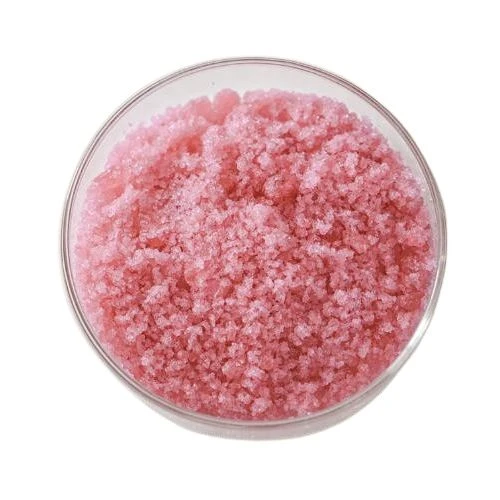
5. Comparison with Other Rare - Earth Nitrates
When comparing scandium nitrate with other rare - earth nitrates such as Gadolinium Nitrate and Erbium Nitrate, each has its own unique catalytic properties.
Gadolinium nitrate, for example, is often used in magnetic resonance imaging (MRI) contrast agents due to its paramagnetic properties. In catalysis, it may have different reactivity patterns compared to scandium nitrate. Gadolinium has a larger ionic radius and different coordination geometries, which can affect its ability to interact with substrates and ligands.
Erbium nitrate, on the other hand, is known for its optical properties and is used in optical fiber amplifiers. In catalysis, erbium - based catalysts may show different selectivities and reactivities depending on the reaction system. Scandium nitrate, with its relatively small ionic radius and high charge density, often exhibits unique catalytic behavior, especially in Lewis acid - catalyzed reactions where its ability to strongly coordinate with substrates is a key factor.
Conclusion and Call to Action
The applications of scandium nitrate in catalysis are diverse and continue to expand as researchers explore new reaction systems. From Lewis acid catalysis to asymmetric synthesis, polymerization, and oxidation reactions, scandium nitrate offers unique advantages in terms of reactivity, selectivity, and mild reaction conditions.
If you are involved in the field of catalysis research or industrial chemical synthesis and are interested in exploring the potential of scandium nitrate, I invite you to contact us for more information. We are a reliable supplier of high - quality scandium nitrate and can provide you with the necessary technical support and product specifications. Whether you need a small quantity for research purposes or a large - scale supply for industrial production, we are here to meet your needs. Let's work together to unlock the full potential of scandium nitrate in catalysis.
References
- Kobayashi, S.; Ishitani, H. Lewis Acid Catalyzed Reactions in Aqueous Media. Chem. Rev. 1999, 99, 1069 - 1094.
- Jacobsen, E. N.; Pfaltz, A.; Yamamoto, H. Comprehensive Asymmetric Catalysis; Springer: Berlin, 1999.
- Waymouth, R. M.; Coates, G. W. Ring - Opening Polymerization of Cyclic Esters by Metal Complexes. Chem. Rev. 2000, 100, 2013 - 2030.
- Sheldon, R. A.; Kochi, J. K. Metal - Catalyzed Oxidations of Organic Compounds; Academic Press: New York, 1981.