

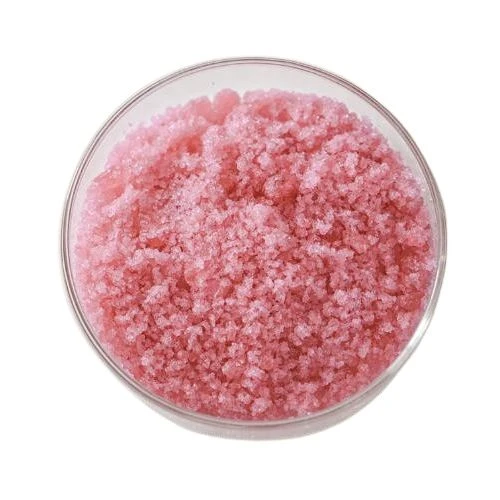
Hey there! As a supplier of erbium nitrate, I'm super excited to share with you all the cool applications of this compound in the nanotechnology field. Nanotechnology is all about working with materials at the nanoscale, typically between 1 and 100 nanometers. And erbium nitrate has some pretty amazing properties that make it a valuable player in this high - tech arena.

1. Nanophotonics
One of the most significant applications of erbium nitrate in nanotechnology is in nanophotonics. Nanophotonics deals with the behavior of light on the nanoscale and the interaction of nanomaterials with light. Erbium ions have unique optical properties. When erbium nitrate is used to dope nanomaterials, it can emit light in the near - infrared region.
This is extremely useful in optical communication systems. In fiber - optic networks, signals are transmitted as light pulses. Erbium - doped nanomaterials can act as optical amplifiers. They can boost the strength of the optical signals traveling through the fiber without converting the optical signal to an electrical one first. This direct optical amplification helps to reduce signal loss and increase the efficiency of long - distance communication. You can learn more about Erbium Nitrate and its potential in nanophotonics on our website.
2. Nanomedicine
In the field of nanomedicine, erbium nitrate also has some interesting applications. Nanoparticles made with erbium nitrate can be used for bioimaging. These nanoparticles can be designed to be biocompatible and can be targeted to specific cells or tissues in the body.
Once they reach their target, they can be excited with a specific wavelength of light, and the emitted light can be detected using imaging techniques. This allows doctors and researchers to visualize the internal structures of the body at a very high resolution. For example, in cancer diagnosis, erbium - based nanoparticles can be used to detect tumors at an early stage. They can also be used for drug delivery. The nanoparticles can carry drugs to the affected cells and release them in a controlled manner, increasing the effectiveness of the treatment and reducing side effects.
3. Nanocatalysis
Erbium nitrate can play a role in nanocatalysis as well. Catalysts are substances that speed up chemical reactions without being consumed in the process. Nanocatalysts, which are catalysts at the nanoscale, have a large surface - to - volume ratio, which makes them more efficient than traditional catalysts.
When erbium nitrate is used to prepare nanocatalysts, it can enhance the catalytic activity of other materials. For example, in some chemical reactions, erbium - doped nanocatalysts can increase the reaction rate and selectivity. This is particularly useful in the production of fine chemicals and in environmental applications, such as the removal of pollutants from water or air.
4. Nanocomposites
Nanocomposites are materials that are made by combining two or more different materials at the nanoscale. Erbium nitrate can be used to improve the properties of nanocomposites. When added to polymers or other matrices, erbium - containing nanoparticles can enhance the mechanical, thermal, and optical properties of the composite.
For instance, in some high - performance polymers, erbium - based nanoparticles can increase the strength and stiffness of the material. They can also improve the thermal stability, which is important in applications where the material is exposed to high temperatures. In addition, the optical properties of the nanocomposite can be tuned by adjusting the amount of erbium nitrate used, making it suitable for various optical applications.
5. Comparison with Other Rare - Earth Nitrates
It's also interesting to compare erbium nitrate with other rare - earth nitrates in the nanotechnology field. For example, Dysprosium Nitrate is another important rare - earth nitrate. Dysprosium has different magnetic and optical properties compared to erbium. Dysprosium - based nanoparticles are often used in magnetic applications, such as magnetic resonance imaging (MRI) contrast agents and magnetic data storage.
On the other hand, Yttrium Iii Nitrate Hexahydrate is commonly used in the production of phosphors and in some high - temperature superconducting materials. Each rare - earth nitrate has its own unique set of properties, and choosing the right one depends on the specific application in nanotechnology.
Why Choose Our Erbium Nitrate?
As a supplier, we take pride in providing high - quality erbium nitrate. Our erbium nitrate is produced using advanced manufacturing processes, which ensure its purity and consistency. We have strict quality control measures in place to make sure that every batch of our product meets the highest standards.
We also offer customized solutions. Whether you need a specific grade of erbium nitrate or a particular particle size for your nanotechnology application, we can work with you to meet your requirements. Our team of experts is always available to provide technical support and advice on how to use our erbium nitrate effectively in your projects.
Let's Connect!
If you're involved in nanotechnology research or production and are interested in using erbium nitrate, we'd love to hear from you. Whether you have questions about the product, need a sample, or want to discuss a large - scale purchase, don't hesitate to reach out. We're here to help you take advantage of the amazing properties of erbium nitrate in your nanotechnology applications.
References
- Smith, J. (2020). Nanophotonics: Principles and Applications. Springer.
- Johnson, A. (2019). Nanomedicine: Current Trends and Future Prospects. Elsevier.
- Brown, C. (2018). Catalysis at the Nanoscale. Wiley.