

In the world of rare - earth elements, chlorides play a significant role in various industrial, scientific, and technological applications. As a supplier of thulium chloride, I've had the privilege of delving deep into the unique properties and characteristics of this particular rare - earth chloride and comparing it with its counterparts. This blog post aims to explore how thulium chloride stacks up against other rare - earth chlorides.
Physical and Chemical Properties
Thulium chloride (TmCl₃) is a compound that contains the rare - earth element thulium. Physically, it is a pale green solid at room temperature. One of the key features of thulium chloride is its relatively high solubility in water. This solubility is an important factor in many chemical processes where the compound needs to be in solution for reactions to occur.
When comparing it with other rare - earth chlorides, we can take Dysprosium Chloride (DyCl₃) as an example. Dysprosium chloride is yellowish - green in color. It also has good solubility in water, but its chemical reactivity can be different from thulium chloride. Dysprosium has a larger atomic radius than thulium, which can influence its bonding behavior and the stability of its compounds. This difference in atomic structure can lead to different applications in magnetic materials. Dysprosium chloride is often used in the production of high - strength permanent magnets, as dysprosium helps to improve the magnetic properties at high temperatures.
Europium Chloride Hexahydrate (EuCl₃·6H₂O) is another interesting rare - earth chloride. It is a pinkish - white crystalline solid. The presence of water molecules in its structure (as a hexahydrate) makes its physical behavior different from anhydrous thulium chloride. Europium chloride hexahydrate is well - known for its use in phosphors. Europium ions can emit characteristic light when excited, which is utilized in display technologies and lighting applications. Thulium chloride, on the other hand, does not have the same kind of prominent luminescent properties for these types of applications.

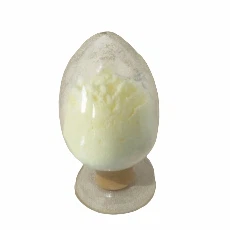
Ceric Chloride (CeCl₄) has a distinct oxidation state compared to the other chlorides mentioned. Cerium can exist in both +3 and +4 oxidation states, and ceric chloride contains cerium in the +4 state. This higher oxidation state gives ceric chloride unique redox properties. It is often used as an oxidizing agent in organic synthesis. Thulium chloride, with thulium typically in the +3 oxidation state, does not have the same strong oxidizing capabilities as ceric chloride.
Applications
In the Field of Optics
Thulium chloride has some interesting applications in the field of optics. It can be used as a dopant in optical fibers. When thulium ions are incorporated into the fiber, they can absorb and emit light at specific wavelengths. This property is useful in the development of fiber lasers and amplifiers, especially in the near - infrared region.
Dysprosium chloride, while not as commonly used in optical fibers as thulium chloride, is important in the field of magneto - optics. It can be used to create materials with strong magneto - optical effects, which are useful in devices such as optical isolators. These isolators are crucial components in optical communication systems to prevent unwanted feedback of light.
Europium chloride hexahydrate's use in phosphors for lighting and display technologies has already been mentioned. Its ability to emit red light with high efficiency makes it a key component in the production of LED lights and cathode - ray tube displays. Thulium chloride, although it may have some luminescent properties, is not as widely used in these mainstream lighting and display applications.
In Catalysis
Catalysis is another area where rare - earth chlorides find applications. Thulium chloride can act as a catalyst in some organic reactions. Its unique electronic structure can influence the reaction kinetics and selectivity. For example, in certain carbon - carbon bond - forming reactions, thulium chloride can enhance the reaction rate and yield.
Ceric chloride, as mentioned earlier, is a well - known oxidizing catalyst in organic synthesis. It can be used in reactions such as the oxidation of alcohols to aldehydes or ketones. The high oxidation state of cerium in ceric chloride allows it to transfer oxygen atoms efficiently during the reaction process. Thulium chloride, with its different oxidation state and electronic properties, has a different catalytic profile and is used in different types of reactions.
In Material Science
In the production of advanced materials, rare - earth chlorides are often used as precursors. Thulium chloride can be used to synthesize thulium - containing ceramics and alloys. These materials can have unique mechanical, thermal, and magnetic properties. For example, thulium - doped ceramics may have improved hardness and fracture toughness.
Dysprosium chloride is used in the production of dysprosium - iron - boron (Dy - Fe - B) magnets. These magnets have high coercivity and remanence, making them suitable for high - performance applications such as electric vehicle motors and wind turbine generators. The addition of dysprosium through its chloride form helps to optimize the magnetic properties of the final magnet.
Availability and Cost
The availability of rare - earth chlorides can vary significantly. Thulium is one of the least abundant rare - earth elements, which means that thulium chloride is relatively scarce compared to some other rare - earth chlorides. This scarcity often translates into a higher cost.
Dysprosium, although also not as abundant as some of the light rare - earth elements, is more available than thulium. As a result, Dysprosium Chloride is generally more affordable than thulium chloride. Europium is also relatively less abundant than some of the more common rare - earth elements, but its demand in the lighting and display industries has led to efforts to ensure a stable supply. The cost of Europium Chloride Hexahydrate is influenced by market demand and supply chain factors.
Cerium is one of the most abundant rare - earth elements. Therefore, Ceric Chloride is relatively inexpensive compared to thulium chloride. The cost difference can be a significant factor for industries when choosing which rare - earth chloride to use in their processes.
Environmental and Safety Considerations
All rare - earth chlorides need to be handled with care due to their potential environmental and health impacts. Thulium chloride, like other rare - earth chlorides, can be harmful if ingested, inhaled, or comes into contact with the skin. It is important to follow proper safety protocols when handling thulium chloride, such as wearing appropriate protective equipment.
In terms of environmental impact, the mining and processing of rare - earth elements to obtain the chlorides can have significant ecological consequences. There are issues related to land degradation, water pollution, and waste management. However, the industry is constantly working on improving its environmental practices to minimize these impacts.
Conclusion
In conclusion, thulium chloride has its own unique set of properties, applications, and challenges when compared to other rare - earth chlorides. Its scarcity and high cost are offset by its specialized applications in optics, catalysis, and material science. Other rare - earth chlorides such as Dysprosium Chloride, Europium Chloride Hexahydrate, and Ceric Chloride each have their own niches in different industries.
If you are in need of high - quality thulium chloride or are interested in learning more about its applications and how it can fit into your processes, I encourage you to reach out for a procurement discussion. We are committed to providing you with the best products and services in the rare - earth chloride market.
References
- “Handbook of Rare Earths” by Yeung, L. W. Y., & Binnemans, K.
- “Rare Earth Elements: Chemistry and Applications” by Gschneidner, K. A., & Pecharsky, V. K.
- Various scientific journals on rare - earth chemistry and materials science.