

The solubility of gallium chloride is a crucial property that impacts its various applications across different industries. As a reliable gallium chloride supplier, understanding how the pH value affects its solubility is of great significance. This knowledge not only helps us provide better products and guidance to our customers but also enables us to optimize the production and utilization of gallium chloride.
Chemical Properties of Gallium Chloride
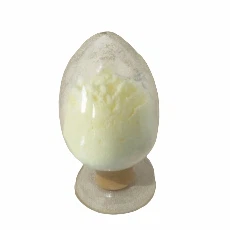
Gallium chloride exists in different forms, with gallium(III) chloride ($GaCl_3$) being the most common. It is a white or pale - yellow solid at room temperature. $GaCl_3$ is highly soluble in water and many organic solvents. When dissolved in water, it forms complex ions and undergoes hydrolysis reactions.
The hydrolysis of gallium chloride in water can be represented by the following equations:
$GaCl_3 + 3H_2O\rightleftharpoons Ga(OH)_3+3HCl$
This reaction shows that the presence of water can lead to the formation of gallium hydroxide and hydrochloric acid. The equilibrium of this reaction is affected by the pH value of the solution.
Impact of pH on Solubility
Acidic Conditions (Low pH)
In an acidic environment (low pH), the concentration of hydrogen ions ($H^+$) is high. According to Le Chatelier's principle, the high concentration of $H^+$ in the solution will shift the hydrolysis equilibrium of gallium chloride to the left. For the hydrolysis reaction $GaCl_3 + 3H_2O\rightleftharpoons Ga(OH)_3+3HCl$, an increase in $H^+$ (from the added acid) suppresses the formation of $HCl$ and thus inhibits the formation of $Ga(OH)_3$.
As a result, gallium chloride remains in its ionic form, mainly as $Ga^{3 +}$ and $Cl^-$ ions in the solution. In strongly acidic solutions, the solubility of gallium chloride is relatively high because the hydrolysis reaction is significantly suppressed. For example, in a solution with a pH of around 1 - 2 (such as in a dilute hydrochloric acid solution), gallium chloride can dissolve readily, and large amounts of it can be present in the solution without the precipitation of $Ga(OH)_3$.
Neutral Conditions (pH around 7)
At a neutral pH (around 7), the hydrolysis of gallium chloride proceeds to a certain extent. The concentration of $H^+$ and $OH^-$ ions is relatively balanced. The formation of $Ga(OH)_3$ becomes more favorable compared to acidic conditions. As the hydrolysis reaction progresses, $Ga(OH)_3$ may start to precipitate out of the solution when the solubility product of $Ga(OH)_3$ is exceeded.
The solubility product constant ($K_{sp}$) of $Ga(OH)3$ is an important factor here. The solubility product expression for $Ga(OH)3$ is $K{sp}=[Ga^{3 +}][OH^-]^3$. When the product of the concentrations of $Ga^{3 +}$ and $OH^-$ ions reaches the $K{sp}$ value, precipitation occurs. In a neutral solution, the concentration of $OH^-$ ions is sufficient to react with $Ga^{3 +}$ ions to form insoluble $Ga(OH)_3$, reducing the solubility of gallium chloride in the solution.

Alkaline Conditions (High pH)
In an alkaline environment (high pH), the concentration of hydroxide ions ($OH^-$) is high. The high concentration of $OH^-$ ions in the solution will react with $Ga^{3 +}$ ions to form $Ga(OH)_3$ and further react with the formed $Ga(OH)_3$ to form gallate ions. The reactions are as follows:
$Ga^{3 +}+3OH^-\rightarrow Ga(OH)_3\downarrow$
$Ga(OH)_3 + OH^-\rightarrow Ga(OH)_4^-$
Initially, as the pH increases from neutral to slightly alkaline, $Ga(OH)_3$ precipitates. But as the pH continues to rise, the $Ga(OH)_3$ reacts with excess $OH^-$ to form soluble gallate ions ($Ga(OH)_4^-$). So, in very alkaline solutions, the solubility of gallium chloride may increase again as it exists in the form of gallate ions.
Applications and Considerations
In the Semiconductor Industry
In the semiconductor industry, gallium chloride is used in the production of gallium - based semiconductors. The solubility of gallium chloride in different pH solutions is crucial for the deposition and doping processes. For example, in chemical vapor deposition (CVD) processes, a well - controlled solution with a specific pH is required to ensure the proper dissolution and transportation of gallium chloride to the substrate. In an acidic solution, the high solubility of gallium chloride can provide a stable source of gallium ions, which is beneficial for the uniform deposition of gallium - containing films on the semiconductor surface.
In Catalysis
Gallium chloride can act as a catalyst in some organic reactions. The pH of the reaction medium can affect the catalytic activity of gallium chloride. In an acidic environment, the high solubility of gallium chloride ensures that more active gallium species are available in the solution, which can enhance the reaction rate. However, in some reactions, a specific pH range may be required to optimize the interaction between the catalyst and the reactants.
Comparison with Other Chlorides
It is interesting to compare the solubility behavior of gallium chloride with other rare - earth chlorides. For example, Dysprosium Chloride, Europium Chloride Hexahydrate, and Ceric Chloride also have their own solubility characteristics influenced by pH.
Dysprosium chloride ($DyCl_3$) is relatively soluble in water. Similar to gallium chloride, its solubility is affected by hydrolysis. In acidic solutions, the hydrolysis of $DyCl_3$ is suppressed, and its solubility is high. However, the hydrolysis products and the solubility product constants of dysprosium hydroxide are different from those of gallium hydroxide, leading to different solubility - pH profiles.
Europium chloride hexahydrate ($EuCl_3\cdot6H_2O$) also shows solubility changes with pH. In alkaline solutions, europium hydroxide may precipitate, reducing its solubility. But the reaction kinetics and the stability of the hydrolysis products are distinct from those of gallium chloride.
Ceric chloride ($CeCl_4$) has unique redox properties in addition to its solubility behavior. The pH of the solution can affect both its solubility and its redox reactions. In some cases, the formation of cerium hydroxides or other cerium - containing species can be influenced by the pH, which is different from the behavior of gallium chloride.
Conclusion
The pH value has a significant impact on the solubility of gallium chloride. In acidic conditions, the solubility is high due to the suppression of hydrolysis. At neutral pH, the hydrolysis may lead to the precipitation of $Ga(OH)_3$, reducing solubility. In alkaline conditions, the formation of gallate ions can increase the solubility again.
As a gallium chloride supplier, we understand the importance of these solubility - pH relationships. We can provide high - quality gallium chloride products and offer professional advice on the appropriate pH conditions for different applications. Whether you are in the semiconductor industry, catalysis research, or other fields that require gallium chloride, we are here to meet your needs. If you are interested in purchasing gallium chloride or have any questions about its application and solubility, please feel free to contact us for further discussion and negotiation.
References
- Atkins, P. W., & de Paula, J. (2014). Physical Chemistry. Oxford University Press.
- Housecroft, C. E., & Sharpe, A. G. (2012). Inorganic Chemistry. Pearson Education.
- Cotton, F. A., Wilkinson, G., Murillo, C. A., & Bochmann, M. (1999). Advanced Inorganic Chemistry. John Wiley & Sons.