

Rare-earth oxides are a group of compounds with unique physical and chemical properties, finding extensive applications in various high - tech fields such as electronics, optics, and catalysis. As a leading erbium oxide supplier, I am well - positioned to discuss how erbium oxide compares with other rare - earth oxides in terms of performance.

1. Physical and Chemical Properties
1.1 Crystal Structure and Appearance
Erbium oxide ($Er_2O_3$) typically has a cubic or monoclinic crystal structure. It appears as a pink to light - purple powder. In contrast, some other rare - earth oxides have different crystal structures and colors. For example, cerium oxide ($CeO_2$) is a white or light - yellow powder with a fluorite - type cubic structure. The different crystal structures affect the packing density and surface properties of these oxides, which in turn influence their reactivity and application performance.
1.2 Thermal Stability
Erbium oxide has excellent thermal stability. It can withstand high temperatures without significant decomposition. This property makes it suitable for applications in high - temperature environments. Lanthanum oxide ($La_2O_3$), on the other hand, also has good thermal stability, but its reactivity at high temperatures may be different from that of erbium oxide. Erbium oxide's high thermal stability allows it to maintain its structure and properties in processes such as ceramic sintering and high - temperature catalysis.
1.3 Solubility
Erbium oxide is insoluble in water but can dissolve in strong acids. This solubility characteristic is similar to many other rare - earth oxides. However, the rate of dissolution and the specific chemical reactions during dissolution can vary. For instance, yttrium oxide ($Y_2O_3$) may dissolve at a different rate in the same acid solution compared to erbium oxide, which is related to the difference in their chemical bond strengths and surface reactivities.
2. Optical Performance
2.1 Absorption and Emission Spectra
One of the most remarkable features of erbium oxide is its unique optical absorption and emission spectra. Erbium ions in erbium oxide can absorb and emit light at specific wavelengths, especially in the near - infrared region. This property is crucial for applications in optical communication systems. For example, erbium - doped fiber amplifiers (EDFAs) use erbium oxide to amplify optical signals in fiber - optic networks. In comparison, neodymium oxide ($Nd_2O_3$) has its own characteristic absorption and emission spectra, mainly in the visible and near - infrared regions, and is often used in lasers and glass colorants.
2.2 Refractive Index
Erbium oxide has a relatively high refractive index, which makes it useful in optical lens and coating applications. When compared with other rare - earth oxides like gadolinium oxide ($Gd_2O_3$), the refractive index of erbium oxide can be adjusted through doping and processing techniques to meet different optical requirements. The high refractive index of erbium oxide can improve the light - gathering ability and optical performance of optical devices.
3. Electrical Performance
3.1 Conductivity
Erbium oxide is generally an insulator at room temperature. However, at high temperatures or under certain doping conditions, it can exhibit some degree of ionic conductivity. This is different from some other rare - earth oxides such as praseodymium oxide ($Pr_2O_3$), which can have more complex electrical conductivity behaviors, including both ionic and electronic conductivity. The electrical conductivity of erbium oxide can be exploited in applications such as solid - oxide fuel cells (SOFCs) when properly engineered.
3.2 Dielectric Properties
Erbium oxide has good dielectric properties, which are important for applications in capacitors and electronic devices. Compared with samarium oxide ($Sm_2O_3$), the dielectric constant and loss tangent of erbium oxide can be optimized through material processing and composition adjustment. The stable dielectric properties of erbium oxide ensure the reliable operation of electronic components.
4. Catalytic Performance
4.1 Catalytic Activity
Erbium oxide can act as a catalyst or a catalyst support in some chemical reactions. For example, it can participate in oxidation reactions and hydrogenation reactions. However, its catalytic activity is different from that of other rare - earth oxides such as ytterbium oxide ($Yb_2O_3$). The specific surface area, crystal structure, and electronic properties of erbium oxide affect its catalytic performance. In some cases, erbium oxide can show high selectivity in catalytic reactions, which is very valuable in the chemical industry.
4.2 Catalyst Stability
Erbium oxide has good catalyst stability, which means it can maintain its catalytic activity over a long period of time. This is an advantage in industrial catalytic processes. When compared with cerium - based catalysts, the stability of erbium oxide under certain reaction conditions may be more prominent, especially in high - temperature and corrosive environments.
5. Applications and Market Competitiveness
5.1 Applications
Erbium oxide has a wide range of applications. In the field of optics, it is used in Erbium Oxide Powder for optical fiber amplifiers, lasers, and phosphors. In the ceramic industry, Erbium Oxide Glaze is used to produce high - quality ceramic products with unique colors and properties. Nano Erbium Oxide has even more excellent performance in some applications due to its high specific surface area and quantum effects.
Other rare - earth oxides also have their own specific application areas. For example, dysprosium oxide is mainly used in permanent magnets, and terbium oxide is used in green phosphors. The diversity of applications of different rare - earth oxides reflects their unique performance characteristics.
5.2 Market Competitiveness
As a supplier of erbium oxide, I understand the market competitiveness of erbium oxide. In the optical communication market, the demand for erbium - doped fiber amplifiers is increasing, which gives erbium oxide a strong market position. However, the market is also competitive, and the performance and price of other rare - earth oxides may pose challenges. We need to continuously improve the quality and performance of erbium oxide products to meet the changing market demands.
6. Conclusion and Invitation for Cooperation
In conclusion, erbium oxide has unique performance characteristics in terms of physical, chemical, optical, electrical, and catalytic properties compared with other rare - earth oxides. Its excellent performance in optical communication, ceramics, and catalysis makes it a valuable material in various high - tech fields.
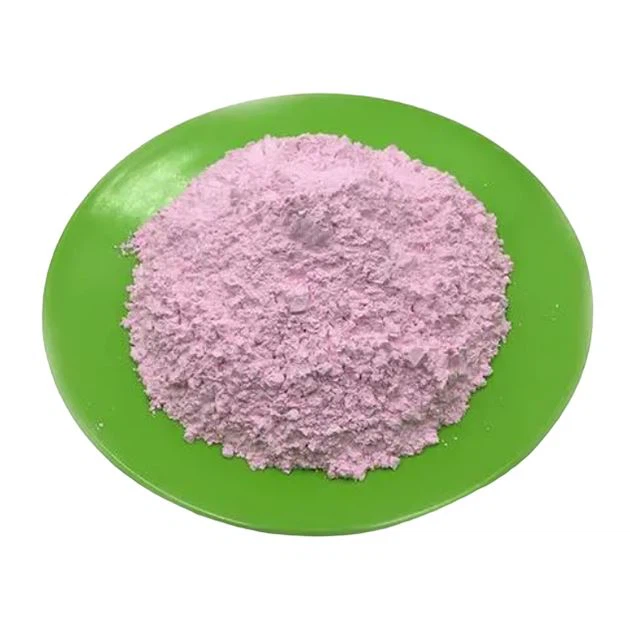
If you are interested in our erbium oxide products, whether it is Erbium Oxide Powder, Erbium Oxide Glaze, or Nano Erbium Oxide, please feel free to contact us for further procurement discussions. We are committed to providing high - quality products and professional services to meet your specific needs.
References
- "Handbook of Rare Earths" - This comprehensive reference book provides in - depth information on the properties, applications, and production of rare - earth elements and their compounds, including erbium oxide and other rare - earth oxides.
- Research papers from scientific journals such as "Journal of Alloys and Compounds" and "Optics Express". These papers present the latest research findings on the performance and applications of rare - earth oxides.
- Industry reports on the rare - earth market, which analyze the market demand, supply, and competitiveness of different rare - earth oxides.