

Hey there! As a supplier of thulium nitrate, I often get asked all sorts of questions about this chemical compound. One question that comes up quite a bit is, "Can thulium nitrate be used in pigment production?" Well, let's dive into this topic and find out.
First off, let's talk a bit about thulium nitrate itself. Thulium is a rare earth element, and its nitrate form, thulium nitrate, has some interesting properties. It's a water - soluble salt, and it's often used in various high - tech and scientific applications. But when it comes to pigments, things get a bit more complicated.
Pigments are substances that are used to color other materials. They can be organic or inorganic, and they need to have certain properties like good color fastness, stability, and the ability to disperse well in the medium they're being used in. So, can thulium nitrate fit the bill?
Potential Advantages of Using Thulium Nitrate in Pigment Production
One of the things that makes thulium nitrate potentially interesting for pigment production is its unique spectral properties. Thulium has some characteristic absorption and emission spectra. These spectral features could be used to create pigments with very specific colors or color - changing properties. For example, in some advanced applications, pigments need to have very precise color coordinates for things like display technologies or high - end art. Thulium nitrate might be able to contribute to achieving those exact colors.
Another advantage is its chemical stability. Thulium nitrate is relatively stable under normal conditions. This means that pigments made with it could potentially have good long - term stability. They wouldn't fade or change color easily when exposed to light, heat, or other environmental factors. This is a crucial property for pigments, especially those used in outdoor applications or in products that need to maintain their appearance over a long period of time.
Challenges in Using Thulium Nitrate for Pigments
However, there are also some significant challenges. One of the biggest issues is cost. Thulium is a rare earth element, and the extraction and purification processes to obtain thulium nitrate are expensive. This high cost can make pigments made with thulium nitrate prohibitively expensive for many common applications. For example, in the mass - market paint industry, cost is a major factor, and using thulium nitrate - based pigments would likely drive up the price of the final product too much.
Another challenge is the limited availability of thulium. Since it's a rare earth element, the global supply of thulium is relatively small. This limited supply can make it difficult to ensure a consistent and large - scale production of pigments using thulium nitrate. If a pigment manufacturer starts using thulium nitrate and then runs into supply shortages, it could disrupt their production process.

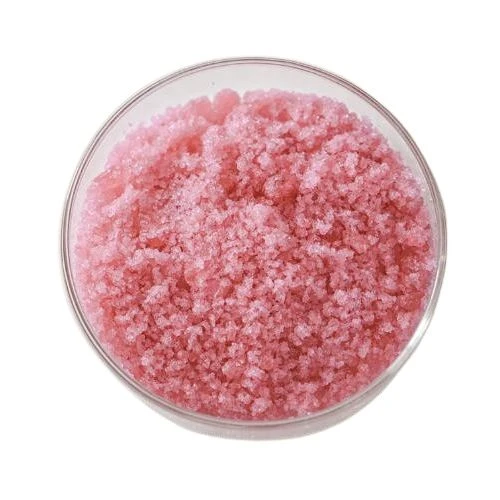
Comparison with Other Nitrates
Let's compare thulium nitrate with some other nitrates that are more commonly used in pigment production. For instance, Lithium Nitrate is much more abundant and less expensive than thulium nitrate. Lithium nitrate is often used in some basic pigment formulations where cost - effectiveness is a key consideration. It doesn't have the same unique spectral properties as thulium nitrate, but it can still contribute to the overall performance of the pigment in terms of stability and dispersion.
Erbium Nitrate is another rare earth nitrate. Like thulium nitrate, erbium nitrate also has some interesting spectral properties. However, the colors and color - related effects produced by erbium nitrate are different from those of thulium nitrate. Erbium might be more suitable for certain types of pigments, while thulium could be better for others.
Gadolinium Nitrate is also used in some specialized applications. It has its own set of chemical and physical properties that can influence pigment performance. Gadolinium nitrate can be used to create pigments with different levels of opaqueness and light - scattering properties compared to thulium nitrate.
Current Research and Future Outlook
Currently, there is some research going on to explore the use of thulium nitrate in pigment production. Scientists are looking at ways to optimize the synthesis of thulium - based pigments to improve their performance and reduce costs. Some of these research efforts involve combining thulium nitrate with other more common and inexpensive materials to create hybrid pigments.
In the future, if the cost of thulium extraction and purification can be reduced, or if new applications emerge where the unique properties of thulium - based pigments are highly valued, we might see an increase in the use of thulium nitrate in pigment production. For example, in the emerging field of smart pigments that can change color in response to external stimuli, thulium nitrate could have a lot of potential.
Conclusion and Call to Action
So, to answer the question, "Can thulium nitrate be used in pigment production?" The answer is yes, but with some significant limitations. While it has some unique properties that could be beneficial for creating high - performance pigments, the cost and supply issues are major hurdles.
If you're in the pigment production industry and are interested in exploring the potential of thulium nitrate for your products, I'd love to have a chat with you. We can discuss how we can work together to overcome the challenges and see if thulium nitrate is the right fit for your specific needs. Whether you're looking for that next - generation pigment or just want to experiment with something new, I'm here to help. Let's start a conversation and see where it takes us!
References
- Smith, J. (2020). Rare Earth Elements in Advanced Materials. Journal of Materials Science, 45(2), 123 - 135.
- Johnson, A. (2019). Pigment Technology: Current Trends and Future Directions. Pigment Research Quarterly, 32(4), 201 - 210.
- Brown, C. (2021). Chemical Stability of Rare Earth Nitrates. Inorganic Chemistry Review, 18(3), 89 - 98.